
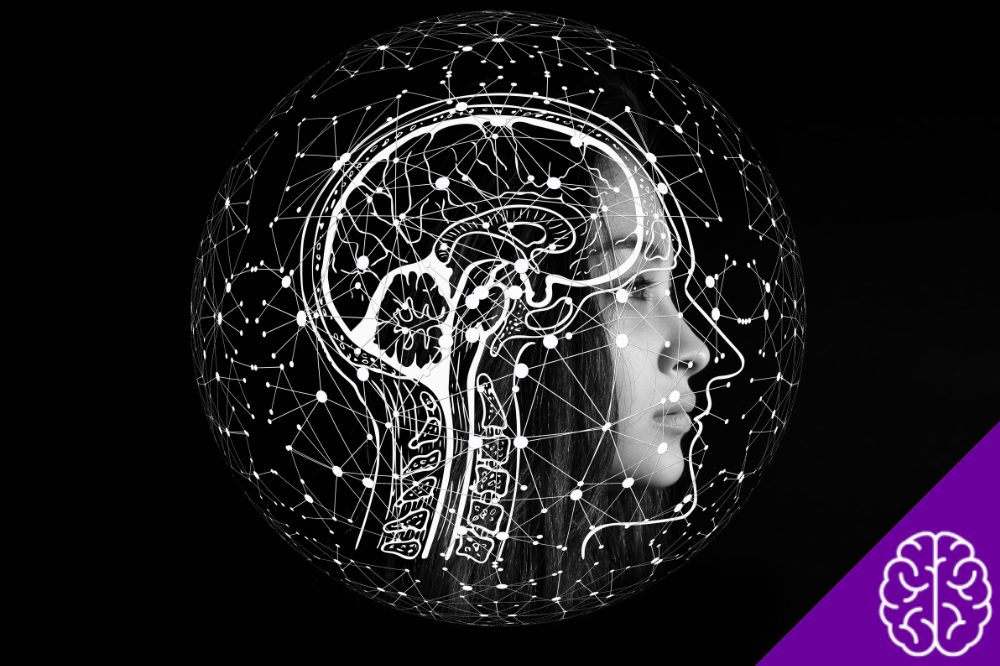
The human brain is a marvel of complexity, running countless operations every second. This powerful organ orchestrates our thoughts, emotions, and actions, often in ways we aren’t even aware of. The human brain performs many of its most fascinating functions behind the scenes, shaping your reality without your conscious input. Understanding these hidden processes reveals just how remarkable this three-pound organ truly is.
From making decisions while you sleep to physically changing its own structure, the brain’s silent work is constant. Let’s explore ten strange things your brain does automatically, demonstrating its incredible power and mystery.
1. It Makes Decisions Unconsciously
You might believe that your choices are the result of careful, conscious deliberation. However, research suggests that up to 95% of your daily decisions are made by your subconscious mind. This includes everything from the food you pick at the grocery store to your immediate reaction in a conversation.
Your subconscious relies on past experiences, ingrained habits, and emotional cues to make rapid judgments. This process is highly efficient, freeing up your conscious mind to focus on more complex, novel problems. Essentially, your brain has an autopilot mode that handles the routine aspects of life, guided by a vast library of stored information you’ve gathered over the years.
2. It Forgets on Purpose
Forgetting is often seen as a failure of memory. But what if it were a feature, not a bug? New theories in neuroscience propose that forgetting is an active process the brain uses to function more effectively. By letting go of irrelevant or outdated memories, the brain can interact more flexibly with the present environment.
Think of it as tidying up. If you remembered every single detail of your entire life, it would be overwhelming and mentally taxing. The human brain prioritizes and filters memories, discarding what it deems less important to make room for new, more relevant information. This active “un-learning” helps you make better decisions and maintain your mental well-being.
3. It Rewires Itself (Neuroplasticity)
For a long time, it was believed that the brain’s structure was fixed after childhood. We now know this is untrue. The brain has a remarkable ability called neuroplasticity, which allows it to form new neural connections and reorganize itself throughout your life.
This means you can learn new skills, form new habits, or recover from brain injuries at any age. Every time you learn a new language, practice a musical instrument, or even think a new thought, you are physically changing your brain. This ongoing process allows you to adapt, grow, and overcome challenges.
Some ways the human brain demonstrates neuroplasticity include:
- Learning a new language, which creates new pathways for thought.
- Recovering functions lost after a stroke or injury.
- Developing expertise in a subject, strengthening specific neural circuits.
4. It Heals the Body Through Belief (Placebo Effect)
The connection between the mind and body is powerful, and nowhere is this more evident than in the placebo effect. This phenomenon occurs when a person experiences real physical benefits from a treatment that has no actual medicinal properties, like a sugar pill.
When you truly believe a treatment will work, your brain can release its own natural painkillers (endorphins) and trigger self-healing mechanisms. This demonstrates that your mindset and expectations can directly influence your physical health. The placebo effect isn’t about tricking someone; it’s about the human brain’s incredible ability to marshal its resources to promote healing.
5. It Processes Emotions in Dreams
Dreams are more than just random stories your brain makes up while you sleep. They are often a window into your subconscious mind, allowing you to process emotions and experiences you may have suppressed or ignored during the day.
Fears, anxieties, and desires can manifest symbolically in dreams. For example, a recurring dream of falling might symbolize a feeling of losing control in your waking life. By working through these emotions in a safe, simulated environment, your brain helps regulate your emotional state and prepare you for real-world challenges.
6. It Doesn’t Fully Mature Until Age 25
While the human body is mostly developed by the late teens, the brain takes a bit longer. Specifically, the prefrontal cortex—the region responsible for planning, impulse control, and long-term consequence assessment—is one of the last areas to fully mature. This process isn’t typically complete until around age 25.
This developmental timeline helps explain why teenagers are often more prone to risk-taking and impulsive behavior. Their brains are still building and strengthening the connections needed for advanced reasoning and self-control.
7. It Creates Physical Reactions to Cold (Brain Freeze)
That sudden, sharp headache you get from eating ice cream too quickly has a scientific name: sphenopalatine ganglioneuralgia. More commonly known as a brain freeze, it’s a direct result of your brain trying to protect itself.
When something intensely cold touches the roof of your mouth, it rapidly cools the blood vessels there, including two major arteries that supply blood to the brain. Your brain interprets this rapid temperature drop as a danger. In response, it causes the arteries to dilate (expand) quickly to rush warm blood to the area. This sudden change in pressure triggers pain receptors, resulting in the familiar headache.
8. It Operates on the Power of a Lightbulb
Despite its immense processing power, the human brain is remarkably energy-efficient. It runs on about 20 watts of power, which is just enough to light a dim lightbulb. This is incredible when you consider that a supercomputer with similar processing capabilities would require megawatts of power.
This efficiency is possible because of the brain’s unique structure of neurons and synapses, which transmit information through electrochemical signals. To maintain this power, your brain requires a constant supply of nutrients and oxygen, which is why healthy eating and adequate sleep are so vital for cognitive function.
9. It Can’t Multitask
You may feel productive when you’re juggling multiple tasks, but your brain isn’t actually multitasking. Instead, it’s “task-switching”—rapidly shifting its focus from one thing to another.
This constant switching comes at a cost. It reduces your efficiency, increases the likelihood of errors, and can impair your short-term memory. Each time you switch, your brain has to disengage from one task and re-engage with another, which consumes valuable mental energy. For best results, focus on one task at a time.
10. It Fills in Perceptual Gaps
Your brain creates a seamless, continuous experience of the world, but your senses are actually providing fragmented information. For example, you have a natural blind spot in each eye where the optic nerve connects to the retina. You don’t notice it because your brain skillfully fills in the missing information using cues from the surrounding environment and the other eye.
This process, known as perceptual completion, also applies to sounds and other sensory inputs. Your brain makes educated guesses to construct a coherent reality from incomplete data. What you perceive isn’t just a direct reflection of the world, but a detailed model constructed by your brain.
The Marvel Within
The human brain is a true masterpiece, quietly shaping every thought, feeling, and action—often without us ever noticing. Understanding its hidden abilities helps us appreciate just how extraordinary this organ is and inspires us to keep exploring the mysteries within ourselves.