

When we watch movies like Interstellar or Star Wars, we see worlds with multiple suns or endless oceans. But the truth is that reality is often much weirder than anything Hollywood can imagine. Since we began discovering exoplanets—planets outside our solar system—astronomers have found worlds that defy the laws of physics as we used to understand them.
These strange planets remind us that the universe is a vast, creative, and sometimes terrifying place. For those of us on Earth, these discoveries are more than just cool facts; they are a window into how planets form and what makes our own home so special. The best part? You don’t need a spaceship to see them. Most of this data is shared for free by agencies like NASA and the ESA, allowing anyone with an internet connection to explore the galaxy.
1. HD 189733b: The Planet Where It Rains Glass
At first glance, this planet looks like a beautiful, deep blue marble similar to Earth. But don’t let the color fool you. On HD 189733b, the blue doesn’t come from water; it comes from a silicate-rich atmosphere.
The Weather: This is one of the most strange planets because its winds can reach 5,400 mph (seven times the speed of sound).
The Rain: The heat is so intense that the silicates in the atmosphere condense into glass. Because of the extreme winds, this glass doesn’t fall down—it blows sideways, creating a storm of a thousand tiny, flying shards.
2. 55 Cancri e: The Diamond World
Imagine a planet twice the size of Earth that is made largely of high-pressure carbon. Because it is so close to its parent star and the internal pressure is so high, scientists believe a significant portion of this planet’s mass is made of diamond.
While we often think of diamonds as rare and expensive on Earth, 55 Cancri e shows that in the right conditions, they can be as common as dirt. It is a sparkling giant in the sky, though its surface temperature of nearly 4,000°F (2,200°C) means you wouldn’t be able to get close enough to mine it.
3. J1407b: The “Super Saturn”
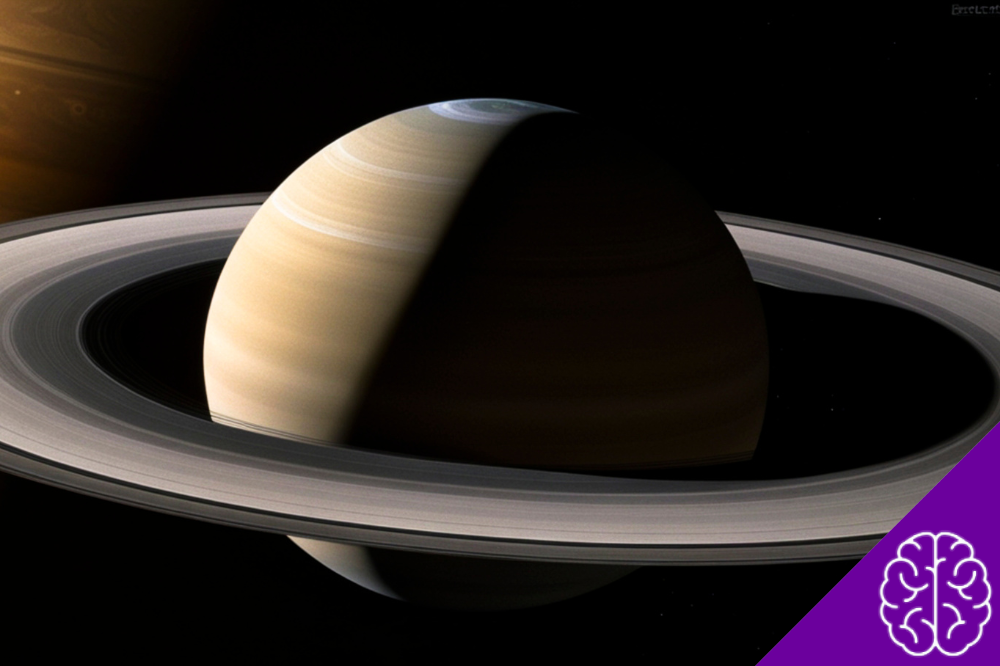
We all love the rings of Saturn, but they are tiny compared to the ring system of J1407b. This is one of the most strange planets because its rings are 200 times larger than Saturn’s.
If J1407b replaced Saturn in our solar system, its rings would be visible from Earth and would appear many times larger than a full moon. There are over 30 rings in the system, each tens of millions of miles in diameter, suggesting that massive moons are currently forming inside those gaps.
4. WASP-12b: The Planet Being Eaten Alive
WASP-12b is a “Hot Jupiter” that is so close to its sun that the star’s gravity is literally pulling the planet apart. Instead of being a sphere, the planet is stretched out into the shape of an egg.
The star is slowly consuming the planet’s atmosphere, “eating” about 189 quadrillion tons of gas every year. Scientists estimate that in another 10 million years, this planet will be completely gone. It is a tragic example of the violent relationship between some stars and their closest neighbors.
5. Gliese 436b: The Planet of Burning Ice
This world defies common sense. Gliese 436b is about the size of Neptune and is extremely close to its star, which makes its temperature a scorching 800°F (430°C). Yet, the planet is covered in ice.
How can ice exist in such heat? The answer is gravity. The planet’s gravity is so strong that it compresses the water vapor in the atmosphere into a solid state, creating “Ice VII.” Even though it is burning hot to the touch, the pressure keeps it from ever melting or turning into steam. It is truly one of the most strange planets ever discovered.
6. TrES-2b: The Darkest World Ever Found
If you looked at TrES-2b, you might see… nothing at all. This exoplanet is darker than coal or black acrylic paint. It reflects less than 1% of the light that hits it, making it the least reflective planet ever found in the universe.
Astronomers aren’t entirely sure why it’s so dark. It might be due to a lack of reflective clouds or the presence of light-absorbing chemicals like vaporized sodium or potassium. It looks like a giant, black void floating in space, with only a faint red glow from its extreme heat visible to infrared sensors.
7. Kepler-16b: The Real-Life Tatooine
For fans of Star Wars, Kepler-16b is a dream come true. It is a circumbinary planet, meaning it orbits two stars instead of one. If you stood on its surface (which you can’t, as it’s a gas giant), you would see two suns in the sky, and you would have two shadows.
When Kepler-16b was first found, many scientists thought strange planets like this were impossible, as the gravity of two stars would usually pull a forming planet apart. Its existence proves that nature is much more resilient and creative than we once believed.
Exploring the Galaxy for Free
You don’t need to be a billionaire or a NASA employee to keep up with these strange planets. In 2026, the public has more access to space data than ever before:
- NASA’s Eyes on Exoplanets: This is a free, interactive 3D tool that lets you “fly” to these worlds and see them from your computer or phone.
- Open-Source Journals: Universities often share their findings in open journals like The Astrophysical Journal, where you can read the raw data about these planets without a subscription.
- Citizen Science: Projects like “Planet Hunters” allow regular people to look through satellite data and help discover new worlds themselves.
The Endless Wonder of the Cosmos
Learning about these strange planets changes the way we look at our own world. We live on a planet with liquid water, a breathable atmosphere, and a stable sun—a combination that seems rare when you look at the glass-rain and burning-ice worlds of the deep galaxy.
Every time we find a new planet that challenges our imagination, we learn more about the rules of the universe. These distant worlds show us that space is not just a dark, empty void, but a massive collection of “what ifs” that have come to life. Whether it is a planet made of diamond or a world with two suns, the galaxy continues to prove that the most incredible stories aren’t found in books, but in the stars above us.