

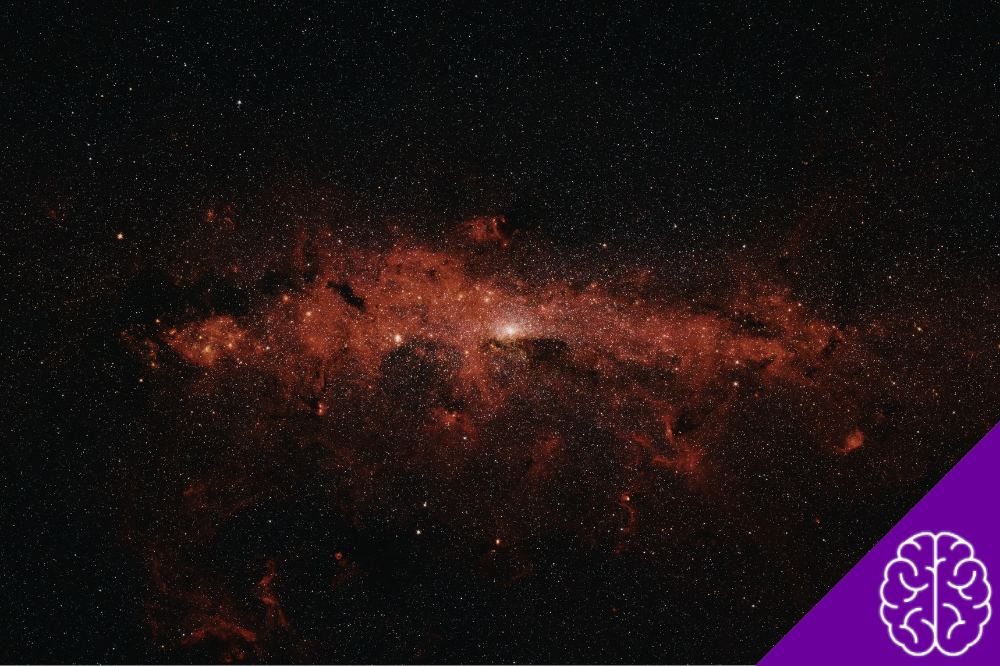
The James Webb Space Telescope (JWST) currently reshapes our fundamental understanding of the cosmos. By peering into the deepest reaches of infrared light, this massive observatory reveals structures that challenge every existing model of early galactic evolution and cosmic history.
Recent observations lead to a startling James Webb discovery: the existence of massive, mature galaxies appearing far earlier than predicted. These “impossible” cosmic giants force astronomers to rethink how the universe began and how matter organized itself during the dawn of time.
The Massive Paradox of the Early Universe
Standard cosmological models predict that the first galaxies began as small, chaotic clumps of gas and stars. Scientists expected these early structures to grow slowly over billions of years through mergers and accretion. However, the telescope reveals a different reality where massive systems existed shortly after the Big Bang.
Astronomers identify several candidates that possess as much mass as the modern Milky Way. These galaxies appear fully formed and densely packed with stars at a time when the universe was only a fraction of its current age. This discovery suggests that star formation occurred much faster and more efficiently than anyone previously imagined.
ZF3-U3: The Silent Red Monster
One of the most significant finds involves a group of galaxies nicknamed the “Little Red Dots.” Among them, ZF3-U3 stands out as a particularly dense and massive object. This galaxy contains a staggering number of stars despite its extreme distance from Earth, appearing as a compact, ruby-red ember in the dark.
Data from the observatory shows that ZF3-U3 formed its stellar population with incredible speed. It essentially converted nearly 100% of its available gas into stars, a feat that modern galaxies cannot achieve. This efficiency defies the “feedback” models where supernovae usually blow gas away and slow down the growth of a galaxy.
- It contains nearly 100 billion stars in a compact space.
- The galaxy appears roughly 600 million years after the Big Bang.
- Its red color indicates high levels of dust and ancient star light.
- It challenges the speed limit of star formation physics.
Gz9p3: The Ancient Merger
The telescope recently captured an image of Gz9p3, which scientists originally thought was a single point of light. Higher resolution data revealed that this object is actually one of the oldest galactic mergers ever witnessed. It shows two massive galaxies in the process of colliding and becoming one giant entity.
This specific James Webb discovery is baffling because mergers of this scale require significant time to coordinate. For two large galaxies to find each other and begin merging so early in the universe suggests that matter was distributed in a much more “clumpy” and interactive way than the “Smooth Start” theory proposes.
The Breakers of the Dark Ages
Another set of six candidate galaxies, often referred to as “Universe Breakers,” continues to spark intense debate in the astronomical community. These objects are so massive that they shouldn’t have had enough “primordial soup”—the raw hydrogen and helium of the early universe—to create so many stars so quickly.
If the mass of these galaxies is confirmed through spectroscopy, it would mean that the Lambda Cold Dark Matter (LCDM) model is incomplete. Astronomers might have to adjust the “Cosmological Constant” or reconsider the role of dark matter in pulling gas together. These objects represent a literal brick wall for current theoretical physics.
- They appear significantly brighter than the expected limits of the early era.
- Their mass rivals the most massive galaxies seen in the local universe.
- The sheer size suggests a fundamental misunderstanding of cosmic timescales.
- They suggest that black holes and galaxies might grow in tandem faster than predicted.
CEERS-2112: The Impossible Spiral
Before the JWST, astronomers believed that complex spiral structures, like our Milky Way, took at least several billion years to develop. The early universe was thought to be too turbulent for delicate spiral arms to survive. However, the discovery of CEERS-2112 proved this assumption entirely wrong.
CEERS-2112 is a barred spiral galaxy that looks remarkably mature and stable. Seeing a “bar” of stars in the center of a galaxy so early suggests that the early universe was much more settled and organized than previously thought. This stability allows for the development of complex environments where life could theoretically emerge much sooner in cosmic history.
JADES-GS-z14-0: The Record Holder
The JADES survey recently identified JADES-GS-z14-0, the most distant galaxy ever confirmed. It exists at a time when the universe was only 290 million years old. While its distance is impressive, its brightness is what truly shocks the scientific world.
This galaxy is hundreds of millions of times the mass of the Sun. For an object to become this bright and massive in less than 300 million years suggests that the first stars were either much larger than current ones or that they formed in massive bursts. This galaxy provides the first real look at the transition from the “Dark Ages” to the “Cosmic Dawn.”
- It represents the current edge of the observable universe.
- Its light traveled for over 13.5 billion years to reach the telescope.
- Oxygen detected in the galaxy proves that stars had already lived and died.
- It confirms that the early universe was surprisingly rich in heavy elements.
Reevaluating the Speed of Cosmic Time
Every new James Webb discovery pushes the timeline of the universe further back. Scientists are now investigating whether the “Dark Matter Halos” that house galaxies formed earlier than suspected. If dark matter pulled gas together more aggressively, it would explain why these giant galaxies appear so suddenly in the infrared images.
This research also looks at “Population III” stars—the very first stars made only of hydrogen and helium. These stars were likely massive and short-lived, exploding as supernovae and seeding the universe with the heavy elements found in galaxies like JADES-GS-z14-0. The observatory is currently searching for the specific light signatures of these primordial giants.
The Impact on Modern Physics
The existence of these five types of galaxies suggests that our “Cosmic Ruler” might be slightly off. While the Big Bang theory remains the best explanation for the origin of the universe, the path from a hot, dense state to the first galaxies is clearly more complex than once believed.
Theoretical physicists are now proposing “Early Dark Energy” or modified gravity theories to account for the speed of this growth. The telescope acts as a high-pressure laboratory for these ideas, providing the data needed to discard old theories and build new ones that accurately describe the beautiful complexity of our origins.