

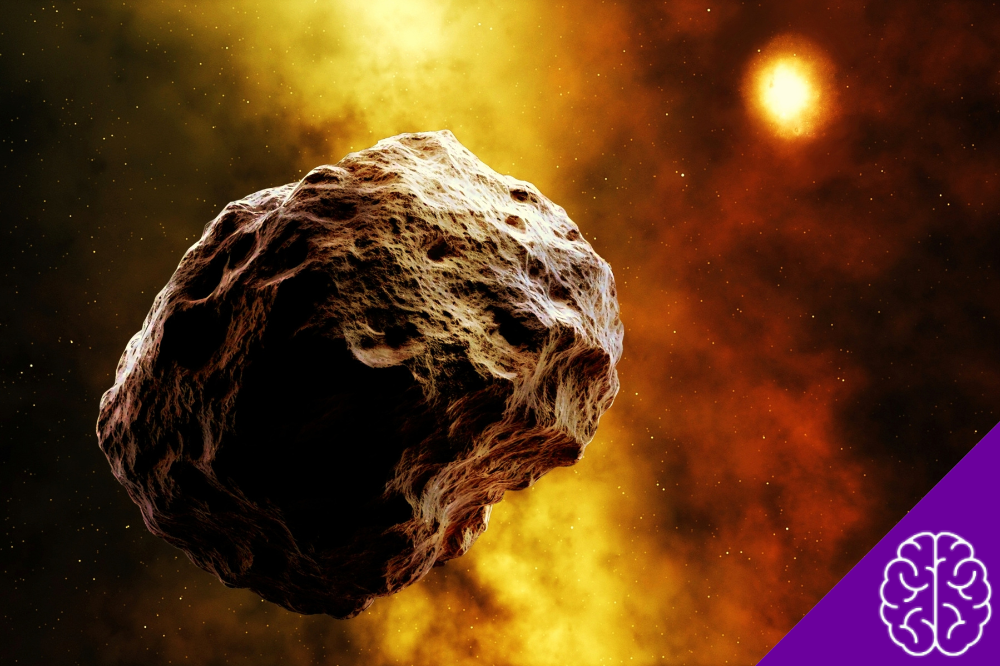
Sixty-six million years ago, a mountain-sized space rock slammed into the Yucatán Peninsula, altering the trajectory of life on Earth forever. While we conceptually know this event ended the reign of the dinosaurs, the physical asteroid impact consequences are difficult to comprehend. It was not just a collision; it was a planetary reset that unleashed the absolute limits of geological violence.
To understand the true scale of the Chicxulub event, we have to look past the immediate blast zone. The intersection of extreme heat, colossal pressure waves, and atmospheric poisoning created a cascading ecological collapse. This guide maps out the cataclysmic sequence of events that transformed a tropical paradise into a global wasteland within a matter of hours.
The Instantaneous Kinetic Release
When the ten-kilometer-wide asteroid made landfall, it was traveling at roughly seventy thousand kilometers per hour. The sudden deceleration converted an unimaginable amount of kinetic energy into raw destructive power. Scientists estimate the blast released the energy equivalent of one hundred million megatons of TNT.
This kinetic discharge instantly altered the geography of the planet:
- The Transient Cavity: Carved a burning bowl thirty kilometers deep into the Earth’s crust.
- Thermal Flash: Generated a pocket of superheated plasma exceeding ten thousand degrees.
- Instant Incineration: Vaporized every living organism within a one-thousand-kilometer radius in milliseconds.
The Supersonic Shockwave and Mega-Earthquakes
Directly following the flash of light, the physical displacement of the atmosphere generated a global high-pressure air blast. This supersonic shockwave rolled outward from the impact site, shredding prehistoric ecosystems and leveling continental forests.
The physical trauma to the Earth manifested through specific mechanical forces:
- Shredding Winds: Air currents far exceeded one thousand kilometers per hour near the crater, scouring soils down to the bedrock.
- Global Compression: The high-pressure wave circled the globe multiple times, causing immediate internal organ collapse in larger wildlife.
- Magnitude 10 Seismicity: The collision triggered an unprecedented mega-earthquake that fractured fault lines and destabilized continental shelves worldwide.
Mile-High Tsunamis and Ocean Scouring
Because the asteroid struck a shallow carbonate shelf, it displaced the ocean on a scale never recorded in human history. Within three minutes of the strike, a ring-shaped wall of displaced water briefly formed a wave over four kilometers high, collapsing outward in all directions.
This displaced ocean mass triggered an unprecedented aquatic assault:
- Towering Walls: Maintained a height of over one hundred meters as the waves propagated across the proto-Caribbean and Atlantic basins.
- Deep Penetration: Flooded deep into continental interiors, dragging soil, broken forests, and animal carcasses back out to sea.
- Seafloor Reshaping: Displaced nearly forty-eight thousand cubic miles of sediment, completely altering the geography of the Gulf of Mexico.
Global Darkness and the Ten-Year Winter
While the immediate asteroid impact consequences were regional, the long-term atmospheric shifts triggered the mass extinction of seventy-five percent of all species. The target rocks in Mexico were highly enriched with sulfur and hydrocarbons, which proved catastrophic when vaporized.
The long-term breakdown of the planetary climate occurred in phases:
- Stratospheric Inversion: Launched hundreds of billions of tons of sulfur aerosols and soot directly into the upper atmosphere.
- Solar Blockade: Enveloped the globe in an opaque blanket, blocking out ninety-nine percent of all incoming sunlight.
- Impact Winter: Initiated a decades-long period of freezing temperatures and global drought, halting photosynthesis and starving the food chain.
The Indelible Legacy of a Planetary Reset
The catastrophic asteroid impact consequences of the Chicxulub event prove that the history of life on Earth can be rewritten in a single afternoon. Today, the physical evidence of this ancient violence is safely buried beneath a kilometer of modern Mexican limestone, recognizable only through satellite radar and unique gravitational anomalies.
For curiosity enthusiasts, the truest monument to this cataclysm is found under our feet—in a thin, global layer of clay embedded in the world’s rock strata. Rich in extra-terrestrial iridium, shocked quartz, and glass spherules, this boundary serves as a silent geological marker of the moment the sky fell, bringing a violent end to the age of reptiles and clearing a blank canvas for the rise of mammals.