

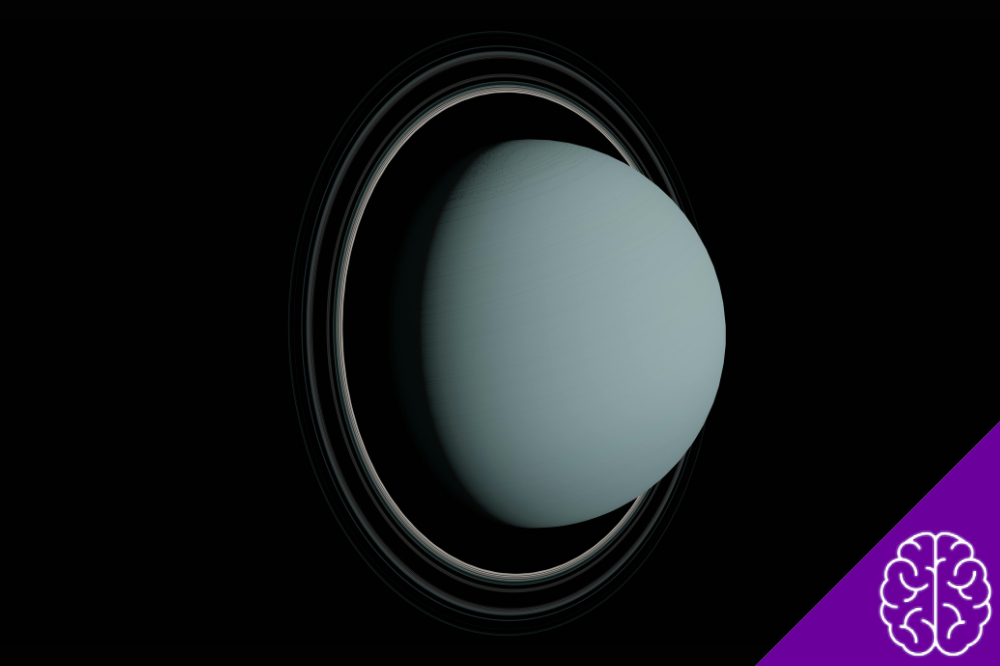
An Earth with rings sounds like a concept from science fiction, but scientists have explored what such a planet might actually look like. Massive ring systems are not unique to Saturn—Jupiter, Uranus, and Neptune also have rings, although they are far less visible.
If Earth somehow developed rings similar to Saturn’s, the planet would remain recognizable, but everyday life could change in surprising ways. From the appearance of the sky to the way humans experience seasons and space exploration, the effects would be difficult to ignore.
What Would Earth’s Rings Look Like?
The most obvious change would be visual.
Unlike Saturn, which we observe from millions of miles away, humans would see the rings from the surface of the planet itself. In many locations, they could appear as a bright band stretching across the sky from horizon to horizon.
Their appearance would vary depending on where someone lived. Near the equator, the rings might dominate the sky overhead, while people closer to the poles could see them lower on the horizon.
Scientists believe such rings could become one of the brightest permanent features in the night sky, potentially outshining many familiar celestial objects.
How Could Earth Get Rings?
Planetary rings form when material becomes trapped in orbit around a planet.
One possible scenario involves an asteroid or moon being torn apart by Earth’s gravity after passing too close. The debris could then spread into a ring system over time.
This process is linked to a concept called the Roche limit, the distance at which gravitational forces can overcome the structural strength of an object and break it apart.
While the idea is scientifically plausible, there is currently no evidence suggesting Earth will naturally develop Saturn-like rings anytime soon.
Nights Would Be Much Brighter
The night sky could look dramatically different.
Depending on the composition of the rings, they would reflect sunlight long after sunset. In some scenarios, nights could become noticeably brighter than they are today.
This additional brightness might affect activities that depend on dark skies, including amateur astronomy and stargazing. Some faint stars and deep-space objects could become more difficult to observe.
At the same time, people would enjoy a spectacular celestial display every evening without needing telescopes or special equipment.
The Rings Could Influence Climate
Large rings might do more than change the view.
If they were dense enough, portions of the rings could cast shadows on Earth during certain times of the year. Those shadows could reduce the amount of sunlight reaching specific regions.
The effects would depend on several factors:
- Ring thickness;
- Ring density;
- Orbital alignment;
- Seasonal position of Earth.
Some climate models suggest that localized cooling could occur in regions affected by prolonged shadowing.
Different Regions Would See Different Skies
An Earth with rings would not provide the same view everywhere.
People living near the equator might see enormous arcs crossing the sky overhead. In higher latitudes, the rings could appear tilted or remain closer to the horizon.
This difference would likely influence tourism, photography, and even local traditions. Certain locations could become famous for offering the most dramatic views of the rings.
Just as travelers today seek out eclipses and auroras, future tourists might travel specifically for ring-viewing experiences.
Space Travel Would Become More Difficult
A ring system would introduce new challenges for satellites and spacecraft.
Modern satellites occupy many orbital regions around Earth. If ring particles were present in those areas, engineers would need to carefully plan launch trajectories and orbital paths.
Potential challenges could include:
- Increased collision risks;
- More complex launch windows;
- Additional spacecraft shielding;
- Restrictions on certain orbits.
The larger and denser the rings became, the more complicated space operations would likely be.
Human Culture Might Develop Differently
Throughout history, humans have drawn inspiration from the sky.
The Sun, Moon, planets, and stars have influenced religions, myths, art, literature, and scientific discoveries. A permanent ring system would almost certainly become one of the defining symbols of human civilization.
Many cultural traditions might evolve around:
- Seasonal ring alignments;
- Unique visual phenomena;
- Religious interpretations;
- Artistic representations.
If rings had existed throughout human history, our understanding of the universe might look very different today.
Wildlife Could Be Affected
Scientists also speculate that rings could influence some ecosystems.
Many animals rely on darkness for navigation, migration, hunting, and reproduction. If the rings significantly increased nighttime brightness, certain species might adapt their behavior over time.
Researchers already know that moonlight affects the activity patterns of numerous animals. A bright ring system could create similar effects on a much larger scale.
Exactly how ecosystems would respond remains uncertain, but the consequences could be widespread.
Would Earth Be More Beautiful?
Many people would probably answer yes.
Astronomical simulations show breathtaking views of giant rings stretching across the sky. Sunrises and sunsets could create striking interactions between sunlight and the ring system, producing visual effects unlike anything seen on Earth today.
The rings would become a permanent backdrop to everyday life, transforming ordinary landscapes into scenes that resemble science-fiction artwork.
Earth With Rings: A Completely Different World
An Earth with rings would still be Earth, but daily life could feel remarkably different. The sky would become one of the planet’s defining features, while astronomy, climate patterns, space travel, and even culture could evolve in response to the presence of a massive ring system.
Although scientists do not expect Earth to acquire Saturn-like rings in the foreseeable future, the idea remains one of the most fascinating thought experiments in planetary science. It demonstrates how a single astronomical change could reshape the experience of living on an entire planet.