

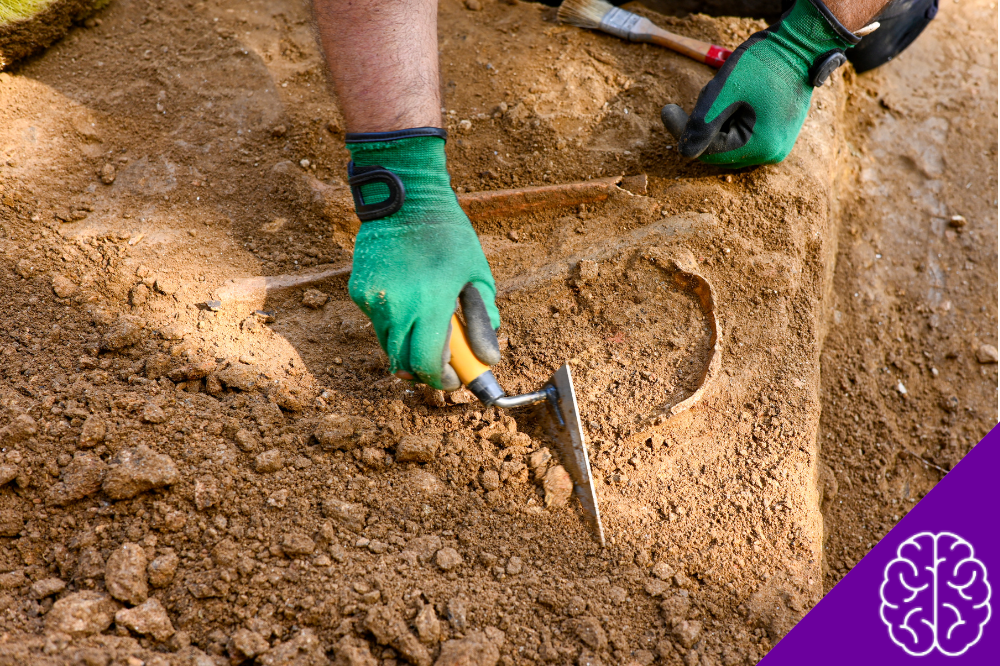
Some of the most important breakthroughs in history did not happen in laboratories or royal courts. They emerged from buried cities, forgotten tombs, and artifacts hidden beneath layers of earth for centuries.
These archaeological discoveries transformed how historians understand ancient civilizations, languages, religions, and even the origins of humanity. In many cases, a single find forced experts to rethink long-held assumptions about the past.
1. The Rosetta Stone
Why it mattered
Few archaeological finds have had a greater impact on historical research than the Rosetta Stone.
Discovered in Egypt in 1799 during Napoleon’s campaign, the stone contained the same text written in three scripts: Ancient Greek, Demotic, and Egyptian hieroglyphs. Because scholars could already read Greek, the inscription became the key to deciphering hieroglyphs.
Historical impact
Before this discovery, Egyptian writing had remained largely unreadable for centuries. The work of linguists eventually unlocked the language of Ancient Egypt, giving researchers access to thousands of inscriptions, monuments, and historical records.
Without the Rosetta Stone, much of what is known about Egyptian civilization today would likely remain a mystery.
2. The Tomb of Tutankhamun
Why it mattered
In 1922, archaeologist Howard Carter uncovered the nearly intact tomb of Pharaoh Tutankhamun in Egypt’s Valley of the Kings.
Unlike many royal tombs that had been looted throughout history, this burial chamber contained thousands of well-preserved artifacts, including jewelry, furniture, weapons, and the famous golden mask.
Historical impact
The discovery provided an extraordinary look into royal life during Ancient Egypt’s New Kingdom period.
Researchers gained valuable information about religion, burial customs, craftsmanship, and political life, while the discovery itself sparked worldwide interest in archaeology and Egyptology.
3. Pompeii
Why it mattered
When Mount Vesuvius erupted in 79 CE, it buried the Roman city of Pompeii under volcanic ash.
The tragedy preserved buildings, artwork, streets, tools, and even the remains of residents with remarkable detail, creating one of the best-preserved archaeological sites ever discovered.
Historical impact
Pompeii offered historians something rare: a detailed snapshot of everyday life in the Roman Empire.
Excavations revealed information about housing, commerce, entertainment, politics, religion, and social structure that written records alone could never fully provide.
4. The Dead Sea Scrolls
Why it mattered
Discovered beginning in 1947 near the caves of Qumran, the Dead Sea Scrolls became one of the most significant manuscript discoveries in history.
The collection includes thousands of fragments dating from roughly the third century BCE to the first century CE, including some of the oldest known biblical texts.
Historical impact
The scrolls transformed the study of ancient Judaism and early religious traditions.
They provided scholars with valuable evidence about how sacred texts were copied, preserved, and transmitted over centuries, while also offering deeper insight into the religious world of the ancient Near East.
5. Lucy
Why it mattered
Not all groundbreaking discoveries involve ancient cities or lost treasures.
In 1974, researchers working in Ethiopia uncovered the partial skeleton known as Lucy, a member of the species Australopithecus afarensis that lived approximately 3.2 million years ago.
Historical impact
Lucy became one of the most important fossils ever found because the skeleton helped scientists better understand human evolution.
The discovery provided strong evidence that early human ancestors were walking upright long before the emergence of modern humans, influencing decades of research in paleoanthropology.
What These Discoveries Have in Common
Although these findings come from different regions and time periods, they share several characteristics.
Each discovery:
- Revealed information previously unknown to historians;
- Challenged existing assumptions;
- Expanded scientific knowledge;
- Influenced future research;
- Changed humanity’s understanding of the past.
This lasting impact is what separates truly historic discoveries from ordinary archaeological finds.
Why Archaeologists Are Still Making Major Discoveries
Many people assume the most important sites have already been found, but archaeology continues to evolve rapidly.
Modern researchers now use tools such as satellite imagery, ground-penetrating radar, DNA analysis, and advanced scanning technology to investigate locations that were once impossible to study effectively.
As these techniques improve, archaeologists continue uncovering evidence that sheds new light on ancient civilizations and human history.
The Lasting Legacy of Archaeological Discoveries
The most influential archaeological discoveries do more than uncover artifacts. They help answer fundamental questions about where humans came from, how civilizations developed, and how societies changed over time.
From the Rosetta Stone to Lucy, these discoveries continue to shape historical research and remind us that some of humanity’s greatest stories remained hidden underground for centuries before finally being brought to light.
- You May Also Like: The Oldest Things Still Existing on Earth