
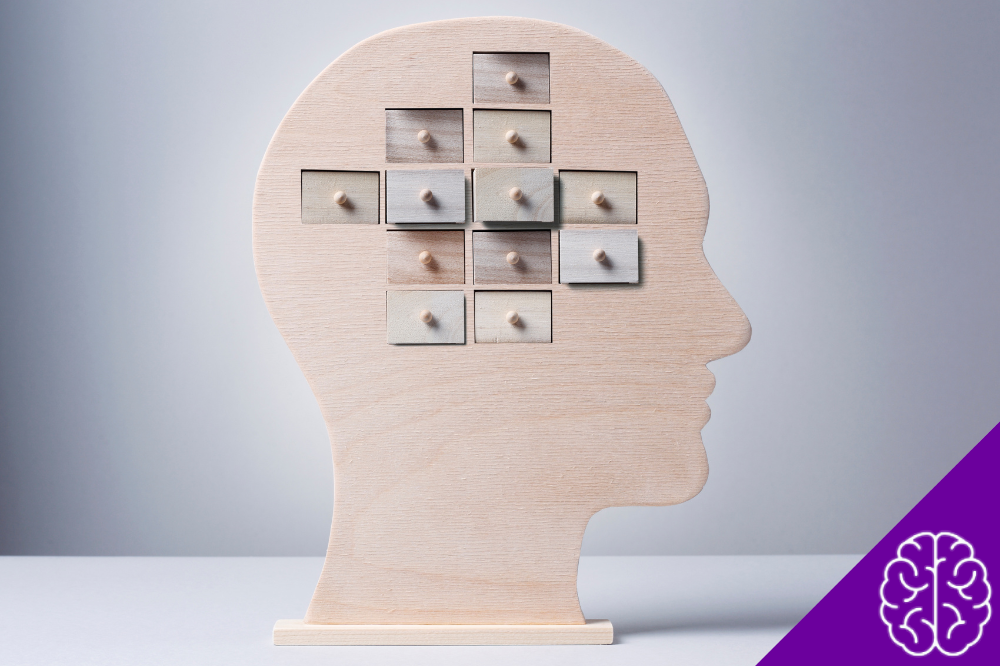
False memories are one of the most fascinating discoveries in modern neuroscience. Although most people believe memories work like recordings stored inside the brain, decades of research have shown that remembering is actually a process of reconstruction. Every time we recall an event, the brain rebuilds it using fragments of information rather than replaying an exact copy of the past.
This explains why people can vividly remember conversations that never happened, details that were never present or even entire events that did not occur. Far from being rare, false memories are a normal consequence of how the human brain processes and stores information.
What are false memories?
A false memory is the recollection of an event that is inaccurate in some way.
Sometimes an event really happened, but certain details become distorted over time. In other cases, the remembered event never happened at all.
Unlike intentionally making up a story, people genuinely believe false memories. The brain treats these recollections as authentic, even when objective evidence shows otherwise.
Researchers have identified several forms of false memories, including:
- Remembering incorrect details from a real event;
- Confusing where or when something happened;
- Combining different experiences into a single memory;
- Recalling events that never actually occurred.
These errors occur because the brain constantly reconstructs memories rather than permanently storing them in their original form.
Why doesn’t the brain work like a video recorder?
One of the biggest myths about memory is that the brain records experiences exactly as they happen.
Instead, the brain stores pieces of information such as images, sounds, emotions, language and context across different neural networks. When you remember an event, it brings those pieces back together to recreate the experience.
This system offers an important advantage. Rather than filling the brain with enormous amounts of unnecessary detail, it prioritizes information that is likely to be useful in the future.
The trade-off is that reconstruction is not always perfect. The brain may unconsciously fill missing details with assumptions, expectations or information learned after the original event.
How are false memories formed?
Scientists have identified several factors that can alter memories over time.
Suggestion
Suggestions from other people can strongly influence memory.
The wording of a question, a conversation with family members or repeated exposure to inaccurate information may gradually change how someone remembers an event.
Even subtle differences in language can influence later recollections, demonstrating that memory is more flexible than most people realize.
Repeated imagination
Repeatedly imagining an event can also blur the boundary between imagination and reality.
As the imagined scenario becomes more familiar, the brain may begin treating that familiarity as evidence that the event actually occurred.
This effect is especially noticeable when the imagined situation is emotionally meaningful or closely resembles a real experience.
Misinformation
New information introduced after an event can become part of an existing memory.
Experiments have shown that participants who receive misleading information after witnessing an event often remember details that were never present in the original experience.
Rather than replacing memories completely, the brain usually weaves misinformation into the reconstructed version of the event.
The experiments that transformed memory research
Much of today’s understanding of false memories comes from the work of cognitive psychologist Elizabeth Loftus, whose research fundamentally changed how scientists think about memory.
In a series of influential experiments, participants watched videos of traffic accidents and later answered questions describing the collisions using different verbs such as “hit,” “bumped” or “smashed.”
Participants exposed to stronger wording were significantly more likely to remember seeing broken glass, even though none appeared in the original footage.
These studies demonstrated that simply changing the wording of a question can alter what people later believe they witnessed.
Today, Loftus’s work continues to influence psychology, neuroscience and legal systems around the world.
Can childhood memories be inaccurate?
Childhood memories deserve special attention because people often reconstruct them many years after the original events occurred.
During that time, family stories, photographs, conversations and repeated retellings may gradually influence how those experiences are remembered.
This does not mean childhood memories are automatically false. Instead, it suggests they should be viewed with the understanding that memory naturally changes as people revisit important moments throughout life.
Why do false memories feel completely real?
Perhaps the most surprising aspect of false memories is how convincing they can be.
Brain imaging studies suggest that genuine memories and false memories activate many of the same brain regions involved in remembering past experiences. Because of this overlap, people often experience false memories with the same confidence and emotional intensity as authentic ones.
A person’s certainty, therefore, is not always a reliable indicator that a memory is accurate.
Why are false memories important in criminal investigations?
The possibility of false memories has significant implications for eyewitness testimony.
Although eyewitness accounts can be valuable, decades of psychological research have shown that stress, lighting conditions, the passage of time and conversations that occur after an event all influence human memory.
For this reason, investigators increasingly evaluate eyewitness testimony alongside other forms of evidence rather than treating it as a flawless record of what happened.
Understanding the limits of memory helps reduce the risk of relying too heavily on recollections that may have changed over time.
Can emotions change our memories?
Emotions play a major role in how people form and later recall memories.
Highly emotional events are often remembered more vividly than ordinary experiences, but vividness does not necessarily guarantee accuracy. Strong emotions may preserve the central event while causing peripheral details to become distorted or forgotten.
Each time people recall those memories, they may also update them with new interpretations, making them gradually different from the original experience.
Why does the brain allow memories to change?
Although memory distortions may seem like a flaw, many neuroscientists believe they are actually a consequence of a highly adaptive system.
Instead of storing every detail permanently, the brain prioritizes flexibility. This allows people to learn from past experiences, apply previous knowledge to new situations and imagine possible future scenarios.
A perfectly accurate memory system might preserve more details, but it would likely be far less efficient at solving problems and adapting to changing environments.
The brain remembers by rebuilding the past
Research into false memories has fundamentally changed our understanding of the human mind. Rather than functioning like a video camera, the brain constantly reconstructs experiences by combining stored information with current knowledge, expectations and emotions.
Although this process sometimes produces inaccurate recollections, it also gives humans remarkable cognitive flexibility. The same mechanisms that occasionally rewrite parts of the past are closely connected to learning, creativity and our ability to imagine the future, making memory one of the brain’s most powerful—and surprisingly imperfect—abilities.