

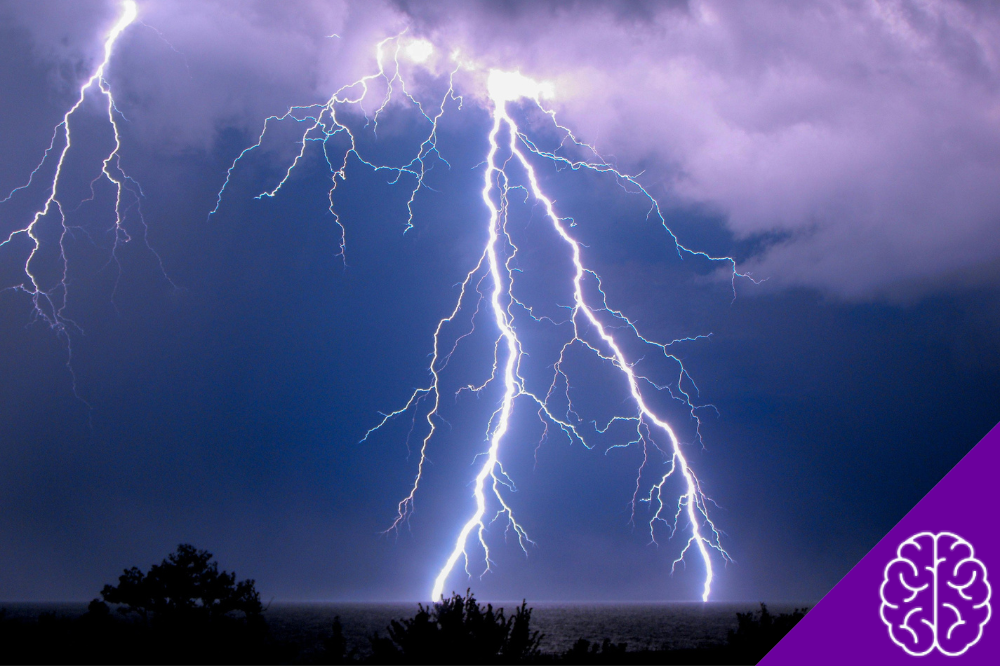
The saying that lightning strikes twice in the same place is impossible has been around for generations. It’s often used as a metaphor to suggest that rare events don’t happen more than once. But when it comes to weather, that popular belief doesn’t match reality.
In fact, scientists have known for years that lightning can strike the same location multiple times. In this guide, you’ll learn where the myth came from, why it persists, and what meteorology tells us about how lightning actually behaves.
Is it true that lightning never strikes the same place twice?
No. This is one of the most common weather myths, and it’s false.
According to the National Weather Service (NWS) and NOAA’s National Severe Storms Laboratory, lightning can strike the same place many times, especially if that location is tall, isolated, or more likely to create the conditions needed for a lightning discharge.
The phrase survives because it works well as a figure of speech, not because it accurately describes how lightning behaves.
Why does lightning hit the same place repeatedly?
Lightning doesn’t “remember” where it struck before.
Instead, every lightning bolt follows the path that offers the easiest electrical connection between the cloud and the ground at that moment.
Several factors increase the chances of a location being struck repeatedly, including:
- height above the surrounding area;
- isolation from nearby structures;
- pointed shapes, such as towers and antennas;
- favorable atmospheric conditions.
That’s why mountains, communication towers and skyscrapers receive lightning far more often than nearby lower objects.
The Empire State Building proves the myth wrong
One of the best-known examples is the Empire State Building in New York City.
Because of its height and design, the skyscraper is struck by lightning dozens of times over the years. According to the National Weather Service, it is hit an average of about 23 times per year, although annual totals naturally vary depending on weather conditions.
Far from being unusual, repeated strikes are exactly what scientists expect for very tall structures.
The building was designed with lightning protection systems that safely direct the electrical current into the ground, preventing serious structural damage.
Can lightning hit the exact same spot?
Yes. A single lightning flash can even contain multiple return strokes that travel through nearly the same channel in a fraction of a second.
Over longer periods, the same tree, tower, building or mountain peak may also be struck repeatedly during different storms if the conditions remain favorable.
This is another reason why the idea that lightning strikes twice is impossible doesn’t hold up under scientific observation.
Why do so many people believe this myth?
The expression “lightning never strikes the same place twice” has been around for centuries, long before scientists understood the physics of thunderstorms.
Over time, the phrase became part of everyday language and started being used to describe unlikely events rather than actual weather.
Because most people never witness the same object being struck multiple times, the myth can seem believable. In reality, lightning strikes happen in fractions of a second and often occur during severe storms, making repeated strikes difficult to observe without specialized equipment.
Today, weather radar, lightning detection networks and high-speed cameras have confirmed what researchers have long understood: repeated strikes are not only possible but fairly common in certain locations.
Are people safe indoors during a lightning storm?
Being indoors is much safer than remaining outside, but not every indoor activity is risk-free.
According to the National Weather Service and the Centers for Disease Control and Prevention (CDC), you should avoid:
- using corded phones;
- touching electrical appliances connected to outlets;
- taking showers or baths, since plumbing can conduct electricity;
- standing near windows and exterior doors during severe storms.
The safest place is inside a substantial building or a fully enclosed metal vehicle with the windows closed.
What should you do if you’re caught outside?
If you hear thunder, you’re already close enough to be struck by lightning.
The National Weather Service recommends seeking shelter immediately inside a building or enclosed vehicle.
If neither is available:
- avoid open fields;
- stay away from isolated trees;
- leave hilltops and elevated areas;
- avoid bodies of water;
- move away from metal fences and poles.
One important myth to avoid is that lying flat on the ground makes you safer. In fact, this can increase your exposure to dangerous ground currents if lightning strikes nearby.
The science is clear
The idea that lightning strikes twice is a myth, not a scientific fact. Lightning doesn’t avoid places it has already struck. Instead, it follows the path that best allows electrical energy to reach the ground, which is why tall buildings, towers and mountain peaks are hit again and again.
Understanding how lightning works helps separate fact from fiction and reinforces the importance of following official safety recommendations whenever thunderstorms are nearby. Some myths may seem harmless, but believing them can lead people to underestimate the real dangers of lightning.
- You May Also Like: 7 Myths About the Past That People Still Believe