

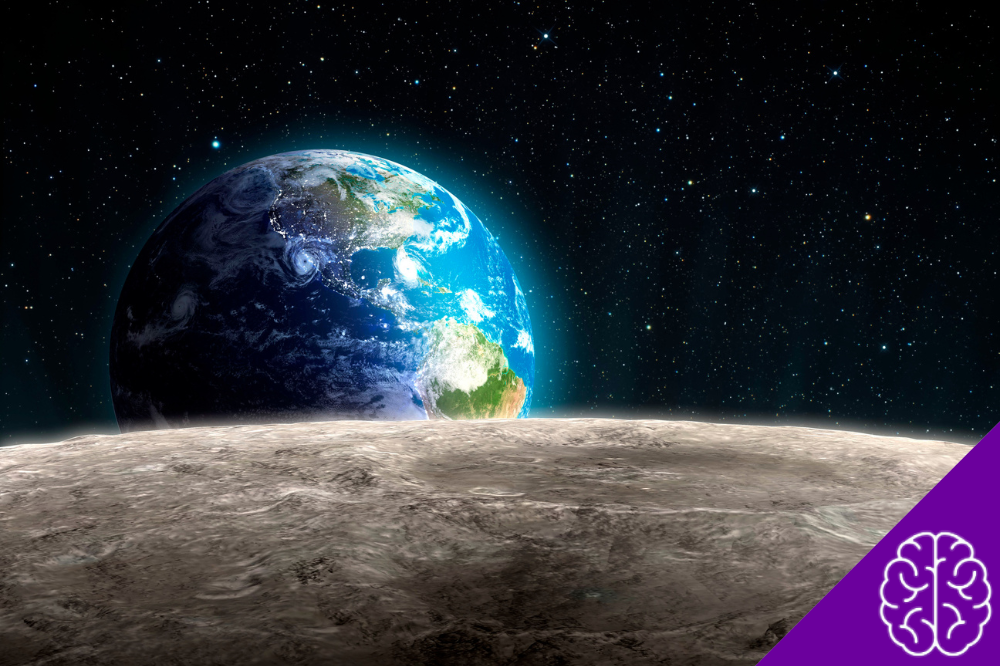
An Earth without the Moon is a fascinating thought experiment that has inspired scientists, writers, and space enthusiasts for decades. While no official scientific study can predict exactly how long humans would survive without the Moon, researchers agree that its disappearance would trigger significant changes to Earth’s oceans, climate, and ecosystems over time.
This article explores what NASA and other scientific organizations say would happen if the Moon suddenly vanished, separating established science from speculation.
Why is the Moon so important to Earth?
Although the Moon is Earth’s only natural satellite, its influence extends far beyond lighting up the night sky. According to NASA, the Moon plays a crucial role in creating ocean tides and helping stabilize Earth’s axial tilt, which contributes to a relatively stable climate over long periods.
Without the Moon, Earth would still orbit the Sun, and life would not disappear overnight. However, several natural processes that have shaped the planet for billions of years would begin to change.
Some of the Moon’s most important roles include:
- generating most of Earth’s ocean tides through its gravitational pull;
- helping stabilize Earth’s axial tilt over millions of years;
- influencing coastal ecosystems that depend on tidal cycles;
- making solar and lunar eclipses possible;
- providing natural nighttime illumination.
Scientists emphasize that these effects have developed over geological timescales, meaning many of the consequences of losing the Moon would unfold gradually rather than instantly.
What would happen immediately if the Moon disappeared?
If the Moon suddenly vanished, the first noticeable change would be in the night sky. Nights would become much darker because moonlight would disappear completely, leaving only starlight and, at times, the brightness of the Milky Way.
Another immediate effect would involve Earth’s tides. The Sun also produces tides through its gravity, so oceans would not become still. However, NASA explains that solar tides are much weaker than lunar tides, meaning tidal ranges would decrease significantly.
People would also notice that solar and lunar eclipses would no longer occur, since these events depend on the Moon’s position relative to Earth and the Sun.
Despite these changes, there would be no immediate collapse of Earth’s atmosphere, gravity, or orbit around the Sun. Those ideas are common in fiction but are not supported by current scientific understanding.
How would the oceans change?
The Moon is responsible for most of the tidal movement experienced around the world. These tides transport nutrients, shape coastlines, and support many marine ecosystems.
Without the Moon, tides would continue because of the Sun’s gravitational pull, but they would become much smaller. Scientists estimate that solar tides are only a fraction of the strength of lunar tides.
Reduced tidal movement could gradually affect:
- coastal wetlands;
- estuaries;
- coral reef ecosystems;
- marine species that reproduce according to tidal cycles;
- animals that rely on predictable water movement for feeding and migration.
The exact ecological consequences are difficult to predict, but researchers agree that many coastal ecosystems would eventually need to adapt to an entirely different tidal environment.
How would Earth’s climate change?
One of the Moon’s most important long-term contributions is helping stabilize Earth’s axial tilt, also known as its obliquity. This tilt is what gives the planet its seasons.
According to NASA, Earth’s axis would not instantly become unstable without the Moon. However, over thousands to millions of years, the tilt could vary much more dramatically than it does today.
Those changes could lead to:
- more extreme seasonal differences in some regions;
- long-term shifts in climate patterns;
- changes in rainfall and weather systems;
- new environmental conditions that ecosystems would have to adapt to.
Scientists cannot predict exactly how these changes would unfold because they would occur over extremely long timescales. What is well established is that the Moon acts as a stabilizing influence, reducing the likelihood of large variations in Earth’s orientation.
Would humans survive without the Moon?
There is no official scientific estimate for how long humans would survive if the Moon disappeared. Neither NASA nor other major scientific organizations provide a timeline because too many variables would determine humanity’s future.
Based on current scientific understanding, humans would not vanish immediately. Cities would continue operating, Earth’s atmosphere would remain intact, and the planet would keep orbiting the Sun.
The greater challenge would come from gradual environmental changes. Smaller tides could affect fisheries and coastal ecosystems, while long-term changes in Earth’s axial tilt might influence agriculture, water availability, and regional climates over many generations.
Human societies have repeatedly adapted to changing environments throughout history. Whether civilization could successfully adapt to a world without the Moon would depend on technological progress, resource management, and humanity’s ability to respond to long-term environmental changes rather than a single catastrophic event.
Separating science from fiction
The idea of an Earth without the Moon often appears in movies, documentaries, and social media posts, but many popular claims are not supported by scientific evidence.
Current research does not suggest that:
- Earth would leave its orbit around the Sun;
- gravity would disappear;
- the atmosphere would be lost;
- all oceans would vanish;
- humanity would become extinct within days.
Instead, scientists describe a much more gradual process. The most significant consequences involve weaker tides, darker nights, ecological disruption, and long-term climate instability resulting from changes in Earth’s axial tilt.
Understanding the difference between evidence-based science and fictional scenarios helps explain why the Moon remains one of the most important objects in our solar system.
A world without the Moon would change gradually
Although the Moon may seem like little more than a bright object in the night sky, it quietly shapes many of the natural systems that make Earth the planet we know today.
Current scientific evidence suggests that losing the Moon would not trigger an immediate global catastrophe. Instead, the effects would unfold over thousands to millions of years, influencing tides, ecosystems, and climate.
While scientists cannot determine exactly how humanity would respond, they agree that the Moon plays a vital role in Earth’s long-term stability.