

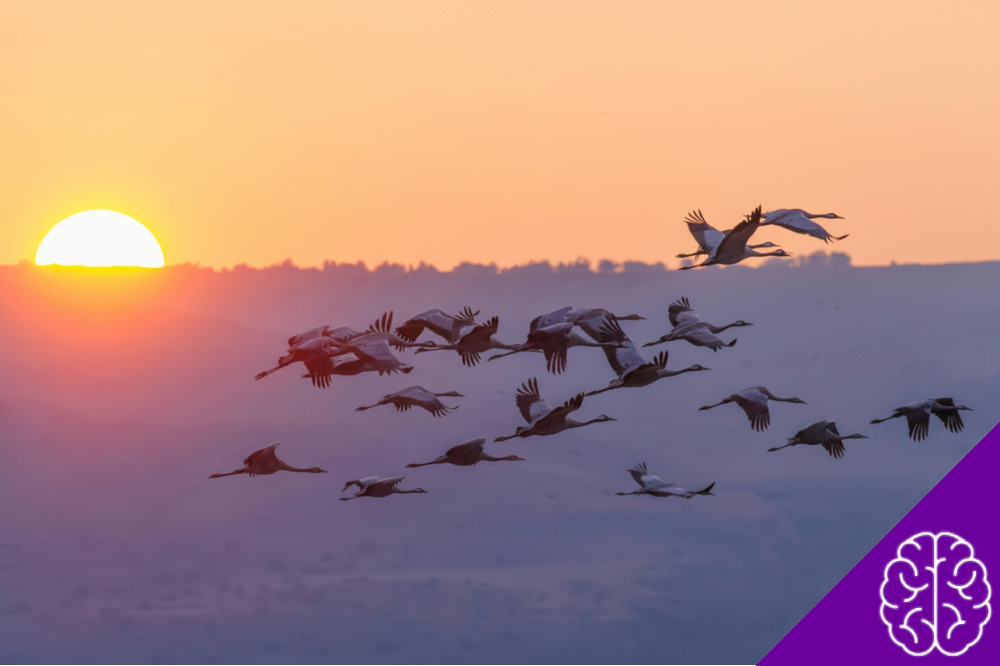
Every year, millions of birds travel thousands of miles between breeding grounds and winter habitats. Understanding animal migration helps explain how these birds cross oceans, deserts, and mountain ranges without losing their way.
Their journeys depend on specialized senses, environmental signals, and inherited behaviors. By studying how birds navigate, scientists can better understand their seasonal movements and the challenges they face as their habitats change.
Why Do Birds Migrate Across Continents?
Birds migrate primarily to find food, suitable breeding conditions, and habitats that support their survival throughout the year. Seasonal changes can make one region ideal for raising chicks during summer but difficult to inhabit during winter.
For example, many birds that breed in North America travel south when temperatures drop and insects become scarce. Others move between northern breeding grounds and tropical regions as food supplies change.
Migration offers several advantages:
- Access to food: Insect-eating birds can travel toward regions where insects remain abundant.
- Better breeding conditions: Longer summer days and plentiful food help many species raise their young.
- Seasonal survival: Moving to warmer regions can reduce exposure to harsh weather and food shortages.
- Reduced competition: Seasonal movement allows birds to use resources that become available in different habitats.
These seasonal changes explain why animal migration often follows predictable patterns. However, not every bird travels across continents. Some species migrate only short distances, while others remain in the same region throughout the year. Their movements depend on food availability, climate, and reproductive needs.
How Do Birds Use Earth’s Magnetic Field?
One of the most remarkable aspects of bird navigation is the ability of some species to detect Earth’s magnetic field. This natural field surrounds the planet and provides directional information that can help birds maintain their course.
Scientists believe certain birds use a magnetic compass to distinguish directions, including north and south. Research suggests that light-sensitive proteins in the eyes of some migratory birds may contribute to magnetic sensing, although scientists continue to investigate the exact mechanisms.
Magnetic navigation becomes particularly useful when birds cross landscapes with few visible landmarks. A bird flying over open water, for example, cannot rely on rivers, forests, or mountain ranges to guide every movement.
Why does this matter? The magnetic field can provide directional information even when birds cannot see familiar landscape features. However, it does not explain every aspect of navigation. Birds can combine magnetic information with other environmental cues, and different species may rely on these signals in different ways.
Can Birds Navigate by the Sun and Stars?
Celestial cues provide another source of directional information. Birds can use the Sun during the day and, in some species, patterns in the night sky to help maintain their direction.
Using the Sun as a Compass
The Sun changes position throughout the day, so birds need more than the ability to recognize where it appears in the sky. Many migratory birds use an internal biological clock to interpret the Sun’s position and estimate direction.
This timing mechanism helps them compensate for the Sun’s movement. Without it, the same solar position could indicate different directions at different times of day.
Following the Night Sky
Many birds migrate after sunset. Cooler conditions and reduced exposure to daytime predators can make nighttime travel advantageous for certain species.
Some night migrants use star patterns to establish their direction. Experiments in controlled environments have shown that particular species can orient themselves using celestial cues, especially the apparent rotation of stars around the celestial pole.
Cloud cover can make these signals harder to see, which is one reason birds benefit from having more than one way to navigate.
How Do Birds Recognize Landmarks?
Rivers, coastlines, mountain ranges, and valleys can help birds maintain a route or recognize familiar locations. These visual landmarks provide information that complements magnetic and celestial navigation.
For example, a bird traveling along a coastline can use the boundary between land and sea to maintain its general direction. Familiar wetlands and forests can also help migrants identify places where they can feed and rest.
Experience may improve this ability. Birds that have completed previous journeys can learn landscape features and remember important stopover sites. Younger birds, however, may initially depend more heavily on inherited directional behaviors.
Three types of information can guide a migrating bird:
- Geographic features: Coastlines, rivers, and mountain ranges provide visible reference points.
- Familiar locations: Previously visited habitats can help experienced birds recognize parts of a route.
- Environmental signals: Magnetic and celestial cues can supplement visual information when landmarks are unavailable.
This combination makes animal migration more flexible than a simple journey in one fixed direction.
How Do Young Birds Know Where to Go?
Bird navigation involves both inherited behavior and learning. Many young birds inherit seasonal patterns that influence when they begin migrating and the general direction in which they travel.
In some species, juveniles complete their first migration without following their parents. Their inherited orientation and timing can guide them toward seasonal destinations despite their lack of previous experience.
Other species benefit from social learning. Young birds may travel with adults, allowing them to learn routes, resting places, and local conditions along the way.
Scientists distinguish between three important navigational abilities:
- Compass orientation: Birds maintain a general direction while traveling toward a seasonal destination.
- Map-like navigation: Birds use environmental information to estimate their position relative to their destination.
- Route learning: Birds remember landmarks and pathways encountered during previous journeys.
These abilities can work together. A young bird might follow an inherited directional pattern during a long flight and rely on familiar landmarks as it approaches its destination.
What Happens When Birds Lose Their Way?
Even specialized navigators can become disoriented. Storms, strong winds, and rapidly changing weather can push birds away from their usual routes or force them to change their flight plans.
Artificial light creates another challenge, especially for birds migrating at night. Brightly illuminated buildings can attract or disorient some species, increasing collision risks. Windows and communication towers also contribute to bird deaths during migration.
Habitat loss presents a different problem. When wetlands disappear or stopover sites become unsuitable, birds may lose places where they normally rest and replenish their energy.
What Can People Do to Help?
- Reduce unnecessary lighting: Turn off outdoor lights during peak migration periods when possible.
- Make windows more visible: Use bird-safe window treatments to reduce collisions.
- Protect wetlands: Preserve feeding and resting habitats along migration routes.
- Support habitat conservation: Protect the natural areas birds depend on throughout the year.
Climate change adds further pressure by shifting seasonal temperatures, food availability, and breeding conditions. Some birds adjust their departure dates or routes, but changes in one region may not align with conditions elsewhere.
Protecting animal migration routes therefore requires more than preserving breeding grounds. Birds also need safe passage and suitable habitats throughout their journeys.
How Do Birds Complete Such Long Journeys?
Navigation is only one part of a successful migration. Birds also need sufficient energy, favorable weather, and opportunities to rest.
Before departure, many migratory species increase their food intake and build fat reserves. Fat provides a concentrated energy source for sustained flight. Some birds can travel for days without landing, while others divide their journeys into shorter stages.
Three factors help determine how successfully birds complete long journeys:
1. Energy Reserves
Stored fat provides fuel for sustained flight, particularly when birds must cross large bodies of water or other areas with few places to land.
2. Weather and Wind
Tailwinds can help birds travel farther with less effort, while headwinds may increase energy demands. Some birds adjust their altitude or departure time to find more favorable conditions.
3. Resting Habitats
Stopover sites allow birds to feed, recover, and prepare for the next stage. Losing an important wetland or coastal feeding area can disrupt an entire journey.
Successful animal migration depends on these factors working together. A bird may have excellent directional abilities but still struggle if it cannot find enough food or suitable resting places along its route.
Why Bird Migration Still Fascinates Scientists
Birds combine magnetic information, celestial cues, visual landmarks, inherited behavior, and learning to navigate across continents. No single mechanism explains every species or every journey.
Researchers continue to investigate how birds detect magnetic fields, combine navigational signals, and respond to environmental changes. Tracking technologies also help scientists identify migration routes, important stopover locations, and areas where birds face the greatest risks.
The study of animal migration reveals how closely survival depends on the relationship between an animal’s senses and its environment. By protecting essential habitats, reducing artificial light, and preserving safe stopover sites, people can help birds continue these extraordinary journeys for generations to come.