

Have you ever felt a sudden chill while listening to music, watching an emotional scene, or stepping outside on a cold morning? Your skin may develop tiny raised bumps, even when you are not actually shivering. This reaction raises an interesting question: why do we get goosebumps in situations that have little to do with temperature?
Goosebumps involve more than a reaction to cold. They connect the nervous system, tiny muscles beneath the skin, and an evolutionary feature inherited from our ancestors. Understanding these mechanisms explains why the same physical response can appear during fear, excitement, and emotional experiences.
1. What Happens Inside Your Body When You Get Goosebumps?
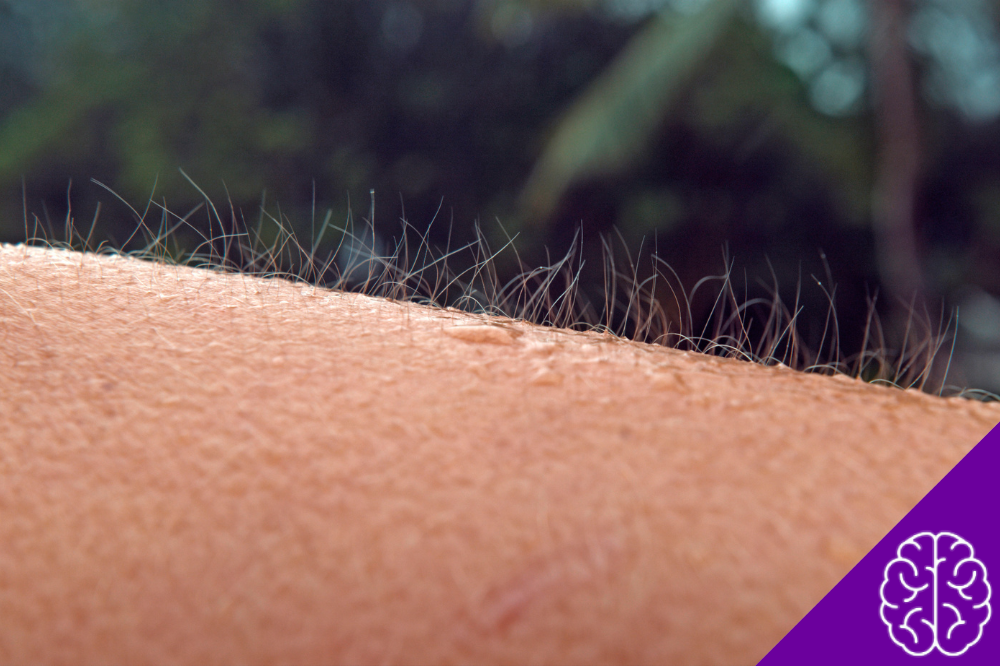
Goosebumps, also called piloerection, appear when tiny muscles attached to your hair follicles contract. These muscles, known as arrector pili, sit just beneath the skin.
When they tighten, they pull the hair follicles upright and create small bumps around them. The hairs may stand on end, producing the familiar appearance of goosebumps.
The autonomic nervous system controls this involuntary process. More specifically, the sympathetic nervous system activates the small muscles when your body responds to certain physical or emotional triggers.
The process happens in three steps:
- A trigger appears: Your body detects cold, fear, excitement, or another stimulus.
- Nerve signals activate the muscles: The sympathetic nervous system sends signals to the arrector pili muscles.
- The muscles contract: Hair rises, and tiny bumps appear on the skin.
You cannot normally control this reaction voluntarily. It happens automatically, just like many other responses managed by your nervous system.
2. Why Do We Get Goosebumps When We Feel Cold?
Cold temperatures are among the most familiar triggers. When your skin detects a drop in temperature, your nervous system activates several mechanisms that help regulate body heat.
Goosebumps are part of this response, but they have limited insulating value in modern humans.
Our ancestors had much thicker body hair. When their arrector pili muscles contracted, their fur stood upright and trapped a layer of air close to the skin. This insulation helped reduce heat loss.
Humans have much less body hair today, so the same mechanism offers little protection against cold. Other responses, such as shivering and changes in blood flow near the skin, play a more significant role in temperature regulation.
This evolutionary background helps answer why do we get goosebumps on chilly days: our bodies still retain a mechanism that once helped hairier ancestors conserve heat.
3. Why Do Fear and Excitement Cause Goosebumps?
You do not need cold weather to experience goosebumps. Fear, surprise, excitement, and anticipation can trigger the same physical response.
These emotions activate the sympathetic nervous system, which prepares your body to react to important or potentially threatening situations. This process is commonly associated with the fight-or-flight response.
You might notice goosebumps when:
- You hear an unexpected noise in a dark room.
- You watch a suspenseful scene in a movie.
- You experience an intense moment during a sports event.
- You feel nervous before an important presentation.
- Something surprises or overwhelms you.
Strong emotional stimulation can produce several physical changes at once, including a faster heartbeat, sweating, and piloerection.
This explains why do we get goosebumps during frightening or exciting moments, even when the surrounding temperature remains comfortable. The bumps do not necessarily signal danger; they are one possible expression of your body’s automatic response to emotion.
4. Why Does Music Sometimes Give You Goosebumps?
Some people experience sudden chills while listening to music, especially during emotionally powerful moments. Researchers often call this experience frisson, a sensation associated with intense pleasure or emotional excitement.
Several musical elements can contribute to this response:
- Unexpected changes: A sudden shift in rhythm, melody, or volume can create a strong reaction.
- Powerful vocals: A singer’s performance may make a particular moment feel especially meaningful.
- Musical build-ups: Gradually increasing intensity can create anticipation before a dramatic section.
- Personal memories: A familiar song may bring back emotionally significant experiences.
Music can activate brain systems involved in emotion, anticipation, and reward. These processes help explain why certain songs produce physical sensations alongside emotional reactions.
Not everyone experiences musical chills, and their intensity varies between individuals. Personal preferences, memories, and sensitivity to music can influence the experience.
The phenomenon also adds another dimension to why do we get goosebumps: the response can accompany pleasure and emotional connection, not just fear or cold.
5. How Did Goosebumps Help Our Ancestors?
Goosebumps make more sense when viewed through evolutionary biology. In many mammals, raised fur serves two important purposes: conserving heat and making the animal appear larger.
When an animal feels threatened, its fur may stand upright. This can create a more imposing appearance and potentially discourage an approaching rival or predator.
Cats provide a familiar example. A frightened cat may arch its back, raise its fur, and appear larger than usual.
Our distant ancestors likely benefited from a similar response. Their body hair could help them retain warmth in cold conditions and make their appearance more intimidating during threatening encounters.
Modern humans retain the underlying muscles and nervous system mechanisms, but we no longer have the thick body covering that made this response especially useful.
Goosebumps are therefore an example of an inherited biological feature that remains active even though its original advantages have become less significant in everyday human life.
6. Can You Get Goosebumps Without Feeling Cold or Emotional?
Yes. Goosebumps can appear without an obvious temperature change or emotional trigger. Sometimes, people notice them after physical stimulation or in response to sensations they cannot immediately identify.
They can also accompany fever and chills. During an illness, changes in body temperature regulation may produce sensations of cold and involuntary physical responses.
In most everyday situations, occasional goosebumps are normal and disappear when the triggering stimulus passes.
However, persistent or unexplained episodes accompanied by other symptoms deserve medical attention. If you experience frequent episodes alongside weakness, unusual sweating, significant pain, or other concerning changes, consult a healthcare professional.
When exploring why do we get goosebumps, remember that the response can have several triggers. Not every episode needs to involve cold weather or a strong emotion.
The Lasting Purpose Behind Goosebumps
Goosebumps reveal how closely the nervous system connects physical sensations and emotional experiences. A reaction that once helped furry ancestors conserve heat and appear larger still occurs in humans during cold weather, fear, excitement, and music.
The answer to why do we get goosebumps involves both evolution and the automatic mechanisms that operate beneath our skin. Although this feature offers limited practical protection today, it remains a fascinating reminder of our biological history.