

Some of the most fascinating historical objects were never found during planned archaeological excavations. Farmers digging fields, shepherds exploring caves and divers searching the seabed stumbled upon treasures that had remained hidden for centuries.
These unexpected discoveries revealed stories about ancient civilizations, forgotten technologies and everyday life in the distant past. Here are eight remarkable finds and the surprising circumstances that brought them to light.
1. The Terracotta Army: Farmers Digging a Well in China
In March 1974, farmers in China’s Shaanxi province were digging a well near Xi’an when they uncovered fragments of terracotta figures. They had no idea that their discovery would lead to one of the largest archaeological finds of the 20th century.
Further excavations revealed thousands of life-size clay soldiers, horses and chariots buried near the mausoleum of Qin Shi Huang, China’s first emperor. The army was created to protect the ruler in the afterlife.
Archaeologists have uncovered more than 8,000 soldiers, many with distinctive facial features, hairstyles and clothing. The figures offer a rare look at military organization, craftsmanship and imperial power during the Qin Dynasty.
What began as an attempt to find water uncovered an entire underground army.
2. The Dead Sea Scrolls: A Shepherd’s Unexpected Discovery
In 1947, Bedouin shepherds were looking after their animals near the Dead Sea when one of them explored a cave in the rocky hills. After throwing a stone inside and hearing pottery break, the shepherds investigated and found clay jars containing ancient manuscripts.
The documents became known as the Dead Sea Scrolls, a collection of religious writings, biblical texts and other manuscripts dating from roughly the third century BCE to the first century CE.
Researchers later discovered additional scrolls in nearby caves. Together, these documents provided valuable evidence about Jewish religious communities and the development of biblical texts.
The shepherds could not have imagined that their discovery would become one of the most important archaeological finds in the history of biblical studies.
3. The Antikythera Mechanism: An Ancient Computer Found Underwater
In 1900, Greek sponge divers took shelter from a storm near the island of Antikythera. While exploring the surrounding waters, they came across an ancient shipwreck filled with statues, pottery and other objects.
Among the recovered items was a corroded bronze object that initially looked like an unremarkable piece of metal. Researchers eventually identified it as the Antikythera Mechanism, a complex device made with an intricate system of gears.
Dating to around the second century BCE, the mechanism could calculate astronomical cycles, including the movements of the Sun and Moon. Its engineering was remarkably sophisticated for its time.
Often described as the world’s first known analog computer, it challenged assumptions about the technological abilities of ancient Greek engineers. Few historical objects have changed our understanding of ancient science quite as dramatically.
4. The Rosetta Stone: A Discovery During Military Construction
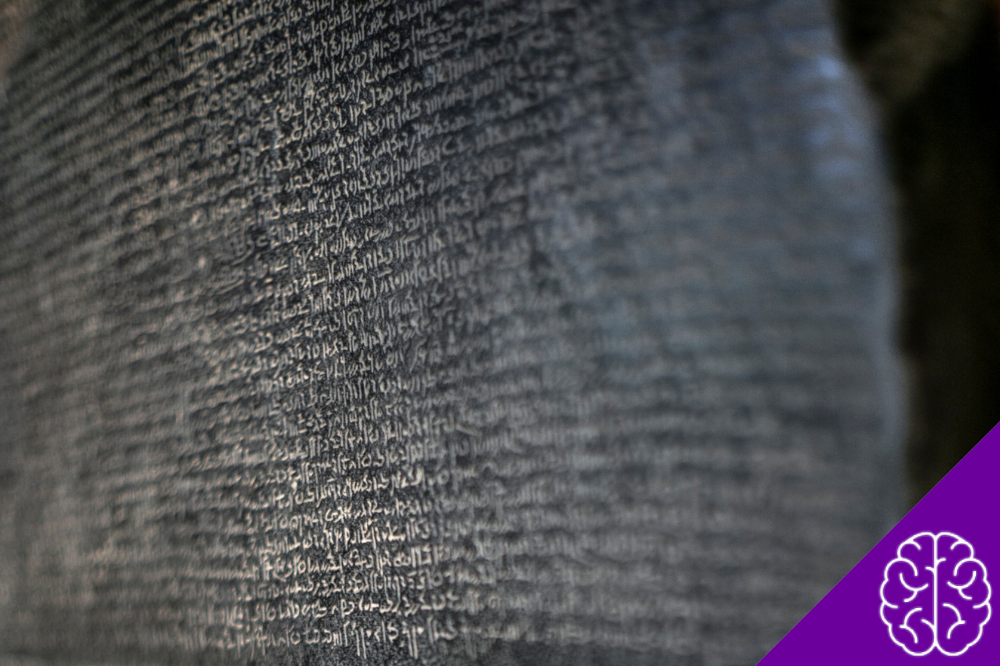
In 1799, French soldiers working on fortifications near the Egyptian town of Rosetta discovered a large stone slab covered in inscriptions. An engineer named Pierre-François Bouchard recognized its potential importance.
The stone contained the same decree written in three scripts: Ancient Greek, Demotic and Egyptian hieroglyphs. Because scholars could read Ancient Greek, the inscriptions provided an essential clue for understanding Egyptian hieroglyphs.
In 1822, French scholar Jean-François Champollion made a major breakthrough in deciphering the writing system. His work opened new possibilities for studying ancient Egyptian history, religion and literature.
Today, the Rosetta Stone is one of the most recognizable historical objects in the world. A discovery made during military construction helped researchers understand a writing system that had remained undeciphered for centuries.
5. The Venus de Milo: A Farmer Finds a Famous Greek Sculpture
In 1820, a Greek farmer named Yorgos Kentrotas was searching through ancient ruins on the island of Melos when he came across fragments of a marble statue. The pieces belonged to what would become known as the Venus de Milo.
The sculpture is generally believed to represent Aphrodite, the Greek goddess of love and beauty. Experts date it to the Hellenistic period, around 150–125 BCE.
Its missing arms have remained a source of fascination. Researchers still debate the statue’s original pose and what it might have held.
French officials eventually acquired the sculpture, and King Louis XVIII donated it to the Louvre in 1821. Today, it remains one of the museum’s most famous works.
A farmer searching among ancient ruins had unexpectedly uncovered a masterpiece of Greek sculpture.
6. The Staffordshire Hoard: A Metal Detector Reveals Anglo-Saxon Treasure
In July 2009, metal detectorist Terry Herbert was searching a field near Hammerwich, England, when his equipment detected buried metal objects. He soon uncovered gold pieces that belonged to an extraordinary Anglo-Saxon collection.
Archaeologists later recovered thousands of objects and fragments, mostly connected to military equipment. The Staffordshire Hoard dates to the seventh century and includes elaborate gold and silver work, sword fittings and garnet decorations.
The collection reveals the wealth, craftsmanship and artistic traditions of Anglo-Saxon society. Its purpose remains uncertain, as researchers have not established exactly why someone buried such valuable objects together.
The find also demonstrates how metal detecting can contribute to archaeology when people report discoveries and allow specialists to investigate the site properly.
7. The Hoxne Hoard: A Lost Hammer Leads to Roman Treasure
In November 1992, a farmer in Suffolk, England, asked metal detectorist Eric Lawes to help find a lost hammer. Instead of locating the tool, Lawes detected a large collection of buried metal objects.
The discovery became known as the Hoxne Hoard, one of the largest collections of late Roman treasure ever found in Britain.
The hoard contained more than 15,000 gold and silver coins, along with jewelry, tableware and other valuable items. Researchers believe someone buried the collection in the early fifth century, during the final years of Roman rule in Britain.
Lawes reported the find and left the remaining objects for professional excavation. This allowed archaeologists to examine how the items were arranged and preserve important information about the discovery.
The collection offers a glimpse into wealth, craftsmanship and material life in late Roman Britain.
8. Ötzi the Iceman: Hikers Find a Man Frozen in the Alps
On September 19, 1991, German hikers Erika and Helmut Simon were crossing the Ötztal Alps when they noticed a human body emerging from melting ice. At first, rescuers believed they had found the remains of a modern mountaineer.
Further examination revealed something extraordinary: the man had lived more than 5,300 years ago. Known as Ötzi the Iceman, he had remained naturally preserved in the glacier along with much of his clothing and equipment.
Researchers recovered a copper axe, a bow, arrows and several tools. These historical objects provided an unusually detailed picture of life during the Copper Age.
Scientific examinations also revealed information about Ötzi’s health, diet and final moments. Evidence showed that an arrow wound contributed to his death, making the discovery particularly valuable for understanding prehistoric life.
What These Accidental Discoveries Reveal About History
From underground armies to prehistoric remains, these stories show how unexpected finds can change what we know about the past. Some historical objects reveal forgotten technologies, while others preserve details about religion, warfare, art and daily life.
The circumstances behind these discoveries are just as remarkable as the treasures themselves. A search for a lost hammer, a walk through the mountains or an ordinary attempt to dig a well can sometimes uncover a piece of history that has remained hidden for thousands of years.