

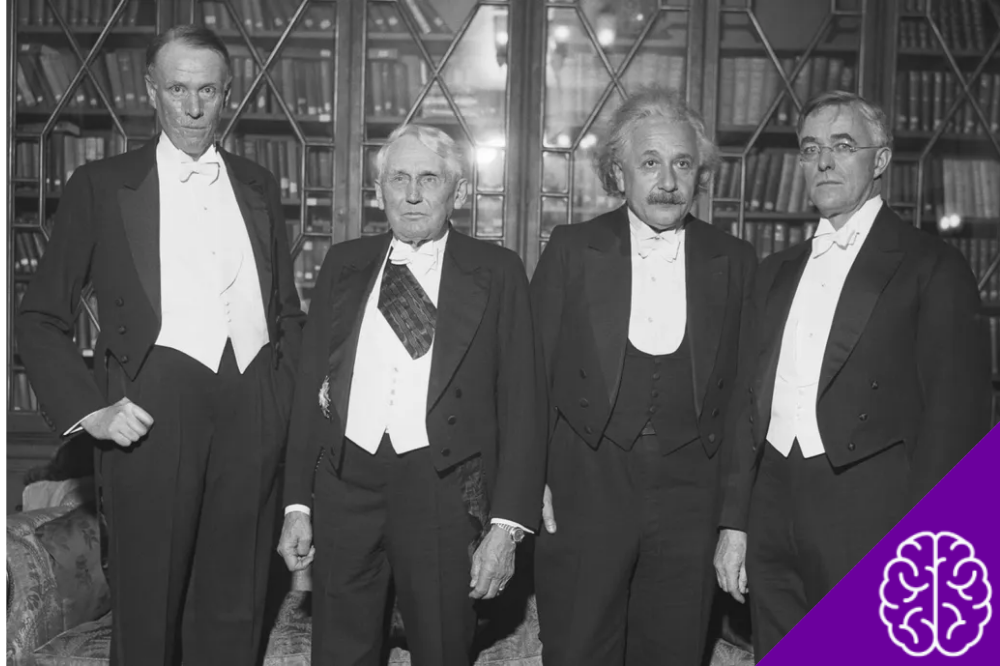
To win a Nobel Prizes is to reach the absolute pinnacle of professional achievement. It signifies that a person has conferred the “greatest benefit to humanity,” a standard set by the award’s founder, Alfred Nobel. For most brilliant minds, obtaining just one of these prestigious medallions is a lifelong dream that remains unfulfilled. The selection process is rigorous, the competition is fierce, and the work required often spans decades of tireless research.
However, history has recorded a very small, exclusive group of individuals who defied these odds not once, but twice. While institutions can and have won multiple times, individual repeat winners are a statistical anomaly. Out of the hundreds of laureates named since the prize’s inception, only five people have ever walked up to the podium to accept a second Nobel Prize.
These double laureates represent the elite of the scientific world. Their work ranges from the discovery of new elements to the invention of the transistor, and even tireless activism for world peace. Understanding who they are and what they discovered offers a fascinating glimpse into the history of modern science and humanitarian efforts.
The Origins of the Prize
Before diving into the specific winners, it is worth understanding the weight of the award itself. The Nobel Prize was established by Alfred Nobel, a Swedish businessman and chemist best known for inventing dynamite. In his will, he dedicated the majority of his fortune to funding these annual awards.
The winners are often referred to as “laureates.” This title is a direct historical nod to ancient Greece, where victors of athletic competitions and poetic contests were crowned with a wreath of laurel leaves.
Today, the prize honors up to three individuals per category, ensuring that collaborative efforts are recognized. Yet, even with the ability to share the prize, winning it twice remains an extraordinary feat.
The 5 Scientists Who Made History
As of 2022, the club of double laureates has five members. This list grew recently with the inclusion of American chemist Barry Sharpless. Below are the geniuses who managed to impress the Nobel Committee on two separate occasions.
1. Marie Curie (Physics and Chemistry)
Marie Curie is perhaps the most famous name on this list, and for good reason. She was a pioneer in every sense of the word.
A scientist of French and Polish descent, Curie holds the distinction of being the first woman ever to win a Nobel Prize. Furthermore, she remains the only woman in history to have won the award twice.
Her first win came in 1903 in the category of Physics. She shared this honor with her husband, Pierre Curie, and physicist Henri Becquerel. The trio was recognized for their groundbreaking work in the discovery of radioactivity.
Eight years later, in 1911, Curie stood alone to receive the Nobel Prize in Chemistry. This second award recognized her continued research into radioactivity and her discovery of the elements polonium and radium. Her dual victories in two different scientific fields highlight the incredible breadth of her intellect.
2. Linus Pauling (Chemistry and Peace)
Linus Pauling is a unique figure among double laureates because his awards span the gap between hard science and humanitarian activism.
His first award was the Nobel Prize in Chemistry in 1954. The committee recognized him for his work in establishing the fundamental principles of protein architecture. His scientific contributions fundamentally changed how we understand molecular structures.
However, Pauling was also a staunch activist. During the height of the Cold War, he and his wife campaigned aggressively against nuclear testing. Pauling didn’t just argue from a moral standpoint; he used science to back his claims.
Through three separate studies, he demonstrated the severe dangers of radioactivity and established a clear link between cancer and radiation exposure. His efforts helped force nuclear testing underground and earned him the Nobel Peace Prize in 1962.
3. John Bardeen (Physics and Physics)
John Bardeen is the only person to have won the Nobel Prize in Physics twice. His work laid the foundation for the modern digital age.
He received his first prize in 1956, alongside colleagues Walter Brattain and William Shockley, for the invention of the transistor. It is difficult to overstate the importance of this invention.
The transistor’s first major application was amplifying sound in hearing aids used by telephone operators. By 1952, the technology had advanced enough to allow users to make long-distance calls without the assistance of an operator.
Bardeen’s second prize came in 1972. This time, he was honored for his contribution to the development of the theory of low-temperature superconductivity.
4. Frederick Sanger (Chemistry and Chemistry)
British biochemist Frederick Sanger was a master of structure. He received his first Nobel Prize in Chemistry in 1958 for his work on the structure of proteins.
Specifically, he focused on insulin, the hormone responsible for regulating blood sugar levels. His research provided crucial insights into how this vital hormone functions.
Sanger wasn’t finished there. In 1980, he was awarded a second Nobel Prize in Chemistry, which he shared with Paul Berg and Walter Gilbert. This prize recognized his invention of a new method for DNA sequencing.
This technique, known as the “Sanger method,” was adopted by laboratories worldwide. It was instrumental in the Human Genome Project, the massive international research effort to map human DNA that began in 1992 and was completed in 2001.
5. Barry Sharpless (Chemistry and Chemistry)
The most recent addition to this elite group is American chemist Barry Sharpless. In October 2022, Sharpless was awarded the Nobel Prize in Chemistry, marking his second win in the category.
He shares this distinction with two other scientists. His entry into this group confirms that groundbreaking scientific discovery is still very much alive and that the pursuit of knowledge continues to yield historic results.
Institutions That Have Won Multiple Times
While individual double winners are rare, organizations dedicated to peace and humanitarian aid have also been recognized multiple times by the Nobel Committee. Their recurring wins highlight the ongoing need for organized relief in a turbulent world.
The International Committee of the Red Cross (ICRC)
The ICRC is the most honored organization in the history of the Nobel Prize. This humanitarian body has received the Nobel Peace Prize three separate times:
- 1917: Honored during the First World War.
- 1944: Honored during the Second World War.
- 1963: Honored on the organization’s 100th anniversary.
Their consistent recognition serves as a testament to their unwavering commitment to helping victims of conflict over the course of a violent century.
Office of the United Nations High Commissioner for Refugees (UNHCR)
The UNHCR is another organization that has received the Peace Prize more than once. Their first win came in 1954, recognizing their innovative work supporting refugees in Europe following the devastation of World War II.
As geopolitical landscapes shifted, so did the focus of the UNHCR. In the 1960s, the decolonization of Africa resulted in the continent’s first major refugee crises.
The organization expanded its reach, aiding displaced persons in Africa, Asia, and Latin America over the following decades. In 1981, the UNHCR was awarded the Nobel Peace Prize a second time for its continued global assistance to refugees.
Frequently Asked Questions About the Nobel Prize
Who founded the Nobel Prize?
The prize was established by Alfred Nobel, the Swedish inventor of dynamite. In his will, he left the bulk of his immense fortune to fund annual prizes for those who confer the greatest benefit to humanity.
Why are winners called “Laureates”?
The term comes from Greek mythology and history. In ancient Greece, the laurel wreath was a symbol of victory and honor, given to winners of athletic and artistic competitions.
Can more than one person win a single prize?
Yes. A single Nobel Prize can be shared by up to three individuals. This is common in scientific fields where research is often a collaborative effort, such as John Bardeen’s shared win for the transistor or Marie Curie’s shared win for radioactivity.
Is it possible to win prizes in different categories?
Yes. Marie Curie won in both Physics and Chemistry, and Linus Pauling won in Chemistry and Peace. However, others like John Bardeen and Frederick Sanger won two prizes in the same category (Physics and Chemistry, respectively).
The Legacy of Excellence!
The stories of these double laureates serve as powerful reminders of human potential. From Marie Curie’s radioactive test tubes to Linus Pauling’s peace marches, these individuals didn’t just participate in their fields—they revolutionized them.
Their achievements also highlight the connection between different disciplines. We see how chemistry can inform peace activism and how physics can revolutionize telecommunications.
As science advances, we may see new names added to this short list, but the legacy of these original five will undoubtedly remain a benchmark for greatness for centuries to come!