
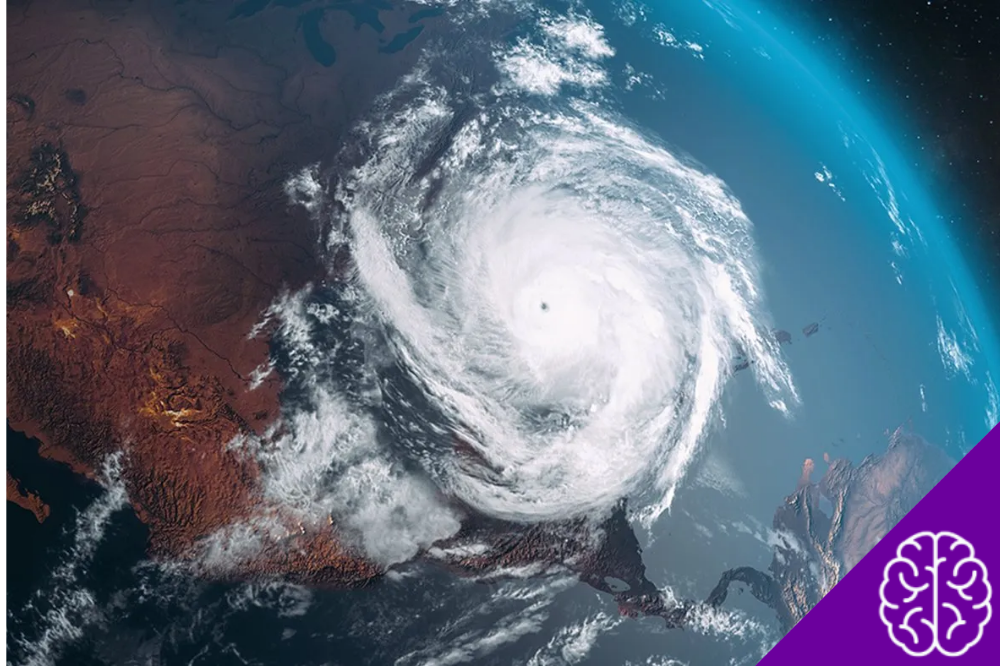
We all remember the names. Ian, Katrina, Sandy, Wilma. These aren’t just names on a list; they represent moments in history that left indelible marks on the American coastlines. When we hear them, we don’t think of a person—we think of wind, rain, and the immense power of nature.
But have you ever stopped to wonder why a terrifying natural disaster is named “Wilma”?
It seems like a strange juxtaposition. We give human identities to destructive weather events. While it might seem arbitrary, the system behind naming hurricanes and typhoons is actually quite rigid, rooted in history, and designed with one specific goal in mind: clear communication.
When meteorologists and government agencies are tracking a storm, clarity is a matter of life and death. Often, multiple storm systems form in close proximity to one another. Without unique identifiers, sending out warnings, coordinating rescue efforts, and broadcasting risk predictions to the general population would be a logistical nightmare.
Understanding how these names are chosen reveals a fascinating history of meteorology, shifting cultural norms, and international cooperation.
The History of Storm Naming
The organized lists we see today didn’t always exist. For centuries, the naming convention was dictated by religious calendars rather than scientific committees.
The “Saint of the Day” Tradition
Long before satellite imagery and computer modeling, hurricanes were named after the saint of the day on which the storm struck a specific area. This tradition grounded the event in a specific time and place.
A prime example occurred in 1825. On July 26, a massive hurricane struck Puerto Rico. Because it fell on the feast day of Saint Anne, the storm was recorded in history books as the Santa Ana hurricane. This method was effective for local record-keeping, but it lacked a global standard.
The Move to Human Names
As time went on, the system evolved—albeit chaotically. For a period, storms were named randomly. Later, they were simply organized alphabetically.
These early attempts didn’t follow a specific pattern regarding gender or origin; they were simply a way to distinguish one event from another.
A significant shift occurred in the mid-19th century, driven by an Australian meteorologist named Clement L. Wragge.
He was the first to introduce a system of using proper names for storms. specifically choosing biblical women’s names. This set a precedent that would influence meteorological standards for decades to come.
The Gender Debate
The United States officially adopted the practice of using women’s names for storms in 1953. For over two decades, every hurricane that hit the U.S. coast bore a female name.
However, this practice eventually changed to reflect a more balanced approach. In 1979, male names were reintroduced, but initially only for storms occurring in the eastern North Pacific.
Global unification on this issue arrived just a year later. In 1980, the World Meteorological Organization (WMO) and the United States Weather Service reached a consensus: they would alternate between male and female names. This decision established the equitable system we still use today.
How Names Are Chosen Today
Contrary to popular belief, meteorologists don’t sit around a table at the start of hurricane season and brainstorm new names. The names of hurricanes and typhoons are decided long before the first clouds even gather.
The 21-Letter System
There are pre-established lists of names for tropical storms and hurricanes for each year. As the season progresses, the storms are named alphabetically, running from A to W.
However, you will never see a Hurricane Quinton or a Tropical Storm Zach. The lists exclude five specific letters:
- Q
- U
- X
- Y
- Z
These letters are removed simply because there aren’t enough common names starting with them to sustain the lists across different countries and languages. This leaves exactly 21 names available for each season. The list alternates strictly between male and female names as it progresses down the alphabet.
Recycling the Lists
Sustainability is key to the system. The lists of names are not one-time use; they are on a six-year rotation. This means the list of names used in 2016 was exactly the same list used in 2022. Unless a specific name is retired, you can expect to see it again half a decade later.
What Happens When We Run Out of Names?
The 21-name system works because, statistically, we rarely see more than 20 named storms in a single year. But nature doesn’t always follow the averages.
There have been notable exceptions where the alphabet simply wasn’t enough. In 2005, the season was so active that it exhausted the standard list, ending with Hurricane Wilma. To handle the subsequent storms that year, meteorologists turned to the Greek alphabet.
This rare phenomenon occurred again recently in 2020. After Hurricane Wilfred used up the last standard name, new storms were dubbed Alpha and Beta.
Retiring a Name
While lists are generally recycled every six years, you will never see another Hurricane Katrina or Hurricane Sandy.
When a storm is particularly devastating, causing significant loss of life or catastrophic damage, using that name again would be insensitive to the victims and confusing for historical records. In these cases, the name is officially retired from the list.
The body responsible for this decision is the World Meteorological Organization (WMO). They review the impact of storms and announce retired names at the start of the following year.
Once a name is removed, it is replaced with a new name starting with the same letter to maintain the alphabetic integrity of the list.
Hurricane, Typhoon, or Cyclone?
While we often use different words to describe them, hurricanes, typhoons, and severe tropical cyclones are actually the exact same meteorological phenomenon. The only difference is where they happen on the map.
The terminology is strictly geographical:
- Hurricane: Used for storms forming in the North Atlantic, the Caribbean, and the northeastern part of the Pacific. The word itself has roots in the Caribbean god of evil, “Hurrican.”
- Typhoon: Used for storms occurring in the Northwest Pacific.
- Severe Tropical Cyclone: Used for storms occurring in the Southwest Pacific.
Regardless of the name, the mechanics of the storm—and the potential for destruction—remain the same.
Frequently Asked Questions
Who is in charge of the names?
The World Meteorological Organization (WMO) is the entity responsible for maintaining the lists and making decisions regarding the retirement of specific names.
Why are there no names starting with Z?
The letters Q, U, X, Y, and Z are excluded from the Atlantic hurricane lists because there are not enough common names beginning with these letters to create viable, rotating lists.
Can a list change?
Yes. If a storm is deemed too destructive, like Katrina (2005) or Sandy (2012), the name is retired and replaced with a new name of the same gender and starting letter.
The Importance of the Name!
From the “Saint of the Day” to the modern alternating alphabetic lists, the history of naming storms is a history of our attempt to organize chaos. While the naming conventions might seem trivial, they are a critical tool for communication.
Whether it is a hurricane in the Atlantic or a typhoon in the Pacific, knowing the name helps communities prepare, react, and eventually recover. The system ensures that when the warnings start, we know exactly what is coming!