

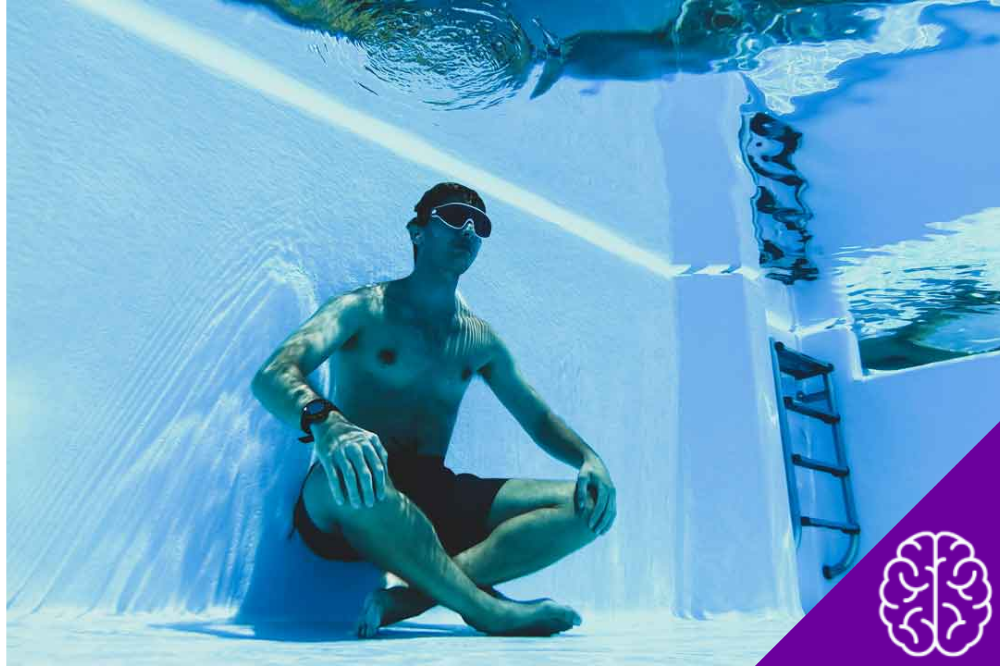
29 Minutes Underwater: Most of us have tried it. You’re in a swimming pool, you take a deep gulp of air, submerge your head, and count the seconds. For the average person, the lungs start burning around the 30-second mark. By 90 seconds, the urge to breathe becomes unbearable.
But on June 14, 2025, Croatian diver Vitomir Maričić defied these biological limits. With his face submerged in a pool and his body supported by floats, Maričić held his breath for a staggering 29 minutes and 3 seconds.
This feat didn’t just break a personal best; it shattered the world record. It forces us to reconsider what the human body is capable of when pushed to the absolute extreme.
How is it physically possible for a human being to go half an hour without taking a breath? It isn’t magic, and it isn’t a mutation. It is a combination of intense physiological training, mental conditioning, and a crucial technique involving pure oxygen. Check out more in this Insight Factory article.
The Record-Breaking Dive (29 Minutes Underwater)
The event took place in June 2025, where Maričić aimed to surpass the previous record held by fellow Croatian diver Budimir Šobat, who had clocked in at 24 minutes and 37 seconds.
Maričić didn’t just inch past the record; he smashed it by over four minutes. During the attempt, his face was immersed in the water while his body remained stationary, supported by pool noodles to conserve every ounce of energy.
This discipline is known as static apnea, where the diver floats face down to maximize breath-holding time without the oxygen-burning exertion of swimming.
While the physical feat is impressive on its own, the event had a higher purpose. Maričić undertook this challenge as part of a fundraising campaign for Sea Shepherds, an international non-profit organization dedicated to marine wildlife conservation.
The Secret Weapon: Pure Oxygen
If you tried to hold your breath for 29 minutes right now, you would pass out long before you reached the halfway mark.
The atmosphere we breathe normally contains only about 21% oxygen. That simply isn’t enough fuel to keep the brain and organs functioning for half an hour without replenishment.
To bridge the gap between human biology and this superhuman time, Maričić utilized a specific technique allowed in this category of record-breaking: oxygen pre-breathing.
For 10 minutes prior to his immersion, Maričić inhaled 100% pure oxygen. This process does two things:
- Hemoglobin Saturation: It ensures the red blood cells (hemoglobin) are fully loaded with oxygen.
- Plasma Saturation: This is the game-changer. By breathing pure oxygen, the gas dissolves directly into the blood plasma—the liquid part of the blood. This significantly increases the total volume of oxygen available for the body to consume while the diver is underwater.
This technique is distinct from “natural” static apnea, where divers breathe normal atmospheric air. However, even with pure oxygen, the body eventually runs out, and the physiological urge to breathe becomes a violent force to be reckoned with.
Fighting the Physiology: The CO2 Reflex
Holding your breath isn’t just about running out of oxygen. In fact, the desperate gasping sensation you feel when holding your breath isn’t caused by a lack of oxygen—it’s caused by a buildup of carbon dioxide (CO2).
As your cells produce energy, they generate CO2 as a waste product. Under normal circumstances, you exhale this gas.
When you hold your breath, that CO2 has nowhere to go. It accumulates in the bloodstream, turning the blood slightly acidic. This acidity triggers the brain’s alarm system, screaming at the body to exhale the poison and inhale fresh air.
The Diaphragm Spasms
When CO2 levels hit a critical point, the body stops asking nicely. The diaphragm—the large muscle below the lungs responsible for breathing—begins to contract involuntarily. It tries to force a breath.
For Maričić, these spasms began around the 10-minute mark.
Imagine your body convulsing, trying to force you to breathe, and you have to mentally override that survival instinct for another 19 minutes. This is where the mental game becomes just as important as the physical one.
Training for the Impossible
Reaching a 29-minute breath-hold requires years of specialized preparation. You cannot wake up one morning and decide to do this. The training regimen for elite breath-hold divers focuses on three pillars:
1. Cardiovascular Adaptation
Record-breakers like Maričić undergo rigorous cardiovascular training, including running, swimming, and cycling.
This doesn’t just improve general fitness; it trains the lungs and diaphragm to work more efficiently. Better cardio means a lower resting heart rate, which burns less oxygen during the attempt.
2. Physical Flexibility
Divers train to increase the flexibility of their rib cage and diaphragm. By doing so, they can expand their lungs further than the average person, physically creating more space for air storage.
3. Muscle Control
Advanced divers practice a technique called “packing.” By controlling the muscles in the throat and mouth, they can pump additional air into their lungs even after taking a full breath. They also learn to control the diaphragm to withstand the violent contractions caused by CO2 buildup.
The Mental Game: Meditating Underwater
Perhaps the most difficult aspect of static apnea is the psychological battle. When your diaphragm is spasming and your brain is signaling a red alert, panic is the enemy. Panic raises your heart rate, which burns precious oxygen and shortens your time.
To survive 29 minutes, Maričić had to enter a meditative state. Elite divers learn to dissociate from the pain and the panic signals their body is sending. They must remain perfectly calm while their body is effectively screaming for air.
This mental fortitude allows them to ride out the spasms without giving in to the urge to surface.
Why You Should Never Try This at Home
Reading about these records often inspires curiosity, but it is vital to understand the extreme risks involved.
The most significant danger is a shallow water blackout. As oxygen levels drop, the brain can shut down without warning to preserve energy. If this happens underwater and you are alone, you will inhale water and drown instantly.
Maričić, like all professional divers, performs these stunts under strict medical supervision and with safety divers right beside him. He has spent years conditioning his body to tolerate high levels of CO2 and low levels of oxygen.
Attempting to hyperventilate or hold your breath for extended periods without professional training can lead to fainting, brain damage, or death.
Pushing the Boundaries!
Vitomir Maričić’s record of 29 minutes and 3 seconds stands as a testament to human adaptability.
Through understanding physiology, leveraging science (like pure oxygen), and mastering the mind, humans continue to push past barriers that once seemed biologically impossible.
While we may not all be able—or willing—to hold our breath for half an hour, feats like this remind us that our limits are often further away than we think.
If you are inspired by the ocean and the limits of human potential, you can learn more about the cause behind Maričić’s dive by visiting the Sea Shepherds website!