

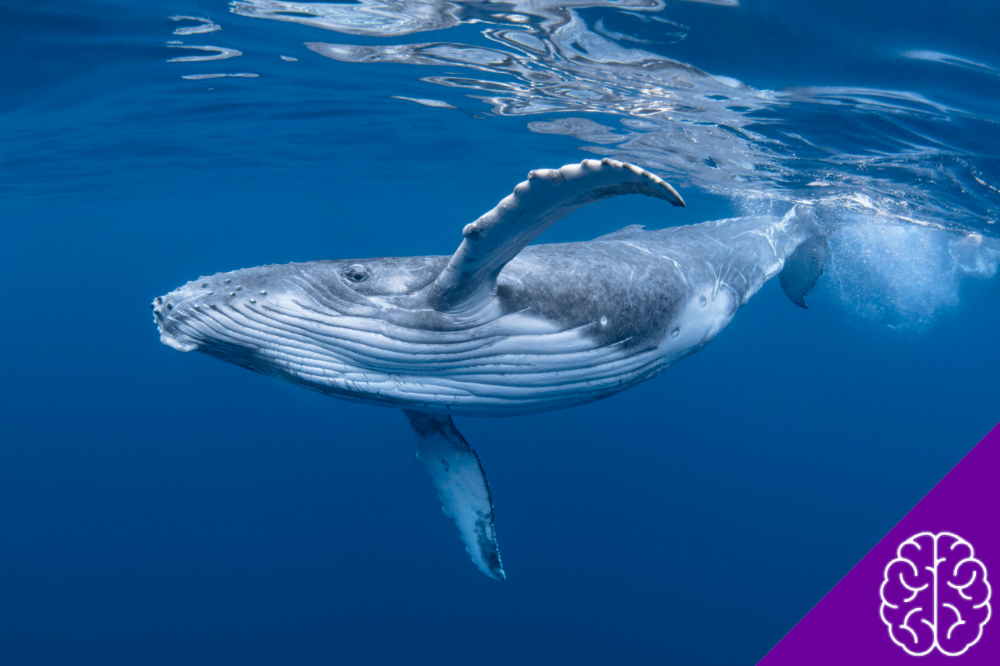
When we think of giant creatures, our minds often go straight to the age of dinosaurs. We imagine massive long-necked giants shaking the ground with every step. However, what if I told you that you are living at the same time as the true record-breaker? The largest animal in Earth’s history is not a creature of the distant past; it is a magnificent giant that still swims in our oceans today.
The blue whale (Balaenoptera musculus) holds a title that no dinosaur, prehistoric sea monster, or ancient land mammal has been able to officially take away. In this guide, we will explore the mind-blowing scale of this animal, how it compares to history’s other giants, and why nature hasn’t produced anything larger.
The Incredible Scale of the Largest Animal
To understand why the blue whale is the largest animal to ever exist, we have to look at the numbers. They are so large that they almost sound like science fiction.
Length and Weight
An adult blue whale can grow up to 100 feet (30 meters) long. To put that in perspective, that is the length of three school buses parked bumper-to-bumper. But it’s the weight that truly sets them apart. A large blue whale can weigh as much as 190 tonnes (over 400,000 pounds).
To match the weight of just one blue whale, you would need:
- 30 African Elephants
- Over 2,500 average-sized humans
- About 15 school buses
A Heart the Size of a Car
Every part of the largest animal is scaled up to a massive degree. Its heart is roughly the size of a bumper car or a small golf cart. When a blue whale dives, its heart rate can drop to just two beats per minute, yet it is powerful enough to pump thousands of liters of blood through a body as long as a basketball court. Its tongue alone can weigh as much as a whole elephant, and its mouth is large enough to hold 100 people (though it couldn’t swallow them, as we’ll see later).
Blue Whale vs. The Dinosaurs: Who Wins?
It is a common misconception that dinosaurs were the biggest creatures to ever live. While dinosaurs like the Argentinosaurus or the Patagotitan were undeniably massive, they were limited by the laws of gravity on land.
Gravity and Weight
Land animals have to support their own weight against the pull of gravity. If a dinosaur grew as heavy as a blue whale, its bones would likely shatter under the pressure, or its muscles would be unable to move its massive frame.
The blue whale, however, lives in the water. The buoyancy of the ocean supports its weight, allowing it to grow to sizes that would be impossible on land. This is why the largest animal in history is a marine mammal rather than a land dweller. While some dinosaurs were longer (due to their very thin necks and tails), the blue whale is far “larger” in terms of total mass and volume.
Recent Challenges: The Perucetus Colossus
In recent years (specifically around 2023 and updated in 2026), scientists discovered fossils of an ancient whale called Perucetus colossus. For a while, some researchers thought this might be the new largest animal in history.
The Weigh-In
Initial estimates suggested Perucetus could have weighed up to 340 tonnes, which would have easily beaten the blue whale. However, as more scientists studied the bone density and the likely body shape of this ancient whale, the estimates were revised. Most experts now agree that while Perucetus was incredibly heavy and had extremely dense bones to stay underwater, the blue whale still holds the title for the overall heaviest animal when considering its full length and muscle mass.
Fun Fact: A baby blue whale is already one of the largest creatures on the planet the moment it is born. It weighs about 2,500 kg and drinks over 400 liters of its mother’s milk every single day, gaining nearly 4 kg of weight every hour.
How the Largest Animal Eats the Smallest Prey
One of the great ironies of nature is that the largest animal doesn’t eat large prey. You might expect a giant of this size to hunt giant squid or large fish, but the blue whale survives almost entirely on krill—tiny, shrimp-like creatures that are barely two inches long.
The Power of Filter Feeding
The blue whale is a “baleen whale.” Instead of teeth, it has fringed plates made of keratin (the same stuff as your fingernails). To eat, the whale takes a massive gulp of water, expanding its pleated throat to hold a volume of water equal to its own body weight. It then uses its giant tongue to push the water out through the baleen, trapping up to 4 tons of krill inside every day.
This efficient way of eating is the only reason such a large animal can exist. By eating at the bottom of the food chain, the blue whale gets the most energy possible with the least amount of effort.
Why Aren’t There Animals Even Larger?
Heat and Energy
Even the largest animal has limits. A creature larger than a blue whale would likely struggle to find enough food to power its massive body. It would also have trouble cooling down; large bodies hold onto heat very well, and a whale much larger might actually overheat just from the energy of its own metabolism.
The Evolution of Giants
Whales only reached these massive sizes relatively recently in Earth’s history—about 4.5 million years ago. This happened because of changes in ocean currents that created massive “buffets” of krill in certain areas. The blue whale evolved to take advantage of these feasts, traveling thousands of miles between feeding grounds.
Protecting the Giant of the Oceans
For a long time, the largest animal was hunted to the brink of extinction. During the whaling era of the early 20th century, hundreds of thousands of blue whales were killed for their oil. At one point, there were fewer than 2,000 left in the entire world.
A Story of Recovery
Today, thanks to international protections, the blue whale population is slowly growing back. They are still considered endangered, and they face new threats like ship strikes and climate change affecting their food source. However, the fact that we can still see these giants today is a victory for conservation.
Viewing the Giants for Free
You don’t have to be a millionaire to appreciate the blue whale. Many coastal areas offer whale-watching tours, but you can also find incredible, high-definition footage and live tracking maps on free websites from organizations like NOAA or the Monterey Bay Aquarium. Seeing the largest animal on your screen is a reminder of how lucky we are to share the planet with such a marvel.
The Lasting Legacy of the Largest Animal
The blue whale is a living testament to the wonders of evolution. It has surpassed the greatest of the dinosaurs and survived the era of industrial whaling. It remains a symbol of the ocean’s mystery and power.
When we look at the blue whale, we aren’t just looking at a big fish (which it isn’t—it’s a mammal like us!); we are looking at the peak of what is biologically possible on our planet. It is the undisputed king of weight and scale, a gentle giant that survives on tiny prey, and a reminder that the most amazing “monsters” in history are the ones we can still protect today.