
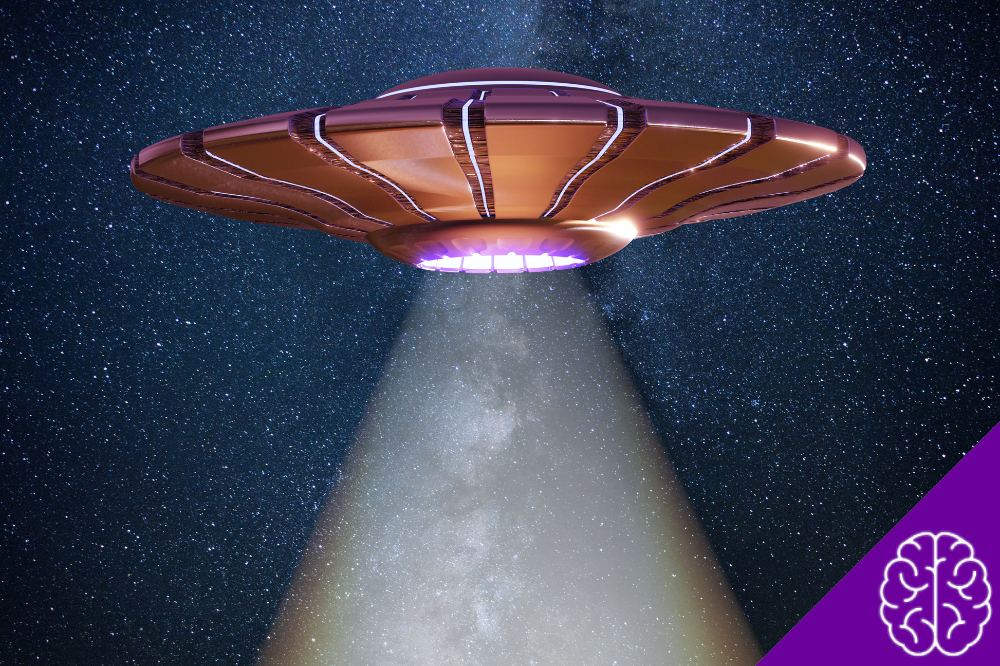
The universe is unimaginably vast, with billions of stars and even more potentially habitable planets. Logically, the cosmos should be teeming with life. Yet, we are met with a “Great Silence”—a paradox famously known as the Fermi Paradox. If the statistical probability of extraterrestrial intelligence is so high, where is everyone?
One of the most chilling solutions to this mystery is the great filter theory. Proposed by economist Robin Hanson in the late 1990s, the theory suggests that there is a colossal barrier in the developmental path of life that is nearly impossible to overcome. This “filter” acts as a cosmic bottleneck, snapping out civilizations before they can reach the stars.
The Nine Steps of Development
To understand the great filter theory, we must look at the hypothetical ladder of evolution. According to the theory, any life-bearing planet must climb nine specific steps to become an interstellar civilization. These steps represent the transition from dead matter to a space-faring empire:
- The right star system (including habitable zones).
- Reproductive molecules (like RNA or DNA).
- Simple (prokaryotic) single-cell life.
- Complex (eukaryotic) single-cell life.
- Sexual reproduction.
- Multi-cell life.
- Tool-using animals with big brains.
- The stage we are at now: advanced technology.
- Colonization of the galaxy.
The Great Filter suggests that at least one of these steps is a “wall.” If a step is so difficult that it almost never happens, that is the Filter. It is the reason why the night sky remains empty despite billions of years of opportunity.
Is the Filter Behind Us or Ahead of Us?
This is the most critical question for humanity’s survival. The answer determines whether we are the “lucky ones” or a doomed species waiting for the inevitable. The implications change how we view every scientific discovery in our solar system.
Scenario A: The Filter is Behind Us
In this optimistic view, we have already passed the impossible barrier. Perhaps the transition from simple to complex life is the Filter. If this is true, the universe may be filled with “pond scum” but very little intelligent life. We might be the first to make it through the needle’s eye, making us truly unique in the galaxy.
Scenario B: The Filter is Ahead of Us
This is the “No-Nonsense” nightmare. If the Filter is ahead of us, it means that almost every civilization that reaches our level of technology eventually destroys itself. Whether through nuclear war, runaway AI, or climate collapse, the Filter waits for us in the future. In this case, the silence is because everyone else hit the wall and vanished.
Why Finding Life on Mars Would Be Bad News
It sounds counterintuitive. We’ve spent billions at NASA and through private ventures like SpaceX searching for signs of life on Mars or Europa. However, proponents of the great filter theory argue that finding life nearby would be a terrifying omen for our future.
If we find complex fossils on Mars, it proves that Step 4 (complex life) isn’t the Filter because it happened twice in one solar system. The more life we find in the universe, the more likely it is that the Filter is still ahead of us.
As philosopher Nick Bostrom famously said, “The silence of the night sky is golden.” Finding an empty universe suggests we might be the exception. Finding a crowded one suggests we are just another bird flying toward a glass window we cannot see.
Modern Existential Risks as the Filter
In our current era, we are witnessing potential candidates for the Filter. Technology moves faster than our biological evolution can keep up with. We have the power of gods but the impulses of primates.
- Artificial Intelligence: A super-intelligence that doesn’t share human values could accidentally end biological life while pursuing a different goal.
- Nanotechnology: The “Gray Goo” scenario, where self-replicating machines consume all organic matter on Earth to build more of themselves.
- Biotechnology: The ability for a single individual to engineer a pandemic more lethal than anything found in nature.
From a structural perspective, these risks are why “Existential Risk” research is a growing field. We are currently in a “technological adolescence,” where our survival depends on our ability to outgrow our destructive tendencies.
The Kardashev Scale and Energy Consumption
To beat the Filter, a civilization must likely move up the Kardashev Scale. This measures advancement based on the amount of energy a species can harness. We are currently a “Type 0” civilization, still dependent on fossil fuels.
To pass the Filter, we may need to become a Type I (using all the energy of our planet) or a Type II (harvesting the entire energy of our sun via a Dyson Sphere). Achieving this requires a level of global cooperation that humanity has yet to demonstrate. It is the ultimate test of a species: can they stop fighting over dirt long enough to colonize the sun?
The Ethical and Philosophical Impact
If the great filter theory is true, it changes how we view our place in the cosmos. Every conflict, every economic crisis, and every environmental challenge becomes a test. We are not just fighting for a country; we are fighting to prove that intelligent life can survive its own tools.
This theory forces us to reconsider our priorities. If the Filter is ahead, then our current squabbles over borders and short-term quarterly profits are distractions from the ultimate goal: becoming a multi-planetary species. The clock is ticking, and the Filter does not care about our politics.
The Role of Information Gain in Space Exploration
As we continue to monitor signals from space via SETI, every year of silence adds to the “Information Gain” regarding our position in the universe. If we find no signals after scanning millions of stars, the statistical weight of the Filter grows.
This isn’t just a curiosity; it informs how we allocate resources. If the Filter is a “bottleneck” of resource depletion, then our focus should be on sustainable energy. If the Filter is a “bottleneck” of war, our focus should be on diplomacy. The Great Filter is a mirror—it shows us our most dangerous flaws by suggesting they have killed everyone else.
The Final Test of Humanity
The Great Filter is a sobering reminder that survival is not guaranteed. It is a cosmic “sink or swim” challenge. Whether we are the pioneers of a new galactic era or just another failed experiment depends on our ability to navigate the next century.
We must protect the “flame of consciousness.” If we look up at the stars and see nothing, we shouldn’t feel lonely. We should feel a sense of immense responsibility. We might be the only ones who have made it this far.
Reaching Beyond the Filter
Passing the Filter isn’t just a scientific goal; it’s the ultimate “no-nonsense” survival strategy for the human race. We must diversify our presence in the solar system. By establishing bases on the Moon or Mars, we reduce the chance of a single-point failure on Earth acting as our Filter.
The silence of the universe is a call to action. We are currently the protagonists of a story that has ended in tragedy for countless others. It is time we start acting like a species that intends to win. If the Great Filter is a wall, we need to be the first ones to build a ladder.