
Some animals that can regrow body parts have abilities that seem almost impossible from a human perspective. They can replace lost limbs, rebuild tails, restore damaged organs and, in some cases, reconstruct much larger portions of their bodies.
These abilities are not all the same. Some species produce a replacement that closely resembles the original, while others rebuild a structure with important differences.
What is regeneration?
Regeneration is the process of replacing damaged or missing cells, tissues, organs or body parts.
It goes beyond ordinary wound healing. Instead of simply closing an injury with new tissue or scar tissue, regeneration can restore a missing structure and some or all of its original function.
The process varies widely between species. Stem cells, mature cells, chemical signals and structures called blastemas can all play roles in different animals.
1. Axolotl
The axolotl is one of the most remarkable examples of regeneration among vertebrates.
This Mexican salamander can regenerate:
- limbs;
- tail tissue;
- parts of the spinal cord;
- parts of the heart;
- other damaged tissues.
After losing a limb, cells near the injury contribute to a blastema, a group of cells that helps produce the replacement structure.
The new limb develops multiple tissues, including muscle, bone, skin and nerves. Researchers study axolotls because they can coordinate this growth in an adult body instead of relying only on the repair and scarring processes seen in humans.
The National Institute of General Medical Sciences notes that axolotls can regenerate almost any body part, including limbs, heart, brain, lungs, spinal cord and tail.
2. Planarian
Planarians are tiny freshwater flatworms with an extraordinary regenerative ability.
A sufficiently large piece of some planarian species can develop into a complete animal. The fragment can rebuild missing structures such as the head, tail and internal organs.
Their secret: neoblasts
Planarians contain large populations of stem cells called neoblasts.
These cells can produce many different types of tissue. After an injury, they divide and generate cells that replace what the animal has lost.
The process also depends on signals that tell the new tissue where it belongs. That allows a fragment from one part of the body to develop the correct structures rather than growing randomly.
Planarians therefore provide one of the clearest examples of how stem cells and positional signals can work together during regeneration.
3. Hydra
Hydra is a small freshwater animal related to jellyfish and sea anemones.
Its regenerative ability is so strong that, under experimental conditions, a hydra cut in half can produce two complete animals.
Hydra maintains stem cells throughout its body. These cells continuously produce new cells, helping the animal replace old or damaged tissue.
Its regeneration also involves reorganizing existing cells. The animal can use information within the remaining tissue to establish the body pattern again.
That makes hydra particularly useful for studying how a relatively simple animal maintains its shape and restores it after injury.
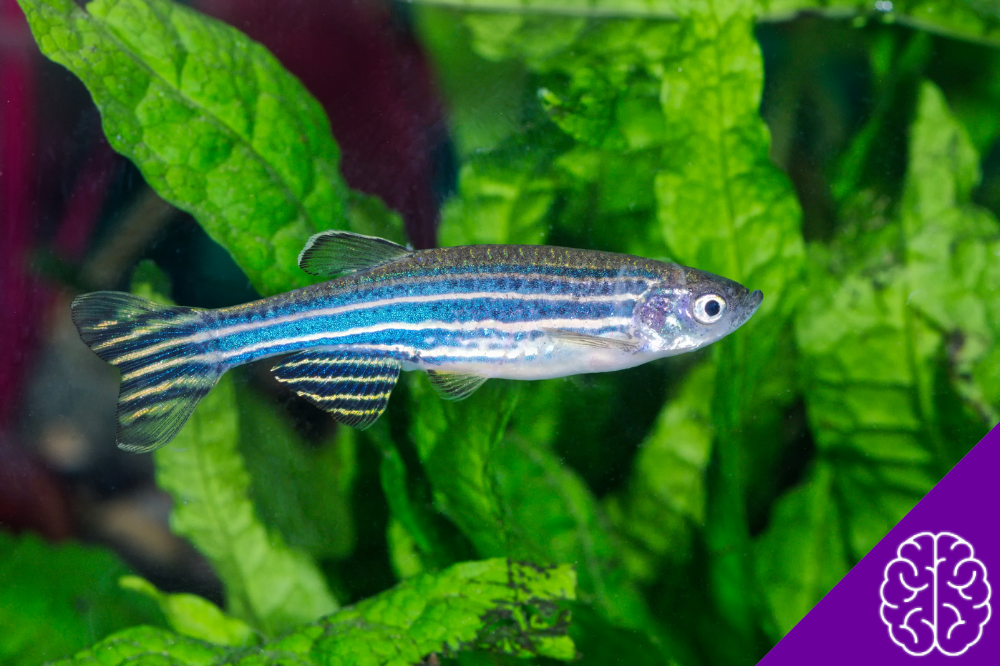
4. Zebrafish
Zebrafish may look ordinary compared with an axolotl, but they can regenerate several important structures.
They can regrow their fins and regenerate functional heart muscle after major heart injuries. Research has also documented regenerative responses in tissues such as the retina and spinal cord.
How does fin regeneration work?
After part of a fin is removed, the wound develops a specialized layer of tissue and a blastema forms underneath it.
Cells in the blastema multiply and contribute to the replacement fin. Chemical signals help control how much tissue grows and where different structures develop.
The result can be remarkably close to the original fin, making zebrafish a major model for studying regeneration in vertebrates.
Their heart is also unusual. After severe injury, zebrafish can replace lost cardiac muscle rather than relying mainly on permanent scar tissue.
5. Lizards
Many lizard species can regenerate a lost tail.
Tail loss often happens through autotomy, a defensive behavior in which the lizard sheds part of its tail to escape a predator.
The replacement is functional, but it is not an exact copy.
The original tail contains vertebrae, while the regenerated tail generally develops a cartilage-based internal support structure. It also differs from the original in the arrangement of several tissues.
Even so, lizards can rebuild multiple components, including cartilage, muscle, nerves and blood vessels.
This makes lizard tail regeneration particularly interesting because lizards are vertebrates, yet they retain a regenerative ability that mammals largely lack.
How do animals regrow lost body parts?
There is no single mechanism that explains regeneration across all species.
Different animals rely on different combinations of:
- stem cells;
- cells that change their behavior after injury;
- blastemas;
- chemical signals;
- tissue-specific growth programs.
The missing structure also matters.
An axolotl must recreate the complex organization of a limb. A planarian can rebuild an entire body from a fragment. A lizard mainly replaces its tail, while a zebrafish can restore a fin and repair parts of its heart.
The differences show that regeneration evolved through several biological strategies rather than one universal system.
Do regenerated body parts look exactly the same?
Not always. Some animals can recreate a structure with remarkable similarity to the original. Others produce a functional replacement with a different internal design.
The lizard’s tail illustrates this clearly. It regains a tail, but the regenerated structure does not reproduce the original vertebrae.
This distinction is important because regeneration does not necessarily mean making an identical copy. The result can instead be a new structure that performs many of the same functions.
Can humans regenerate body parts?
Humans have regenerative abilities, but they are much more limited.
Our bodies regularly replace certain cells and repair damaged tissues. Skin and blood cells, for example, undergo continuous renewal. Small children can also regenerate some tissue at the tips of their fingers under certain circumstances.
However, humans cannot naturally regrow an entire lost arm or leg.
This difference is one reason scientists study animals that can regrow body parts. Their biology may reveal why some organisms can rebuild complex structures while human injuries more often lead to repair and scarring.
Why are scientists interested in animal regeneration?
The goal is not simply to make humans grow replacement limbs.
Researchers are trying to understand how cells respond immediately after an injury, how they know which tissues to produce and how those tissues organize themselves into a working structure.
Those questions could help improve regenerative medicine.
Research on axolotls, planarians, hydra, zebrafish and lizards gives scientists several different systems to study. Each one highlights a different part of the regeneration process, from powerful stem cells to blastema formation and tissue patterning.
What makes these animals unusual?
The five species show how broad regeneration can be.
Axolotls can rebuild limbs and repair several organs.
Planarians can reconstruct large portions of their bodies from small fragments.
Hydra can reorganize pieces of their bodies into complete animals.
Zebrafish can regenerate fins and functional heart tissue.
Lizards can replace lost tails with a new, functional structure.
Together, these animals that can regrow body parts show that regeneration is not one single ability. Different species have evolved different ways to replace what they lose, and scientists are still working to understand the limits of each system.
- You May Also Like: 6 Unusual Animals That Look Almost Unreal