

Some animals that shouldn’t exist look so strange that they seem more like fictional creatures than real products of evolution. With bizarre appearances, extraordinary abilities, and survival strategies unlike anything most people have seen, they often leave scientists and animal lovers equally fascinated.
The truth is that these species are not exceptions to evolution. Instead, they are examples of how natural selection can produce remarkably unexpected solutions to environmental challenges over millions of years.
Why do some animals seem impossible?
Evolution does not follow a blueprint.
Species develop traits that improve survival within specific environments, even when those traits appear unusual from a human perspective. The result can be creatures that look inefficient, impractical, or even impossible, despite being perfectly adapted to their habitats.
Some evolved to survive extreme climates. Others developed unique ways to hunt, reproduce, or avoid predators.
1. Platypus
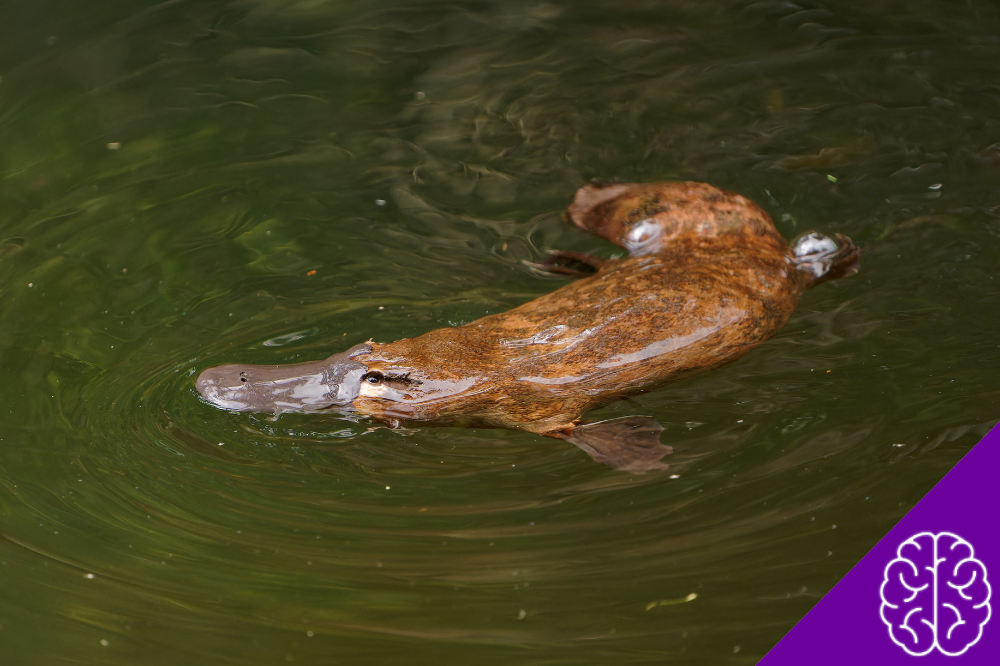
The platypus is one of the most famous examples of evolutionary oddity.
At first glance, it appears to be a combination of several unrelated animals:
- A duck-like bill;
- A beaver-like tail;
- Otter-like feet;
- Egg-laying reproduction.
Adding to the mystery, males possess venomous spurs capable of delivering a painful sting.
When the first specimens reached Europe, some naturalists believed they were looking at a taxidermy prank.
What makes it so unusual?
Most mammals give birth to live young.
The platypus belongs to a tiny group known as monotremes, mammals that lay eggs while also producing milk for their offspring.
This combination of traits is extremely rare among living animals.
2. Narwhal
The narwhal has inspired myths for centuries.
Its iconic tusk can reach several meters in length and is actually a highly specialized tooth that grows through the upper lip.
Scientists now believe the tusk serves sensory functions, helping the animal detect changes in its environment.
What makes it so unusual?
Few animals possess such a dramatic anatomical feature.
Because of its appearance, narwhal tusks were once sold in Europe as “unicorn horns” and considered magical objects.
3. Axolotl
The axolotl is often called the world’s most remarkable salamander.
Unlike most amphibians, it remains in a juvenile form throughout its entire life while retaining the ability to reproduce.
Its most extraordinary feature, however, is regeneration.
What makes it so unusual?
An axolotl can regenerate:
- Limbs;
- Parts of the spinal cord;
- Sections of the heart;
- Portions of the brain.
Researchers continue studying this species because of its potential relevance to regenerative medicine.
4. Tardigrade
Tardigrades are microscopic creatures, but their survival abilities are legendary.
Despite measuring less than a millimeter, they can withstand conditions that would kill nearly every other animal.
What makes it so unusual?
Experiments have shown that tardigrades can survive:
- Extreme heat;
- Extreme cold;
- Intense radiation;
- Severe dehydration;
- Exposure to the vacuum of space.
When conditions become hostile, they enter a dormant state that allows them to endure for extended periods.
5. Mantis Shrimp
The mantis shrimp possesses one of the most powerful strikes in the animal kingdom.
Its specialized appendages accelerate with astonishing speed, creating shock waves underwater.
What makes it so unusual?
The strike is so powerful that it can:
- Break shells;
- Crack aquarium glass;
- Generate brief flashes of light through a process called cavitation.
Its vision is equally impressive, allowing it to detect forms of light beyond human perception.
Among the animals that shouldn’t exist, few display such a combination of physical power and sensory sophistication.
6. Goblin Shark
The goblin shark looks like a creature from a deep-sea horror film.
Living hundreds of meters below the ocean surface, it rarely encounters humans.
Its appearance is dominated by an elongated snout and highly flexible jaws.
What makes it so unusual?
Unlike most sharks, the goblin shark can rapidly project its jaws forward to capture prey.
This adaptation helps compensate for the limited visibility found in deep-ocean environments.
7. Saiga Antelope
The saiga antelope is instantly recognizable because of its oversized, flexible nose.
Although it may appear comical, this unusual feature serves an important purpose.
What makes it so unusual?
The enlarged nasal structure helps:
- Filter dust during migration;
- Warm cold air during winter;
- Improve breathing efficiency in harsh climates.
What seems strange at first glance is actually a highly specialized survival tool.
What do these animals reveal about evolution?
One reason these creatures attract so much attention is that they challenge common assumptions about how animals should look and behave.
Many people imagine evolution as a process that gradually produces simpler or more elegant designs. In reality, evolution rewards effectiveness rather than appearance.
As long as a trait improves survival or reproduction, it can persist for generations regardless of how unusual it seems.
Why these species are evolutionary success stories
Calling these creatures impossible can be misleading.
Every species on this list survived because its unusual traits offered advantages in a particular environment. Their existence demonstrates the incredible flexibility of evolutionary processes and the diversity of life on Earth.
The most fascinating animals that shouldn’t exist are not biological mistakes. They are reminders that evolution often produces solutions far stranger—and far more creative—than anything humans could design themselves.
- You May Also Like: 6 Unusual Animals That Look Almost Unreal