

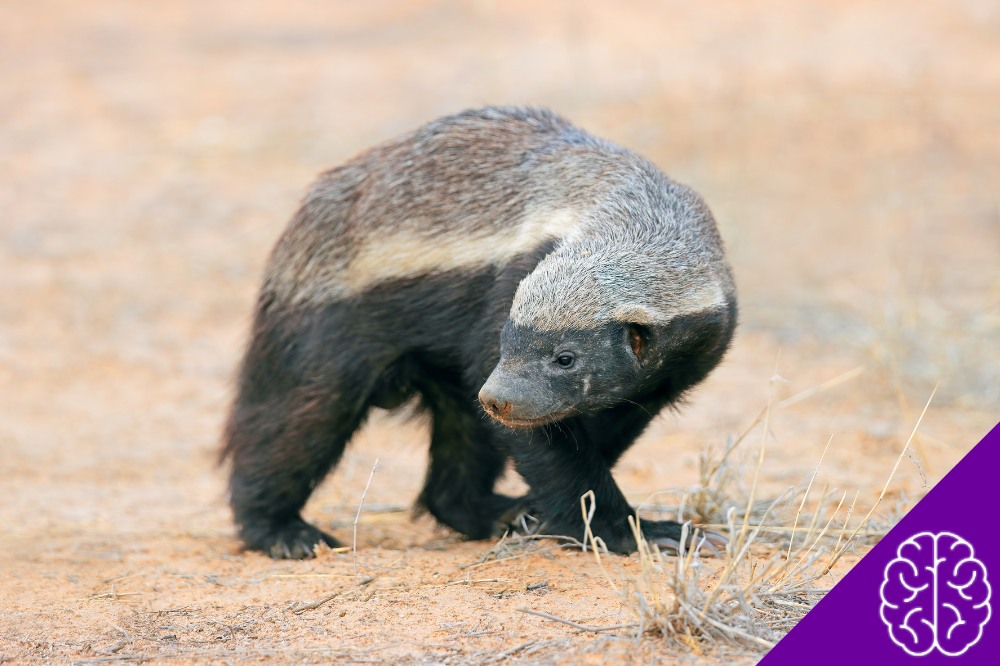
The honey badger has a reputation that seems almost unbelievable for an animal of its size. Found across parts of Africa and Asia, this stocky mammal can face venomous snakes, raid beehives, and defend itself against much larger predators. Its confidence is impressive, but its survival depends on more than an aggressive attitude.
Several physical and behavioral adaptations help explain why this animal is such a difficult opponent. From its unusually loose skin to its resistance to certain snake venoms, each characteristic gives the honey badger an advantage when food becomes dangerous or a predator gets too close.
How Strong Is a Honey Badger?
The honey badger is a relatively small carnivore, but its compact body hides considerable strength. Adults typically measure around 23 to 27 inches in body length, with a muscular build, short legs, broad head, and powerful shoulders. Males are generally larger than females.
Its front feet are especially important. Long, strong claws help the animal dig through soil, open burrows, break into beehives, and catch prey. They can also cause serious injuries when the honey badger needs to defend itself at close range.
Its jaws and teeth add to its physical abilities. A strong bite helps it subdue prey and resist attackers, while its muscular neck allows it to hold and manipulate food. These features make the animal a capable hunter despite its relatively small size.
Why Is a Honey Badger’s Skin So Difficult to Bite?
One of the animal’s most remarkable defenses is its skin. It is unusually thick, tough, and loose, creating a protective layer that makes it difficult for predators to get a firm grip.
Some sources estimate that the skin can reach around 6 to 8 millimeters in thickness in certain areas. Its flexibility is just as important: rather than fitting tightly against the body, it allows the animal to move inside its own skin.
This can make a major difference during an attack. If a predator grabs the honey badger by the neck or back, the animal may twist around and bite the attacker while the predator still holds its loose skin. The result is a difficult target that can fight back even when caught.
The skin also offers some protection against bee stings and the teeth of other animals. It does not prevent every injury, but it reduces the effectiveness of attacks that would seriously harm less-protected mammals.
Can a Honey Badger Survive a Venomous Snakebite?
The honey badger hunts venomous snakes, including species that pose a serious threat to humans. Snakes can make up a substantial part of its diet, and the animal has adaptations that help it tolerate certain venoms.
Research has identified changes in the animal’s nervous system that reduce the effects of some neurotoxins. These toxins normally interfere with signals between nerves and muscles. In honey badgers, changes in the receptors targeted by certain venoms can make it harder for those toxins to produce their usual effects.
However, this does not make the animal completely immune to snake venom. A bite can still cause serious harm, and some encounters may leave a honey badger temporarily incapacitated. Its resistance simply gives it a better chance of surviving exposure to certain types of venom.
This adaptation is particularly useful for a predator that regularly hunts snakes. It can include dangerous prey in its diet while accepting a level of risk that many other mammals cannot tolerate.
What Does a Honey Badger Do When a Predator Attacks?
The honey badger does not rely on physical strength alone when facing danger. It often uses warning displays to discourage potential attackers before physical contact becomes necessary.
When threatened, it may:
- Raise the hair on its body and lift its tail.
- Produce loud rattling or growling sounds.
- Release a strong odor from glands near the base of its tail.
These signals make the animal appear more intimidating and warn an approaching predator that an attack could be costly.
If the threat continues, the honey badger may charge or bite. Its flexible skin makes it harder to restrain, while its claws and powerful jaws give it a way to fight back at close range.
The foul-smelling secretion provides another form of defense. Rather than relying on a precise spray like a skunk, the animal releases an unpleasant odor that may discourage an attacker from staying nearby.
Which Animals Can Defeat a Honey Badger?
Despite its reputation, the honey badger is not unbeatable. Large predators such as lions, leopards, and spotted hyenas can kill one, especially if they catch it by surprise or target a young, old, or weakened individual.
Size and strength still matter in the wild. A much larger predator has a considerable advantage, and a successful attack can overwhelm the honey badger’s protective skin and defensive behavior.
Its best strategy is often to make the encounter too difficult or risky for a predator to continue. A threatening display, an unpleasant odor, and the possibility of a painful bite may convince an attacker to look for easier prey.
This explains why the honey badger has such a formidable reputation without being invincible. It does not need to defeat every predator in a direct fight. Avoiding an attack or convincing an opponent to retreat can be enough to survive.
Does a Honey Badger Really Eat Honey?
Honey is part of the animal’s diet, but the name can be misleading. Honey badgers are particularly interested in the bee larvae found inside beehives, which provide a nutrient-rich food source. They may also consume honey while raiding a hive.
Their diet is much broader, though. These opportunistic feeders eat:
- Rodents, birds, and eggs.
- Reptiles, amphibians, and insects.
- Scorpions and other small animals.
- Fruit, roots, and other plant material when available.
Their strong claws and digging ability help them find food underground, while their willingness to tackle dangerous prey gives them access to meals that many animals avoid. The honey badger can adapt its feeding habits to the resources available in its environment.
This dietary flexibility helps the species survive across a wide range of habitats. It does not depend on a single food source and can take advantage of different opportunities throughout the year.
What Makes the Honey Badger Such a Remarkable Survivor?
The honey badger’s reputation comes from a combination of traits rather than one extraordinary ability. Its thick, flexible skin makes it difficult to restrain, its claws and jaws help it fight back, and its resistance to certain snake venoms allows it to hunt dangerous prey.
Still, it cannot escape every attack or survive every encounter. Its success comes from using these adaptations together: it can find food in challenging conditions, discourage potential threats, and defend itself when necessary. That combination of physical protection, hunting ability, and defensive behavior makes the honey badger one of the most formidable small carnivores in the wild.
- Read more: 6 Unusual Animals That Look Almost Unreal