

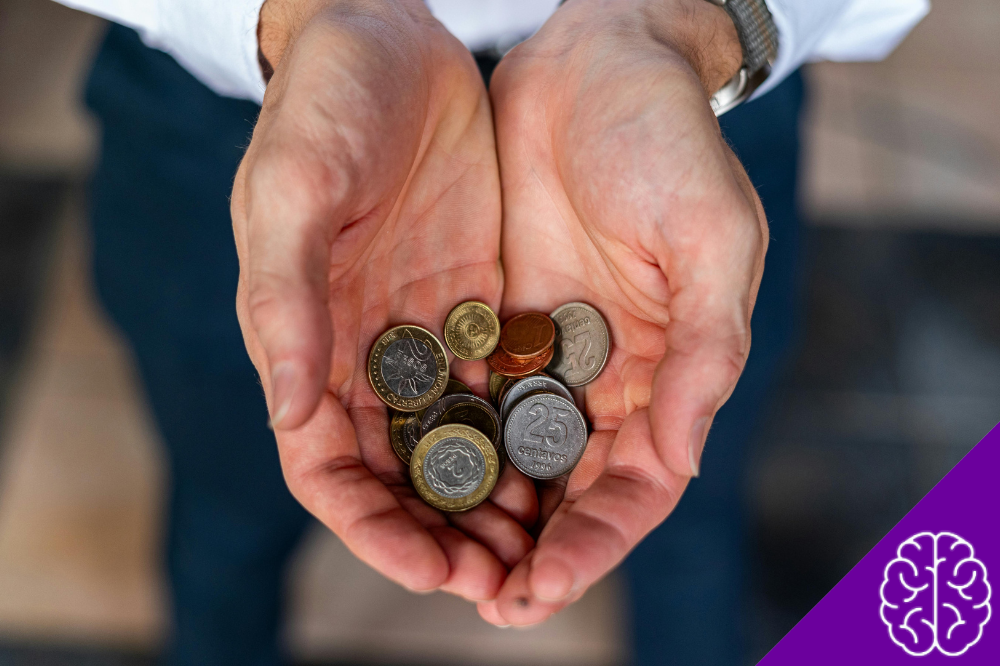
Modern societies take paper bills and digital bank accounts for granted, but economic trade looked entirely different in the ancient world. Before central banks established standardized coins, early civilizations had to improvise with whatever resources they found available.
This quest for a medium of exchange led to some highly unconventional choices throughout history. When tracking bizarre things humans used for currency, one discovers that utility, rarity, and sheer absurdity often defined what held value in the global marketplace.
1. Blocks of Edible Salt
In the ancient Mediterranean and across the Roman Empire, salt held a status equivalent to physical gold. Because early societies lacked refrigeration, preserving meat and food supplies required vast quantities of this mineral. This high utility quickly transformed salt from a simple kitchen ingredient into a powerful economic asset.
Roman soldiers frequently received a portion of their wages in salt, a practice that birthed the modern word “salary.” In various parts of East Africa and Europe, merchants carried standardized blocks of salt to trade for textiles, livestock, and land. A merchant could literally eat their profits if an economic crisis arose.
- Salt preserved food, making it an essential survival asset.
- Roman authorities used it to pay military wages directly.
- Sub-Saharan trade routes relied heavily on salt-block transactions.
- The physical weight of the mineral regulated its circulating value.
2. Giant Rai Stones
The inhabitants of the Micronesian island of Yap took the concept of large-denomination currency to a physical extreme. Instead of carrying small tokens, these islanders used massive, circular limestone discs known as Rai stones. Some of these carved stones measured up to twelve feet in diameter and weighed several tons.
Because moving a multi-ton limestone disc presented extreme physical danger, the islanders developed a unique accounting system. Physical possession of the stone rarely changed during a transaction. Instead, the community simply agreed that ownership of a specific stone, resting on a specific hillside, had transferred to a new person.
This reliance on public ledger agreements mirrors modern decentralized banking systems. Even if a Rai stone accidentally sank to the bottom of the ocean during transit, the community still recognized its value. The islanders agreed that the asset remained valid, allowing the owner to continue trading with it.
3. Highly Coveted Cowrie Shells
For centuries, the shells of the cowrie sea snail served as the most widely distributed currency in human history. From the coastal regions of Africa to the internal markets of China and India, these small, durable items facilitated the exchange of goods long before the invention of metal coins.
The success of the cowrie shell lay in its distinct physical characteristics. The shells are lightweight, easy to count, and virtually impossible to counterfeit by hand. Because the sea snails only thrived in the warm waters of the Indian Ocean, their scarcity in inland territories guaranteed their purchasing power.
- Chinese dynasties integrated cowrie shapes into their earliest written characters.
- African kingdoms used the shells to establish vast international trade networks.
- The durability of the shell prevented decay during long-distance transit.
- European merchants eventually disrupted local economies by importing bulk shipments.
4. Solid Bricks of Tea
Throughout Central Asia, Mongolia, and parts of Siberia, compressed bricks of tea functioned as a primary form of currency for generations. Nomadic cultures and settled traders preferred tea bricks over metal coins due to their practical value in harsh climates.
To create these currency blocks, producers pressed dried tea leaves into dense, rigid bricks using wooden molds. The face of the brick often bore a stamp from the manufacturing press, verifying its origin and quality grade. Traders could use the bricks to pay taxes, purchase horses, or settle nomadic tribal debts.
- Traders divided the bricks into smaller segments for low-value transactions.
- The physical asset doubled as a vital source of nutrition and medicine.
- High-quality bricks retained value better than unstable regional fiat currencies.
- Nomads preferred tea over coins because they could brew it during winter.
5. Tulips and the First Commodity Bubble
During the golden age of commerce in the Netherlands, a single botanical item briefly became the most valuable asset in Western Europe. The introduction of the tulip led to an intense economic craze where the value of rare flower bulbs skyrocketed to astronomical levels.
At the peak of this speculative frenzy, a single tulip bulb of a rare variety could purchase an entire estate, including a mansion, land, and livestock. Traders stopped looking at the flowers as garden decorations and began treating the contracts for future bulbs as pure financial currency.
The market eventually realized that trading entire life savings for a perishable root lacked long-term viability. The speculative bubble burst rapidly, leaving thousands of investors with worthless vegetation. This event remains a classic historical warning about the dangers of assigning currency value to unbacked commodities.
The Evolutionary Logic of Trade
Looking back at the unusual things humans used for currency reveals a fundamental truth about human psychology: money only exists because people agree to believe in its value. Whether an economy relies on a ton of limestone, a handful of sea shells, or a block of dried tea, trust remains the ultimate backing asset.
As modern societies transition toward increasingly digital and abstract forms of exchange, these ancient methods show that humanity has always been willing to experiment with trade boundaries. The bizarre currencies of the past paved the way for the sophisticated global financial systems that manage wealth today.