

When you search for the oldest things on earth, you might imagine crumbling ruins or dusty fossils. But our planet holds surviving secrets that are much older and far more fascinating than you might expect. History is everywhere, hiding in plain sight.
From crystals that formed billions of years ago to everyday items crafted by our earliest ancestors, ancient history reveals how humans and nature evolved. Some of these discoveries prove that early societies were incredibly advanced. Others leave modern scientists completely baffled.
This guide will walk you through the most incredible ancient artifacts and natural wonders still around today. You will learn about the dawn of our planet, surprising human inventions, and mechanical mysteries that defy explanation.
Natural Wonders: The Oldest Things on Earth
Before humans ever walked the planet, the Earth was busy creating materials that would survive for billions of years. Identifying these materials helps scientists understand how our world originally formed.
The Jack Hills Zircon Crystal
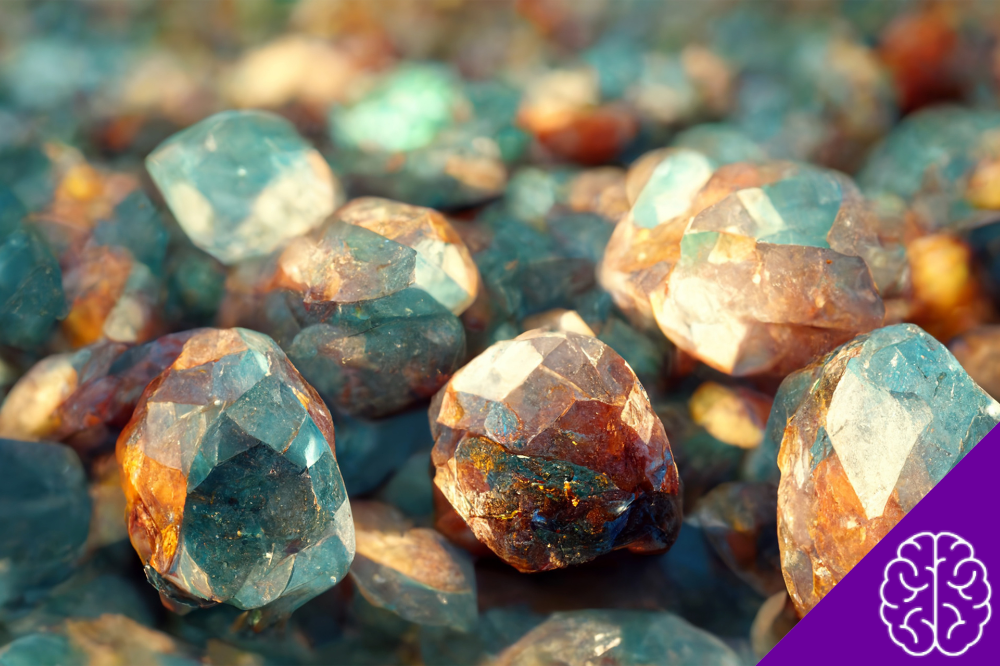
Discovered on a sheep ranch in Western Australia, a microscopic piece of zircon crystal holds a massive record. It is the oldest known material formed on our planet. Scientists date this ancient crystal back roughly 4.4 billion years.
This means the crystal has been around almost since the Earth itself took shape. Despite its tiny size—roughly the thickness of four human hairs—it provides massive clues about our past. The chemistry of the crystal suggests that temperatures on Earth 4.4 billion years ago could support liquid water. This discovery indicates that our planet cooled much faster than experts previously believed, making early life a distinct possibility.
Everyday Objects: The Oldest Things on Earth Made by Humans
You might think of ancient artifacts as grand marble statues or gold jewelry. However, some of the most revealing archaeological finds are simple, everyday items. These objects show us that ancient humans shared many of our modern daily habits.
A 5,000-Year-Old Piece of Chewing Gum
A British archaeology student digging in Finland uncovered a 5,000-year-old piece of Neolithic chewing gum. The gum even had ancient tooth marks still visible in it.
Early humans made this gum from birch bark tar. Birch bark tar contains phenols, which boast natural antiseptic properties. Experts believe that Neolithic people chewed this substance to treat mouth and gum infections.
The World’s Earliest Footwear
Inside an Armenian cave, researchers found the oldest known example of footwear. This 5,500-year-old leather shoe looks surprisingly similar to a modern moccasin.
- Shoemakers crafted it from a single piece of cowhide leather.
- The creator rubbed it with plant oil for preservation.
- It featured shoe laces crisscrossed through holes, just like modern sneakers.
- It fit roughly a women’s size seven in the United States.
An Ancient Prosthetic Toe
Buried alongside Egyptian mummies from 3,000 years ago, researchers found a false toe fashioned from wood and leather. Experts currently recognize this as the oldest prosthetic device in existence.
University researchers built a replica to test its function. Pressure sensors revealed that ancient sandals made walking nearly impossible for someone missing a big toe. The wooden prosthetic served a highly practical purpose, making walking significantly more comfortable for its owner.
The Original “Swiss Army” Knife
An ancient multi-tool discovered in the Mediterranean proves that pocket gadgets are not a modern invention. Originating from the second-century Roman Empire, this versatile device was primarily used for eating.
- A knife, fork, and spoon for meals.
- A spike used to pluck snails out of shells.
- A hook-like spatula to extract sauces from bottles.
- A small pick to clean teeth after eating.
All these utensils fold neatly into the handle to keep the tool compact, directly mirroring the design of modern pocket knives.
The Earliest Musical Instruments
Music has always been a vital part of the human experience. Researchers working in a southern German cave identified two flutes that hold the title of the oldest known musical instruments.
Carbon dating shows these flutes are approximately 43,000 years old. Early humans carved them from mammoth ivory and bird bone. Scientists suggest that music helped early Homo Sapiens socialize, form tight communities, and eventually outlast their Neanderthal competitors.
Unsolved Mysteries: The Oldest Things on Earth We Cannot Explain
While we understand how ancient humans used shoes and knives, other artifacts remain entirely mysterious. These technologies showcase a level of complexity that we still do not fully comprehend.
The Enigmatic Roman Dodecahedra
Found across Europe, the Gallo-Roman Dodecahedra are hollow, twelve-sided objects made of bronze or stone. Most date back to between the second and fourth centuries. Each of the twelve flat faces contains a hole of a different size.
Despite finding hundreds of these items, modern experts have absolutely no idea what they do. Theories suggest they could be:
- Surveying or mathematical calculating tools.
- Time-keeping devices used alongside candles.
- Religious or magical artifacts.
- Devices used for spool knitting.
The Baffling Baghdad Battery
Discovered in Iraq in 1936, the Baghdad Battery dates back to between 250 BCE and 250 CE. It consists of a simple ceramic pot, an asphalt stopper, a copper tube, and an iron rod.
When assembled, these materials resemble a very basic battery cell. Some researchers guess the device produced a small electrical voltage used for electroplating metals or performing rudimentary medical treatments. Others argue it was simply a secure storage vessel for sacred scrolls.
The Secretive Phaistos Disc
Unearthed in a Minoan palace on the island of Crete, the Phaistos Disc is a clay disc measuring about 6.3 inches across. Both sides feature a spiral sequence of stamped symbols.
The disc contains 241 individual tokens representing 45 unique symbols, including humans, animals, and plants. No one has successfully translated the script. Because the disc is the only artifact of its kind ever found, experts lack the comparative material needed to crack the code.
The Enduring Legacy of the Past
Studying the oldest things on earth gives us a direct connection to our deep past. From billions of years of geological evolution to the brilliant mechanical minds of early humans, these items tell an incredible story of survival.
Whether it is a piece of ancient chewing gum or a mysterious twelve-sided bronze object, every artifact adds a new puzzle piece to human history. By preserving these objects, we keep the stories of our earliest ancestors alive. As archaeologists continue to dig, there is no telling what ancient wonders we will uncover next to redefine our understanding of the oldest things still existing on earth.