

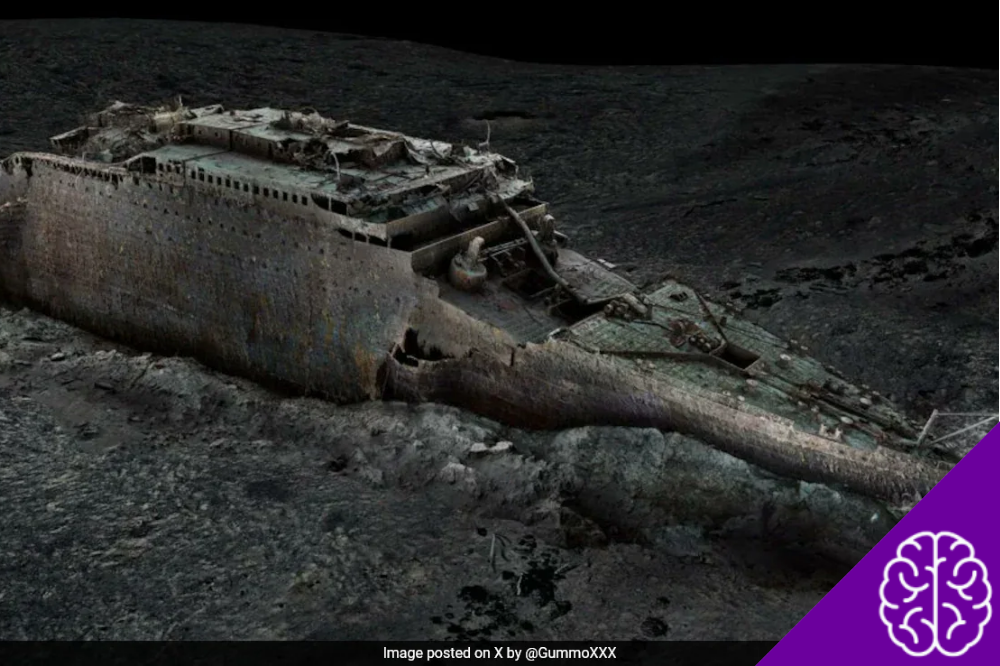
More than a century after the RMS Titanic sank to the bottom of the North Atlantic, the ship’s wreckage continues to reveal secrets from its tragic maiden voyage. In a recent stunning discovery, researchers have found Titanic Necklace Victorian, a forgotten artifact that offers a direct link to the passengers who sailed on the “unsinkable” ship. The find reconnects us with the human stories behind one of history’s most famous maritime disasters.
The remarkable piece of jewelry was identified by RMS Titanic, Inc., the company holding exclusive rights to explore the wreck. The necklace was encased within a block of sediment and metal fragments retrieved from the seafloor back in the year 2000.
For over two decades, its presence went unnoticed, hidden within the hardened mass until new, more detailed conservation techniques unveiled its delicate form. This blog post from the Insight Factory will explore the details of this incredible discovery, the history behind the necklace’s style, and what this find means for our understanding of the lives aboard the Titanic.
Titanic Necklace: An Unexpected Find in the Deep
The story of the Titanic is well-known. Departing from Southampton, England, on April 10, 1912, the ship was a marvel of modern engineering, destined for New York.
Just five days into its journey, it struck an iceberg about 370 miles (600 kilometers) off the coast of Canada. The resulting catastrophe claimed the lives of more than 1,500 of the 2,200 people on board.
Even after 113 years, the wreck site remains an active area of discovery. The newly found necklace was discovered within a concretion—a hard, solid mass formed by sand, rust, rocks, and remnants of the ship itself.
Researchers had initially believed they had cataloged every item from the sample collected during the 2000 expedition. However, when they applied modern conservation and excavation methods to the concretion, something new emerged.
Slowly and carefully, a string of delicate black beads, some heart-shaped and others octagonal, came into view, preserved against all odds in the immense pressure of the deep sea.
A Mourning Jewel and an Unsolved Mystery
Once the necklace was revealed, the team at RMS Titanic, Inc. began the difficult task of trying to identify its original owner.
They searched through insurance records and compensation claims filed after the sinking but found no matches.
This lack of documentation has led researchers to believe the necklace might have belonged to one of the many victims of the tragedy whose belongings were never recorded.
Experts have analyzed the design and material of the piece, concluding that it is a Victorian-era mourning jewel. It was likely crafted from French jet, a type of black glass used to imitate the more expensive gemstone, jet.
During the 19th century, particularly after the death of Queen Victoria’s husband, Prince Albert, such jewelry became a popular and powerful symbol of grief and remembrance. Widows and bereaved family members wore these adornments as a tribute to their lost loved ones.
The necklace’s style suggests its owner was likely in a state of mourning, adding another layer of poignant emotion to its discovery.
A Tangible Link to the Past
The finding of this necklace serves as a powerful reminder of the human element at the heart of the Titanic disaster. It stands in stark contrast to the corroded metal and large-scale wreckage that dominate the site.
“This necklace is a powerful reminder that every artifact tells a personal story,” stated Tomasina Ray, President of RMS Titanic, Inc. “From the craftsmanship to the materials, it offers a unique glimpse into the style, feelings, and daily lives of the Titanic’s passengers.”
Each item recovered from the wreck, from a piece of machinery to a personal effect like this necklace, helps to build a more complete picture of the people on board.
It connects us not just to the loss of life on a grand scale, but to the individual memories and emotions that were frozen in time on that fateful night in 1912.
The Enduring Legacy of the Titanic!
The discovery of the Victorian necklace is more than just an archaeological find; it is a bridge to the past. It speaks to the personal stories, the fashion of the era, and the emotional states of those who boarded the ship with hopes and dreams for a new life.
As researchers continue to study the wreck, each new discovery adds another voice to the chorus of history, ensuring that the stories of the Titanic and its passengers will never be forgotten.
This small, elegant piece of jewelry, lost for over a century, now serves as a testament to the lives intertwined with the great ship. It reminds us that beneath the historical accounts and technical details of the sinking lie countless personal narratives waiting to be told!