

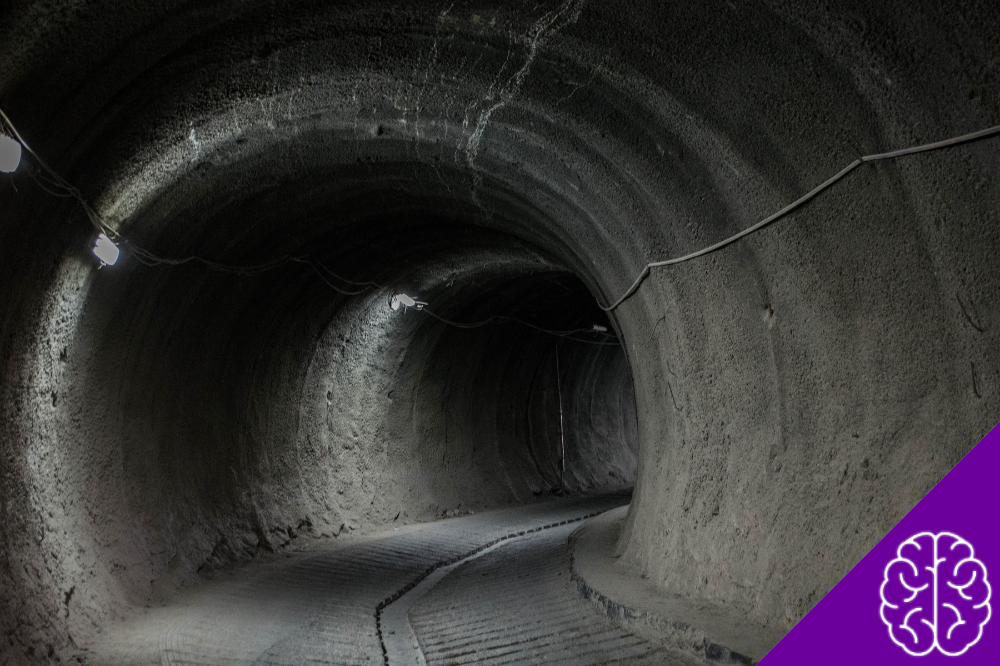
Humans have sought refuge beneath the earth’s surface for millennia. From massive volcanic labyrinths to hidden military bunkers, the history of underground cities reveals an incredible capacity for architectural ingenuity and survival.
These subterranean settlements provided more than just temporary shelter. Ancient engineers carved entire civilizations into stone, creating complex systems for ventilation, food storage, and defense. Today, these historical sites offer a “no-nonsense” look at how our ancestors conquered the challenges of the surface world.
The Volcanic Labyrinth of Derinkuyu
Central Turkey contains one of the most spectacular examples of subterranean engineering in the world. The region of Cappadocia sits on soft volcanic tuff, a rock that is easy to carve yet hardens upon contact with air. Ancient residents exploited this geological feature to create Derinkuyu, a city plunging eighteen stories into the ground.
Archaeologists estimate that this massive network could house up to 20,000 people along with their livestock and food supplies. The city served as a primary defense against invading armies. Residents would retreat into the tunnels, sealing the entrances with massive circular stone doors that attackers could only open from the inside.
The ventilation system in Derinkuyu remains a marvel of ancient physics. A central chimney extends over 50 meters deep, providing fresh air to even the lowest levels. Smaller vertical shafts distributed this air to individual rooms, ensuring that thousands of inhabitants could breathe comfortably during long periods of isolation.
Survival in the Australian Outback
While ancient cities focused on defense, Coober Pedy in Australia demonstrates how underground cities solve environmental extremes. Founded after the discovery of opals, this town sits in a region where summer temperatures frequently exceed 40 degrees Celsius. To survive the heat, miners began living in “dugouts” carved into the hillsides.
Today, nearly half of the town’s population lives underground. These modern subterranean homes maintain a constant, comfortable temperature of 23 degrees Celsius year-round without the need for air conditioning. This efficiency reduces the community’s energy footprint and protects residents from the harsh ultraviolet radiation of the Australian desert.
The town features underground churches, hotels, and even art galleries. Living beneath the surface allows the residents to thrive in a landscape that would otherwise be uninhabitable. It serves as a living laboratory for future space colonies, where underground living may be the only way to escape cosmic radiation on other planets.
The Secret Salt Cathedrals of Wieliczka
In Poland, the Wieliczka Salt Mine represents a different type of underground development. For over seven centuries, miners carved an enormous complex that reaches depths of over 300 meters. While not a residential city in the traditional sense, it functioned as a self-contained world with its own culture and infrastructure.
The mine contains dozens of statues and four chapels, all carved directly into the rock salt by the workers. The Chapel of St. Kinga is the most famous, featuring salt-crystal chandeliers and intricate biblical reliefs. This subterranean cathedral demonstrates the human desire to bring beauty and spirituality into the most challenging work environments.
Wieliczka features a unique microclimate characterized by high air purity and a lack of allergens. This led to the establishment of a health resort within the mine’s chambers. Patients visit the underground chambers to treat respiratory conditions, proving that subterranean environments can offer significant health benefits when managed correctly.
The Military Strength of Gibraltar
The Rock of Gibraltar contains one of the most complex tunnel systems ever constructed for military purposes. Over centuries, British forces excavated more than 50 kilometers of tunnels through the limestone. During the mid-20th century, these tunnels evolved into a fully functional underground fortress.
The network housed a powerhouse, a water distillation plant, and a hospital with 200 beds. It could support a garrison of 16,000 soldiers for up to sixteen months without surface contact. The engineers designed the tunnels to withstand heavy bombardment, creating a “city within a rock” that remained virtually impregnable.
This military application of underground cities highlights the strategic value of the earth’s crust. Limestone provides a natural shield against conventional weapons, allowing for the storage of ammunition and the movement of troops in total secrecy. Today, many of these tunnels remain open as historical monuments to human resilience.
The Resilience of Naours
In northern France, the underground city of Naours, or the “muches,” provided a secret sanctuary for villagers during the Middle Ages. Located beneath a plateau, this site consists of two kilometers of tunnels and 300 individual rooms. Villagers used the site to hide from Viking raiders and during the Thirty Years’ War.
The inhabitants carefully managed the “Information Gain” of their presence. They built special chimneys that filtered smoke through the chimneys of surface houses to avoid revealing their location to attackers. This sophisticated level of deception allowed entire villages to vanish beneath the wheat fields at the first sign of danger.
Naours functioned as a complete society with chapels, stables, and bakeries. The walls still bear thousands of inscriptions left by soldiers and refugees over the centuries. These marks provide a direct link to the psychological state of people living in total darkness, highlighting their hope and determination to survive.
Engineering Challenges of Deep Living
Building and maintaining underground cities requires constant vigilance against the forces of nature. The primary threat to any subterranean structure is water. Engineers must design complex drainage systems to prevent flooding and manage the humidity that can lead to structural decay and respiratory illness.
Structural integrity also requires the use of pillars and arches to support the immense weight of the rock above. In ancient Cappadocia, builders left sections of the natural rock as supporting columns, calculating the load-bearing capacity with surprising accuracy. Modern engineers use steel reinforcements and specialized concrete, but the core principles of gravity and pressure remain the same.
Waste management represents another critical hurdle. Ancient cities often used deep pits or redirected natural water sources to clear refuse. In modern contexts, underground living requires advanced pumping systems to move sewage to the surface. These technical requirements explain why most underground developments remain specialized rather than becoming the primary form of urban housing.
The Psychological Impact of Subterranean Life
Living without natural light poses significant challenges to the human circadian rhythm. Historically, people used oil lamps and candles, but these created issues with smoke and oxygen depletion. Modern underground spaces use “full-spectrum” lighting to mimic the sun’s cycles and prevent seasonal affective disorder among residents.
Studies on miners and submariners show that humans can adapt to life underground if they maintain a sense of space and social connection. The most successful underground cities feature high ceilings and common areas that prevent feelings of claustrophobia. Designers often use light-colored paints and mirrors to create the illusion of openness, helping the mind adjust to the lack of a horizon.