
What Would Happen If the Earth Stopped Spinning?
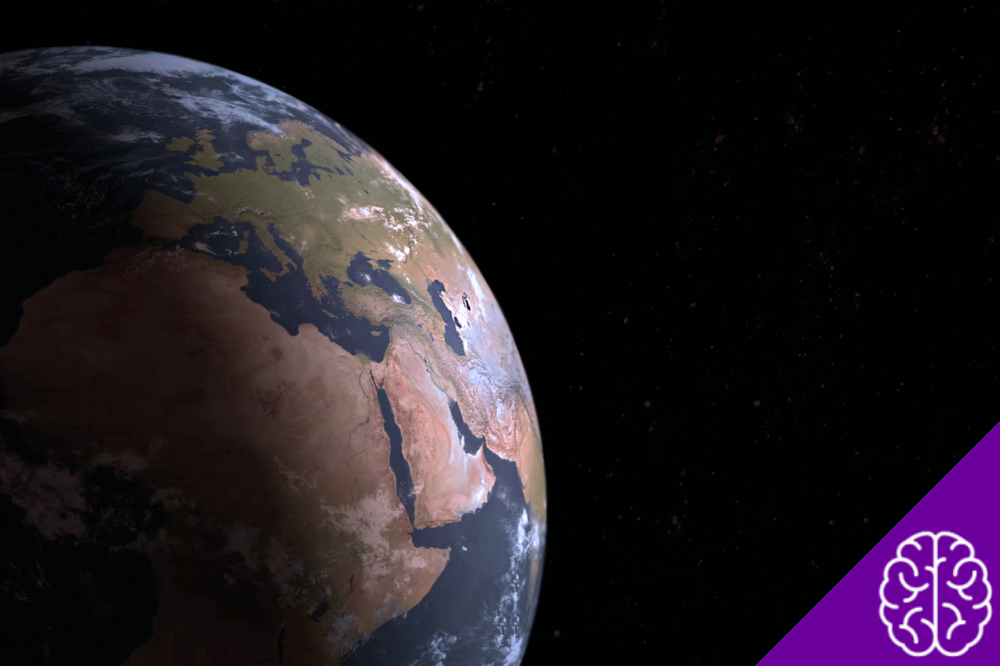
It’s a motion we take for granted, but what would happen if the Earth stopped spinning? This thought experiment, while impossible in reality, offers a fascinating glimpse into the powerful forces that govern our planet. For just five seconds, the world as we know it would be subjected to unimaginable chaos.
The Earth spins at a tremendous speed—about 1,100 miles per hour (1,670 km/h) at the equator. Everything on the planet, including its atmosphere, oceans, and every object on the surface, moves with it. If that rotation suddenly halted, the law of inertia dictates that everything not bolted to the bedrock would continue moving at that incredible speed. The consequences would be nothing short of catastrophic.
This article explores the immediate and devastating effects that would occur if the Earth stopped spinning, even for just a few seconds, and what the aftermath would look like.
The Immediate Catastrophe if the Earth Stopped Spinning
The moment the planet’s rotation ceased, inertia would take over. Everything on the surface—people, buildings, trees, and topsoil—would be violently scraped off and sent tumbling eastward at hundreds of miles per hour. It would be the most destructive event in planetary history.
The Atmosphere Becomes a Weapon
The atmosphere, which also rotates with the Earth, would continue its motion. This would create winds far more powerful than any storm ever recorded.
- Supersonic Winds: the air would effectively become a planet-wide supersonic shockwave, scouring the surface clean.
- Friction and Fire: the friction between the moving atmosphere and the stationary ground would generate immense heat, likely igniting global firestorms.
- Unimaginable Destruction: any structure, no matter how reinforced, would be instantly obliterated. The force would be equivalent to a massive atomic blast detonating simultaneously across the entire globe.
A World Drowned and Scoured
The oceans would also continue their momentum, unleashing tsunamis of a scale that is hard to comprehend.
- Global Tsunamis: trillions of tons of water would surge eastward, creating waves miles high that would wash over continents in minutes.
- Erosion on a Massive Scale: these colossal waves would erode the land down to the bedrock, wiping out entire landscapes.
- Boiling Oceans: the intense friction and energy release would heat the oceans, potentially causing them to boil in some areas and fundamentally altering marine ecosystems forever.
For those brief five seconds, the planet would be a blender of rock, water, and fire. Life as we know it would cease to exist.
What Happens When the Earth Starts Spinning Again?
After five seconds of apocalyptic stillness, if the Earth were to resume its normal rotation, the chaos would not simply end. The initial destruction would set off a chain of long-term environmental disasters. The planet would be an unrecognizable wasteland.
A New Geography Forged in Disaster
The centrifugal force from the Earth’s spin causes the planet to bulge at the equator, and this force also keeps the oceans distributed globally. If the Earth stopped spinning and then restarted, the distribution of land and water would be forever changed.
- Migrating Oceans: without the rotational force to hold them in place, the oceans would begin to migrate toward the poles, where gravity is strongest.
- Two Super-Oceans: the world would eventually settle into a new equilibrium with two massive polar oceans and a single supercontinent encircling the equator.
- Drowned Continents: large parts of North America, Europe, and Asia would be submerged under the new Arctic Ocean. The United States and much of Europe would be completely underwater. Antarctica would also disappear beneath a new southern sea.
A Day Lasts a Year
If the Earth stopped spinning on its axis but continued to orbit the Sun, our day-night cycle would change dramatically. A single day would last an entire year.
- Extreme Temperatures: the side of the Earth facing the Sun would experience six months of continuous, scorching daylight, with temperatures rising well above the boiling point of water.
- Frozen Night: the side facing away from the Sun would endure six months of unrelenting, freezing darkness.
- A “Twilight Zone” for Life: the only potentially habitable area would be a narrow twilight zone between the searing daylight and the frozen night. This band would slowly creep across the globe as the Earth orbited the Sun.
Even if some microbial life survived the initial cataclysm, it would have to contend with a world of extreme, uninhabitable temperatures.
Could the Earth Ever Stop Spinning?
Fortunately, this scenario is pure science fiction. There is no known force in the universe that could cause the Earth to suddenly stop rotating. The law of conservation of angular momentum ensures that our planet will keep spinning.
However, the Earth’s rotation is slowing down, albeit incredibly slowly. This process is caused by the gravitational pull of the Moon, which creates tidal friction.
- Slowing Rotation: every century, the length of a day increases by about 1.7 milliseconds.
- No Sudden Stop: this gradual slowing will continue for billions of years but will never lead to a complete or sudden halt.
- The Sun’s End: long before the Earth could ever stop spinning, the Sun will have expanded into a red giant, engulfing and destroying our planet in about 5 billion years.
What We Learn from This Thought Experiment
Imagining a scenario where the Earth stopped spinning is a powerful reminder of the delicate balance of forces that make life on our planet possible. The constant rotation creates our day-night cycle, stabilizes our climate, shapes our oceans and continents, and generates the magnetic field that protects us from solar radiation.
This thought experiment, while terrifying, highlights the profound and often invisible ways in which physics governs our existence. It underscores how a seemingly simple motion—the daily spin of our world—is the bedrock of our entire ecosystem. While we don’t have to worry about the Earth stopping, understanding the consequences deepens our appreciation for the dynamic and life-sustaining planet we call home.