

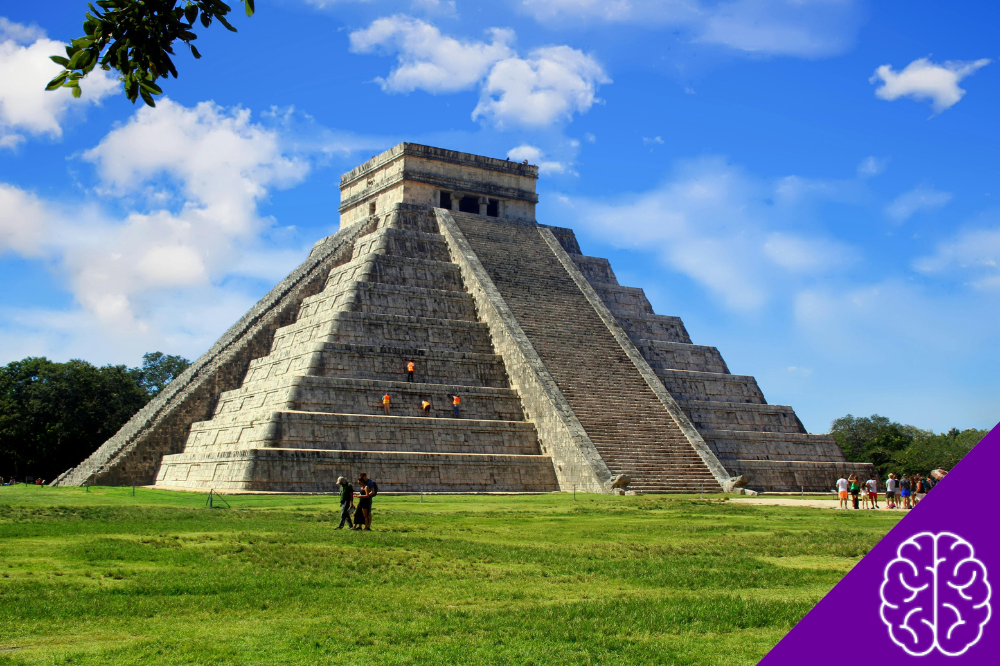
The Maya civilization is remembered for its monumental cities, advanced writing system, mathematical achievements, and remarkable understanding of astronomy. Yet between the eighth and tenth centuries, many of its largest urban centers were abandoned, giving rise to one of history’s greatest archaeological questions.
Today, researchers agree that there was no single cause. Instead, evidence points to a combination of environmental, political, and social pressures that unfolded over generations.
Did the Maya civilization really collapse?
Not in the way many people imagine.
Modern archaeologists increasingly avoid describing the event as the complete “collapse” of the Maya civilization. Instead, they refer to the decline of many Classic Maya cities, particularly those located in the southern lowlands between approximately A.D. 750 and 900.
While major cities such as Tikal, Copán, and Palenque experienced population decline and eventually lost political influence, Maya culture itself survived. New centers emerged elsewhere, especially in the northern Yucatán, and millions of Maya people continue to live throughout Central America today.
The Maya were never one unified empire
One common misconception is that the Maya formed a single empire similar to the Aztecs or the Inca.
In reality, they lived in dozens of independent city-states connected by trade, diplomacy, alliances, and frequent warfare. Each kingdom had its own ruler and political interests, meaning crises often affected regions differently.
This decentralized political system also helps explain why some cities declined while others remained prosperous for much longer.
Prolonged drought likely played a major role
One of the strongest pieces of evidence comes from climate research.
Scientists studying cave formations, lake sediments, and other geological records have identified periods of severe and prolonged drought during the Terminal Classic period. These dry conditions likely reduced agricultural production and placed increasing pressure on cities that depended heavily on seasonal rainfall.
However, researchers caution that drought alone does not fully explain what happened. Instead, climate stress appears to have intensified problems that were already developing within Maya society.
Population growth and environmental pressure
As Maya cities expanded, they required more farmland, timber, and fresh water.
Archaeological evidence suggests that forests were cleared to support agriculture and large construction projects. In some regions, this may have contributed to soil degradation and made local communities more vulnerable when prolonged droughts reduced crop yields.
Growing populations also meant greater demand for food and resources, increasing pressure on an already fragile environment.
Warfare became increasingly destructive
Conflict between rival Maya kingdoms was common throughout much of their history, but evidence suggests warfare intensified during the civilization’s final centuries.
Archaeologists have uncovered defensive walls, destroyed settlements, inscriptions describing military campaigns, and signs of violent attacks against important cities.
Rather than causing the decline by itself, warfare likely disrupted trade, weakened political alliances, displaced populations, and made recovery from environmental crises even more difficult.
Political instability made recovery more difficult
Environmental challenges were only part of the story.
As resources became scarcer, competition among Maya rulers appears to have intensified. Because the region was divided into independent city-states, prolonged crises could weaken political authority, disrupt alliances, and make it harder to organize large public works such as irrigation systems, reservoirs, and monumental construction.
Many archaeologists believe these political tensions made communities less resilient when faced with repeated environmental stress.
Was there a single cause?
Probably not. Today, the prevailing view among historians and archaeologists is that the decline of the Maya civilization resulted from several interconnected factors rather than one catastrophic event.
The main contributing causes include:
- prolonged periods of drought;
- environmental degradation;
- growing pressure on natural resources;
- intensified warfare between city-states;
- political instability.
The importance of each factor likely varied from one region to another, which helps explain why some Maya cities declined while others continued to prosper.
What happened after the decline?
The abandonment of many southern cities did not mark the end of Maya civilization.
Power gradually shifted to other regions, particularly the northern Yucatán Peninsula, where cities such as Chichén Itzá became major political and economic centers. Maya kingdoms continued to exist for centuries, and some remained independent until the arrival of the Spanish in the 16th century.
Today, the Maya are very much alive. More than six million Maya people live across Mexico, Guatemala, Belize, Honduras, and El Salvador, speaking dozens of Indigenous languages and preserving traditions that have endured for centuries.
Why the Maya still matter today
The story of the Maya civilization continues to evolve as archaeologists uncover new evidence using technologies such as LiDAR, satellite mapping, and advanced climate analysis.
Rather than revealing the fall of a vanished civilization, modern research tells a more nuanced story—one of adaptation, regional decline, resilience, and cultural continuity. It also serves as a reminder that even highly sophisticated societies can face enormous challenges when environmental change, political instability, and resource pressures occur at the same time.
Understanding what happened to the Maya is not just about solving an ancient mystery. It also offers valuable insight into how complex civilizations respond to periods of profound change.