

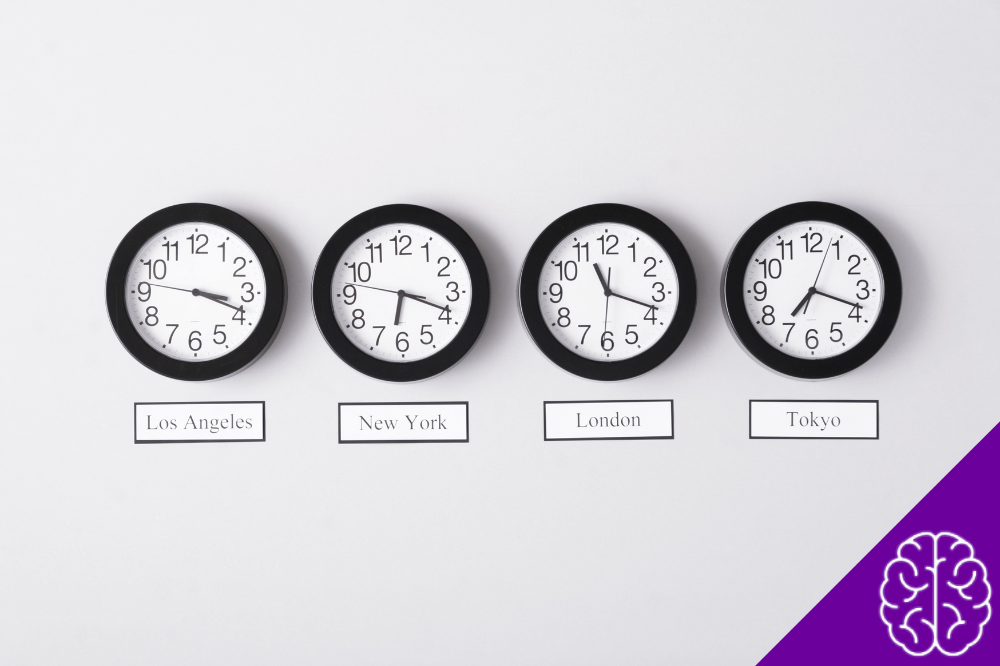
Have you ever wondered why it can be sunrise in New York while it is still pitch black in Los Angeles? Or why some countries, like China, use only one time zone despite being thousands of miles wide? The way we measure time across the globe is not just a matter of science; it is a fascinating blend of geography, history, and political power. Understanding why time zones exist the way they do helps us appreciate how the modern world stays connected, even when we are half a world apart.
For most of human history, time was a local affair. If you lived in a village, “noon” was simply when the sun was at its highest point in the sky above your head. This worked perfectly for thousands of years, but as humanity began to travel faster and communicate across continents, this “local solar time” became a source of total chaos. Today, our global system of 24 zones is what allows planes to land on schedule, international markets to trade, and families to video call across oceans.
1. The Era of Local Solar Time
Before the invention of the railroad and the telegraph, every city and town had its own unique time. This was based on the Earth’s rotation relative to the sun. Because the Earth is a sphere, the sun hits different longitudes at different moments.
A Patchwork of Clocks
In the early 1800s, if it was 12:00 PM in London, it might be 12:05 PM in a town just a few miles to the east. In the United States alone, there were over 300 different local times. People rarely traveled far or fast enough for this to matter. If you traveled by horse and carriage, the four-minute difference between towns was invisible. However, once the “Iron Horse” (the steam locomotive) arrived, this patchwork of clocks became a deadly problem.
2. The Railroad Revolution: The Need for Standard Time
The primary reason time zones exist today is the development of the railway system. In the mid-19th century, trains began moving people across vast distances in a single day.
The Scheduling Nightmare
Railway companies struggled to create schedules that made sense. A train leaving a station at “12:00 PM” according to local time would arrive at a destination three hours away, but the local clock there might say something completely different. This wasn’t just confusing—it was dangerous. Without a synchronized clock, two trains could end up on the same track at the same time, leading to horrific collisions.
In 1883, U.S. and Canadian railroads took matters into their own hands and established four standard time zones to govern their tracks. This was the first major step toward the organized world we live in today.
3. The Prime Meridian and the 24-Hour System
In 1884, representatives from 25 nations met at the International Meridian Conference in Washington, D.C. Their goal was to create a single, unified system for the entire planet.
Greenwich Mean Time (GMT)
The conference decided that the world should be divided into 24 time zones, each roughly 15 degrees of longitude apart. This number was chosen because the Earth rotates 360 degrees in 24 hours ($360 / 24 = 15$). They established the Royal Observatory in Greenwich, London, as the “Prime Meridian” or Longitude 0°.
Every zone to the east of Greenwich would be “ahead” by an hour, and every zone to the west would be “behind.” This created a logical, mathematical grid that defined the start and end of the day for everyone on Earth.
4. Why the Lines Aren’t Straight
If you look at a map of global time zones, you will notice that the lines are jagged and zig-zagged. They almost never follow the perfectly straight 15-degree longitude lines. This is because time is as much about politics as it is about geography.
Political and Economic Borders
Governments often adjust their time zone boundaries to keep an entire state, province, or country on the same clock. It would be highly inconvenient for a small country to have two different times, so they “bend” the line to encompass their entire territory.
- The China Example: Geographically, China is wide enough to have five different time zones. However, the government decided in 1949 to use only one (Beijing Time) for the entire country to promote national unity. This means that in western China, the sun might not rise until 10:00 AM!
- The Kiribati Zig-Zag: The International Date Line (where the day officially changes) has a massive “dent” around the island nation of Kiribati. In the 1990s, the country moved the line so all its islands would be on the same calendar day, making it the first place on Earth to see the new year.
5. Daylight Saving Time: A Seasonal Shift
Another reason time zones seem complicated is the practice of Daylight Saving Time (DST). This is the “spring forward, fall back” ritual where clocks are moved one hour ahead in the summer to extend evening daylight.
Does It Actually Save Energy?
Originally proposed by Benjamin Franklin and later adopted during the World Wars to save coal, the modern value of DST is heavily debated. While it provides more light for outdoor activities and shopping, many health experts argue that the sudden shift in sleep patterns can lead to increased stress and heart issues. Today, many regions are considering staying on “Permanent Standard Time” or “Permanent Daylight Time” to stop the biannual confusion.
6. Where to Find Reliable Time Info for Free
Managing your schedule across different time zones is a vital skill in our global economy. Fortunately, you don’t need a professional clock-syncing tool; the best resources are free and built into the devices you already own:
- WorldClock.com: A free, highly accurate site that shows the current time in every major city, including any active Daylight Saving shifts.
- Google Search: Simply typing “Time in London” or “Time in Tokyo” into your mobile browser will give you an instant, accurate result based on the official GMT offset.
- Smartphone Apps: The “Clock” app on every iPhone and Android device has a “World Clock” tab where you can add multiple cities to see the time difference at a glance—a must-have for anyone with family abroad.
The Invisible Grid That Runs the World
Without time zones, our modern life would be impossible. We take for granted that a plane leaving Paris will arrive in New York at a predictable time, or that a live sports broadcast can be seen simultaneously across continents.
The existence of these zones is a testament to human ingenuity. We took a chaotic, natural process—the rotation of our planet—and placed a logical grid over it so we could work, travel, and communicate together. While the lines might be zig-zagged and the political decisions behind them can be strange, the system works. It turns our massive, rotating planet into a single, synchronized neighborhood.
Next time you check your watch or change your phone’s clock after a flight, remember that you are participating in a global system that has been 150 years in the making.