
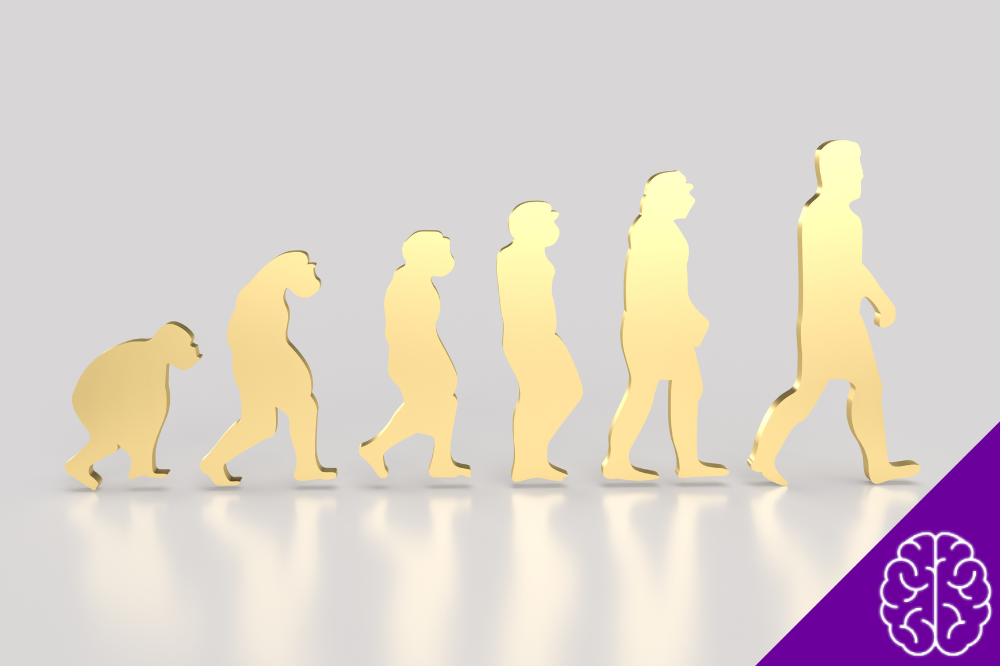
When people think about human evolution, they often imagine a simple progression from ape-like ancestors to modern humans. In reality, evolution followed a much more complex path filled with surprising twists, unexpected discoveries and extinct relatives that once shared the planet with us.
From ancient humans with unusually small brains to evidence that our species interbred with other hominins, scientists continue to uncover findings that reshape our understanding of where we came from. Here are eight of the strangest facts about human evolution supported by modern research.
1. Humans weren’t the only human species
One of the biggest misconceptions about human evolution is that modern humans evolved alone.
In fact, multiple human species existed at the same time. Besides Homo sapiens, Earth was home to groups such as Neanderthals, Denisovans, Homo floresiensis, Homo naledi and several others.
For thousands of years, different human relatives occupied different regions of Africa, Europe and Asia. Some even lived side by side before eventually disappearing.
Rather than resembling a straight line, the human family tree looks more like a branching bush with many evolutionary experiments occurring simultaneously.
2. You probably carry Neanderthal DNA
If your ancestry includes Europe or Asia, there’s a good chance that part of your DNA came from Neanderthals.
Genetic studies published over the past decade show that modern humans interbred with Neanderthals after leaving Africa around 60,000 years ago. Today, most non-African populations carry roughly 1% to 2% Neanderthal DNA.
These inherited genes may influence traits ranging from immune responses to skin characteristics and even susceptibility to certain diseases.
Instead of replacing Neanderthals completely, our ancestors also mixed with them.
3. One ancient human species had a surprisingly small brain
In 2003, researchers discovered fossils on the Indonesian island of Flores belonging to an adult human standing only about 3.5 feet (1.1 meters) tall.
Nicknamed the “Hobbit,” Homo floresiensis also had a brain roughly one-third the size of a modern human’s. Despite this, archaeological evidence suggests the species manufactured stone tools and hunted animals.
The discovery challenged the long-held assumption that larger brains were always necessary for relatively sophisticated behavior.
4. Evolution is still happening
Many people assume human evolution stopped thousands of years ago. It hasn’t.
Evolution continues whenever genetic variations influence survival or reproduction. Scientists have identified relatively recent adaptations involving lactose digestion in adulthood, resistance to certain infectious diseases and the ability to thrive at high altitudes among populations living in places such as the Tibetan Plateau and the Andes.
Although modern medicine has changed many survival pressures, humans continue to evolve along with their environment.
5. Red hair may have an ancient connection
The genetics behind red hair are primarily linked to variations in the MC1R gene.
Interestingly, researchers identified different versions of this gene in Neanderthal DNA, suggesting that at least some Neanderthals likely had lighter skin and possibly red hair. However, the mutations found in Neanderthals are not identical to the most common variants responsible for red hair in modern humans.
This means red hair evolved more than once in different human lineages, illustrating how similar traits can appear independently through evolution.
6. Early humans may have crossed the sea much earlier than expected
For decades, scientists believed early humans lacked the technology needed to cross open water.
However, the discovery of Homo floresiensis on Flores Island raised an important question: how did their ancestors reach an island that was separated by deep ocean channels, even during periods of lower sea levels?
While researchers still debate the exact answer, many believe ancient humans may have built simple watercraft or reached the island by accidental sea crossings. Either possibility suggests that early hominins were more adaptable and resourceful than previously thought.
The finding has encouraged scientists to rethink when complex behaviors, such as planning and long-distance travel, first appeared in human evolution.
7. Humans once survived a dramatic population bottleneck
Genetic research suggests that our species may have come surprisingly close to extinction.
A 2023 study proposed that the ancestral population leading to modern humans declined dramatically between roughly 930,000 and 813,000 years ago, leaving only a small breeding population for an extended period. Although researchers continue to investigate this hypothesis, it offers one possible explanation for why modern humans display relatively low genetic diversity compared with many other species.
If future evidence supports this bottleneck, it would represent one of the most significant events in human evolutionary history, shaping the genetic makeup of nearly every person alive today.
8. Modern humans didn’t evolve because they were “the strongest”
Popular culture often portrays evolution as survival of the strongest, but biology tells a much more complicated story.
Modern humans likely succeeded because they combined several advantages, including cooperation, language, social learning and remarkable adaptability. Archaeological discoveries indicate that our ancestors shared knowledge, cared for injured group members and developed increasingly sophisticated tools over hundreds of thousands of years.
These behaviors allowed communities to adapt to changing environments far more effectively than physical strength alone ever could. Human evolution was driven as much by collaboration and innovation as by biology itself.
Human evolution is far stranger than we imagined
The story of human evolution is still being written. Every year, new fossils, genetic analyses and archaeological discoveries continue to challenge ideas that were once considered settled, reminding us that evolution is a dynamic scientific field rather than a finished story.
Far from following a straight path, human evolution involved multiple species, unexpected migrations, genetic mixing and remarkable adaptations. As researchers uncover more evidence, our understanding of what it means to be human will likely continue to evolve alongside the science itself.
- You May Also Like: 7 Animals That Shouldn’t Exist According to Evolution