

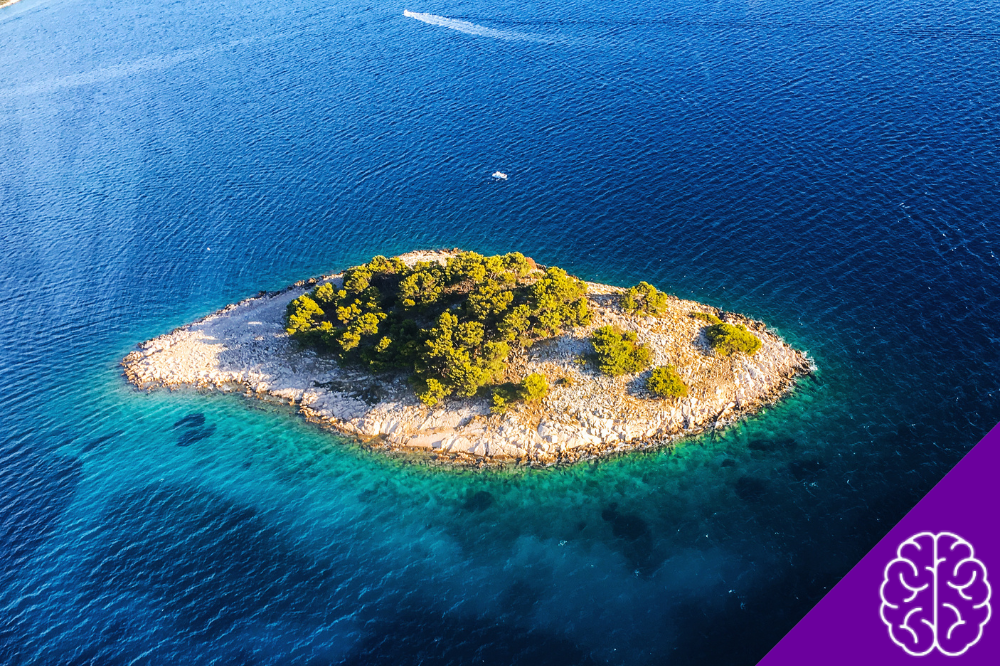
From ancient settlements to abandoned communities and unusual wildlife, some islands have stories that seem almost too strange to be real. These mysterious islands stand out because their history, geography or natural features still capture people’s curiosity.
Here are six islands whose documented stories reveal something far more interesting than the myths often associated with them.
1. Nihoa, Hawaii: The Island With a Hidden History
Nihoa belongs to the northwestern Hawaiian Islands and contains extensive archaeological evidence of earlier Hawaiian settlement.
When European explorers encountered abandoned structures there, they did not understand their purpose. That uncertainty eventually gave Nihoa and nearby Mokumanamana the nickname “Mystery Islands.”
Archaeologists have found:
- habitation sites;
- agricultural terraces;
- cave shelters;
- stone tools;
- heiau, or Hawaiian temples.
Research combining archaeology, oral traditions and historical records has revealed a much clearer picture of the islands’ past. Nihoa supported long-term habitation, while Mokumanamana held numerous important ritual sites.
The island’s mystery, therefore, comes from a history that outsiders once struggled to interpret.
2. Hashima, Japan: The Abandoned “Battleship Island”
Hashima sits off the coast of Nagasaki and became a major coal-mining community during Japan’s industrial development.
Its nickname, Gunkanjima, means “Battleship Island” because its dense concrete buildings give the island a distinctive silhouette.
At its peak, thousands of people lived and worked there. The coal mine closed in 1974, and the population left, leaving apartments, schools and other structures behind.
Today, Hashima forms part of the Sites of Japan’s Meiji Industrial Revolution, a UNESCO World Heritage property.
What makes the island remarkable is the contrast between its crowded industrial past and its abandoned appearance today.
3. Sable Island, Canada: A Remote Island With Hundreds of Shipwrecks
Sable Island forms a narrow crescent of shifting sand about 290 kilometres southeast of Halifax, Nova Scotia.
Its location, fog and constantly changing sandbars created dangerous conditions for ships. Parks Canada records more than 350 shipwrecks since 1583, earning the island its famous nickname, “Graveyard of the Atlantic.”
The island also has an unexpected resident: a population of wild horses.
Today’s horses descend from animals introduced during the 1700s. Parks Canada estimates the current population at about 420 horses and considers them a naturalized part of the island’s ecosystem.
Shifting sand continues to reveal archaeological evidence, too. In 2024, researchers found a piece of copper sheathing linked to HMS Barbadoes, a British naval ship that wrecked near Sable Island in 1812.
4. Socotra, Yemen: An Island Full of Unique Species
Socotra looks unusual even in photographs, especially because of its distinctive vegetation.
The explanation lies in the archipelago’s long isolation. Its varied landscapes and environmental conditions created many habitats where species evolved separately from those on nearby mainland regions.
UNESCO research documents exceptionally high levels of endemism on Socotra, including about 95% of land snail species and 90% of reptile species.
The island also has hundreds of endemic plant species. One of its most recognizable examples is the dragon blood tree, known for its unusual shape.
That combination of isolation and biodiversity gives Socotra a landscape unlike almost anywhere else.
5. Skellig Michael, Ireland: A Monastery Above the Atlantic
Skellig Michael, or Sceilg Mhichíl, rises from the Atlantic Ocean off Ireland’s County Kerry.
Early Christian monks established a remote settlement on the rocky island. Its surviving structures include stone cells, terraces and a monastery built using dry-stone techniques.
The exact date of the monastery’s foundation remains unknown. Historical records begin in the late 8th century, while the site’s dedication to St. Michael dates to somewhere between 950 and 1050.
The monks eventually left the island as conditions became more difficult, but a religious connection continued for centuries.
Today, Skellig Michael is a UNESCO World Heritage site and one of the most striking surviving examples of an early Christian island settlement.
6. Rapa Nui: The Island of the Moai
Rapa Nui, also known as Easter Island, is famous for its monumental moai statues.
The island has around 1,000 moai, most of which came from volcanic tuff at the Rano Raraku quarry. Some unfinished statues remain at the quarry, giving researchers valuable evidence about how people carved them.
The statues represented sacred ancestors and stood near villages and ceremonial areas.
Their transportation has attracted plenty of speculation, but archaeological research has produced several plausible explanations involving techniques such as wooden rollers and levers.
The unfinished statues and quarry remains make Rapa Nui especially valuable for understanding the technology and culture of the people who created the moai.
What Makes These Islands So Fascinating?
These mysterious islands do not share one particular secret. Their appeal comes from very different sources:
- Nihoa preserves evidence of ancient Hawaiian life and ritual.
- Hashima shows what remains after an industrial community disappears.
- Sable Island combines shipwreck history with a population of wild horses.
- Socotra contains an extraordinary concentration of endemic species.
- Skellig Michael preserves a remote early Christian settlement.
- Rapa Nui offers an exceptional record of monumental Polynesian culture.
In each case, geography played an important role. Isolation helped preserve archaeological remains, abandoned buildings, unusual ecosystems or cultural traditions.
Why Do Islands Develop Such Unusual Histories?
Isolation can change how both people and nature interact with a place.
For humans, remote islands can protect settlements from outside influence while also making transportation and communication difficult. For wildlife, geographic separation can allow populations to evolve independently over long periods.
That helps explain why some mysterious islands contain such distinctive combinations of history, culture and biodiversity.
Their stories also continue to develop as archaeologists, historians and scientists study new evidence.
The Stories Behind the Mystery
The most interesting secrets of these islands do not require supernatural explanations. Their real histories already include ancient settlements, vanished communities, shipwrecks, rare species and remarkable monuments.
These mysterious islands show how isolation can preserve evidence of the past while creating environments unlike those found anywhere else.