

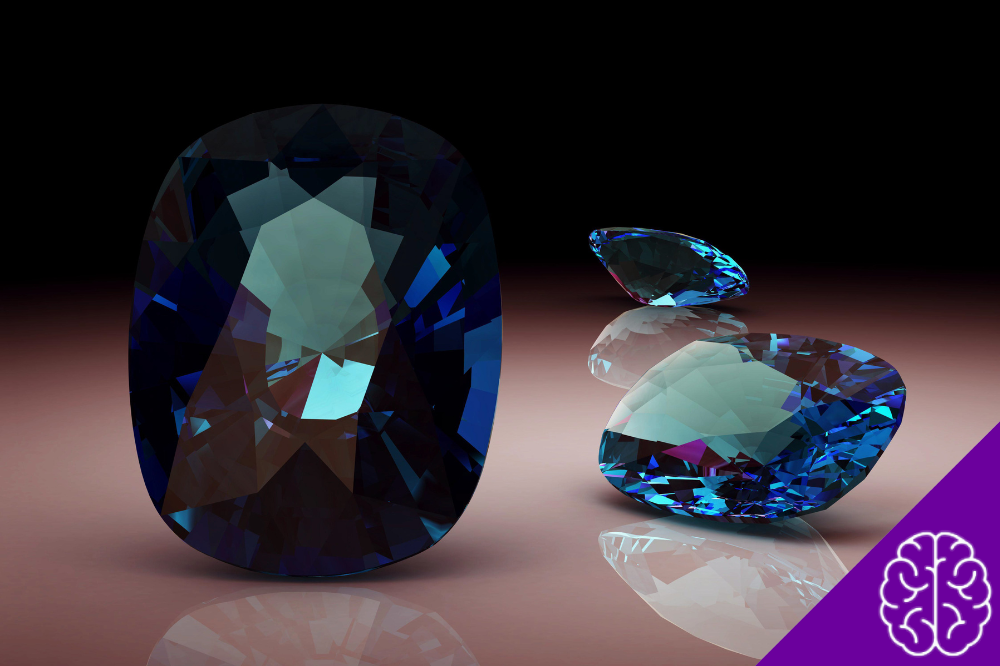
Diamonds may dominate the jewelry market, but they aren’t always the most expensive stones. Some rare gemstones can command extraordinary prices because of their limited supply, distinctive colors, unusual optical properties, and strong demand among collectors.
From intensely red rubies to electric-blue tourmalines, these stones show how much origin, quality, and scarcity can influence a gemstone’s value. Explore six examples that can cost more than many traditional diamonds and discover what makes each one so desirable.
1. Ruby: One of the Most Valuable Colored Gemstones
Ruby stands out for its intense red color, particularly when it displays a vivid, well-saturated hue. The finest specimens often come from Myanmar, historically known as Burma, although valuable rubies also originate in other countries.
Color plays a major role in determining a ruby’s price. Gemologists and collectors prize stones with strong red saturation, good transparency, and few visible inclusions. Large specimens with these characteristics are especially difficult to find.
The Sunrise Ruby demonstrates just how valuable an exceptional stone can become. This 25.59-carat Burmese ruby sold at Sotheby’s Geneva in 2015 for approximately $30.3 million, or more than $1.18 million per carat. The sale established its place among the most expensive colored gemstones ever auctioned.
For collectors interested in rare gemstones, fine rubies are particularly appealing because their color, origin, and quality can combine to create extraordinary auction prices. Even so, not every ruby reaches these values: treatments, inclusions, and color variations can make a substantial difference.
2. Imperial Jadeite: A Green Gem with Exceptional Demand
Jadeite comes in several colors, but its most prized variety is Imperial jade. This material displays a vivid green hue, fine texture, and translucent appearance that distinguish it from more common types of jade.
Its popularity has deep cultural roots, particularly in China and other Asian markets. Jade has represented beauty, status, and cultural significance for centuries, helping sustain demand for exceptional pieces.
According to the Gemological Institute of America (GIA), color, transparency, and texture are among the most important factors in jadeite valuation. Fine Imperial jadeite is difficult to find, especially when all three characteristics come together.
A remarkable example appeared at auction in 2026, when Christie’s sold the Ethereal Jadeite Necklace for approximately $25.55 million. The piece featured 61 carefully matched jadeite beads.
Unlike many faceted stones, jadeite often appears in beads, carvings, and finished jewelry. Buyers therefore evaluate the quality and consistency of the entire piece, not just its weight in carats. This combination of cultural importance and limited supply helps explain why fine jadeite can command prices that exceed those of many diamonds.
3. Kashmir Sapphire: A Rare Blue Stone
Kashmir sapphires have a special reputation among gemstone collectors. Their characteristic velvety blue appearance, combined with their historical origin, makes fine specimens particularly desirable.
The Kashmir region became famous for producing exceptional sapphires during the late 19th century. However, the original deposits have limited production, and stones with documented Kashmir origins are now especially collectible.
The Regent Kashmir offers a striking example. This 35.09-carat sapphire sold at Christie’s Hong Kong in May 2025 for HK$74.675 million, approximately $9.5 million. The sale established a new auction record per carat for a sapphire.
Not every blue sapphire reaches these prices. Buyers look for strong, attractive color, transparency, excellent cutting, and reliable documentation of origin. For anyone exploring rare gemstones, Kashmir sapphires stand out because their geological history and scarcity contribute to their reputation.
4. Alexandrite: The Gemstone That Changes Color
Alexandrite has one of the most distinctive optical properties in the gemstone world: it changes color depending on the light source. Under daylight, fine specimens usually appear green or bluish green. Under incandescent lighting, they can shift toward purplish red.
This phenomenon makes alexandrite a particularly recognizable member of the chrysoberyl mineral family. Miners first discovered it in Russia’s Ural Mountains in the 1830s, and later deposits emerged in countries such as Brazil, Sri Lanka, and locations across East Africa.
The GIA considers fine alexandrite exceptionally scarce, especially when it displays a strong color change under different lighting conditions. Most faceted specimens weigh less than one carat, so larger stones with an impressive transformation can attract significant premiums.
Its appeal comes from more than rarity alone. Collectors value the contrast between its two colors, as well as the size, clarity, and strength of the transformation. Unlike a traditional diamond, alexandrite offers a visual effect that changes as the lighting around it changes.
5. Paraíba Tourmaline: An Electric Blue Treasure
Paraíba tourmaline is easy to recognize because of its intense blue-to-green colors. Its bright, almost neon appearance comes from trace amounts of copper in its chemical composition.
The gemstone was first discovered in Brazil’s Paraíba state during the 1980s. Later discoveries in Mozambique and Nigeria expanded its known sources, although Brazilian specimens remain particularly desirable among some collectors.
Research from GIA identifies copper-bearing tourmalines with vivid green-to-blue colors as some of the most prized varieties of the mineral. Their limited availability in fine gem quality contributes to their strong market appeal.
Color makes a substantial difference in price. Highly saturated blue and green stones generally attract more attention than paler examples. Size, clarity, geographic origin, and laboratory identification also influence what buyers are willing to pay.
Although not every Paraíba tourmaline exceeds diamond prices, exceptional specimens can command substantial premiums. Their distinctive color and limited supply make them some of the most recognizable rare gemstones in the colored-stone market.
6. Emerald: A Classic Gem with Exceptional Auction Values
Emerald has been prized for centuries, but fine specimens can reach prices that exceed those of many conventional diamonds. The most desirable stones display vivid green or bluish-green color, good transparency, and attractive proportions.
Unlike diamonds, emeralds commonly contain natural inclusions, sometimes called jardin. These internal features contribute to the stone’s characteristic appearance. However, inclusions that significantly affect transparency or durability can reduce its value.
Colombian emeralds have a particularly strong reputation in the international market. Their origin, color, and quality can influence collector interest, especially when a respected gemological laboratory provides an origin report.
The Rockefeller Emerald illustrates the value of an exceptional specimen. This 18.04-carat Colombian stone sold at Christie’s New York in 2017 for $5.51 million, approximately $305,516 per carat. The sale established an auction record for emeralds on a per-carat basis.
For buyers exploring rare gemstones, emeralds demonstrate how a combination of vivid color, recognized origin, and exceptional quality can create prices far beyond those of many mass-market diamonds.
Why Can These Gemstones Cost More Than Diamonds?
A gemstone’s price depends on much more than its mineral category. Diamonds have an established international market, but exceptional colored stones can become considerably more expensive when collectors compete for limited specimens.
Several characteristics influence how much buyers are willing to pay:
- Rarity: Stones with very limited availability in fine quality can attract significant premiums.
- Color: Intense, distinctive hues often increase demand, particularly in rubies, sapphires, and tourmalines.
- Clarity and transparency: Visible imperfections can affect appearance and value, although some gemstones naturally contain inclusions.
- Size: Large, high-quality specimens are generally harder to find and can command higher prices.
- Origin and documentation: A verified geographic origin and independent laboratory report can strengthen a stone’s appeal.
It’s also important to distinguish between exceptional colored gemstones and diamonds with extraordinary characteristics. Fancy vivid pink and blue diamonds can reach millions of dollars per carat, sometimes exceeding the auction records of colored stones. The comparison here is therefore with many traditional colorless diamonds, not every diamond on the market.
What Makes These Gemstones So Special?
Each of these six stones has a different reason to attract attention. Rubies stand out for their intense red color, Imperial jadeite combines visual beauty with cultural importance, and Kashmir sapphires carry a reputation built on their historical origin. Alexandrite offers a remarkable color change, Paraíba tourmaline is known for its electric hues, and emerald remains a classic among collectors.
Their prices also show why the gemstone market goes beyond the traditional appeal of diamonds. A stone’s value comes from the combination of its natural characteristics, scarcity, documented origin, and demand from buyers.
Ultimately, no single gemstone is always more valuable than a diamond. The highest prices belong to exceptional specimens that offer something difficult to find elsewhere, whether that’s an extraordinary color, a rare optical effect, or a remarkable history.