
Long before humans appeared, Earth was already home to animals with extraordinarily old evolutionary histories. Some of the species that existed before humans belong to groups that had already been evolving for hundreds of millions of years.
Modern humans, Homo sapiens, appeared about 300,000 years ago. That means the history of these ancient animal groups stretches back far beyond our own species.
1. Sharks
Sharks and their relatives have been in Earth’s oceans for about 450 million years. Their evolutionary history began long before dinosaurs appeared.
What makes them ancient?
- Their lineage dates back roughly 450 million years.
- Their skeletons are made of cartilage rather than bone.
- More than 500 shark species live today.
That does not mean today’s sharks are identical to the first shark-like animals. Their different lineages continued to evolve as oceans and ecosystems changed.
2. Horseshoe Crabs
Horseshoe crabs are another group with an extraordinarily old history. Their fossil record reaches back about 450 million years, making their ancestors older than the dinosaurs.
Despite their name, horseshoe crabs are not true crabs. They are more closely related to spiders and scorpions.
A surprising fact: only four horseshoe crab species survive today. Their hard outer shell and distinctive body shape make them instantly recognizable, even though their distant relatives lived in very different ancient environments.
3. Jellyfish
Jellyfish may look simple, but their history is anything but. Fossil evidence shows that ancient jellyfish existed more than 500 million years ago.
Finding their fossils is difficult because jellyfish have no bones or other hard structures.
One remarkable discovery: scientists found exceptionally preserved jellyfish fossils in Utah dating to about 505 million years ago. These fossils provide a rare look at animals with soft bodies from the Cambrian Period.
The ancient history of jellyfish also shows why the fossil record does not always give us a complete picture of early life. Many soft-bodied organisms left little evidence behind.
4. Cockroaches
Cockroaches were already around hundreds of millions of years ago. The Smithsonian has documented cockroach fossils that are more than 350 million years old.
Those fossils come from a world very different from today’s. During the Carboniferous Period, vast swampy environments covered parts of Earth and supported an enormous variety of arthropods.
Why are they interesting?
- They existed long before dinosaurs.
- Their ancient relatives lived in Carboniferous swamps.
- Their fossils show that cockroaches have an exceptionally long history.
Modern cockroaches have continued to evolve, so today’s species are not simply unchanged versions of their prehistoric relatives.
5. Nautiluses
The nautilus belongs to one of the oldest surviving branches of cephalopods. The lineage of nautilids dates back about 500 million years, according to the American Museum of Natural History.
That puts their broader evolutionary history far before the first dinosaurs.
What sets them apart?
The chambered nautilus still has an external shell, a feature that distinguishes it from most living cephalopods, including squid and octopuses. Its shell contains internal chambers that help the animal control its buoyancy.
Other shelled cephalopods, including ammonites, disappeared during the mass extinction at the end of the Cretaceous. Nautiloids survived, leaving living representatives of an exceptionally old branch of cephalopod evolution.
6. Crocodilians
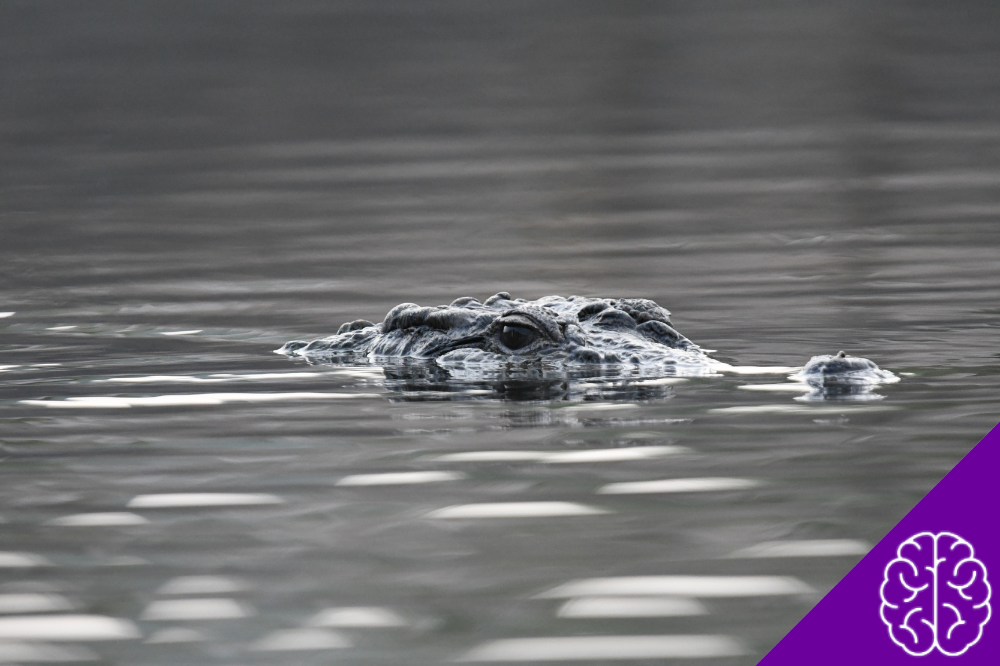
Crocodilians include crocodiles, alligators, caimans and gharials. Their body plan has remained broadly similar for about 200 million years, according to Smithsonian resources.
Their ancestors lived alongside dinosaurs, but crocodilians are not simply unchanged prehistoric animals.
Their ancient features include:
- heavily armored skin;
- powerful jaws;
- eyes and nostrils positioned high on the head;
- strong tails used for swimming and sudden attacks.
Crocodilian relatives also survived major changes in Earth’s ecosystems. Some ancient forms disappeared, while other branches continued into the modern world.
What do these animals reveal about life before humans?
The species that existed before humans were not necessarily identical to the animals we see today. In many cases, scientists are tracing a much older lineage or group through fossils and living descendants.
That distinction matters. A modern shark, horseshoe crab or crocodilian is not literally the same animal that lived hundreds of millions of years ago. Instead, today’s species represent branches of evolutionary histories that extend deep into Earth’s past.
The timeline is what makes these animals remarkable:
- humans: about 300,000 years;
- crocodilian history: about 200 million years;
- cockroach fossils: more than 350 million years;
- shark lineage: about 450 million years;
- horseshoe crab history: about 450 million years;
- nautilid lineage: about 500 million years;
- ancient jellyfish: more than 500 million years.
The comparison shows just how recent humans are in the much larger story of life on Earth.
A glimpse into an ancient world
These animals offer a rare connection to periods of Earth’s history that existed long before humans. Some lived in ancient oceans, others occupied prehistoric wetlands, and their distant relatives survived environmental changes that reshaped life on the planet.
Their survival does not mean evolution stopped. Instead, these animals show how ancient lineages can persist while their species continue to change over immense stretches of time.
That is what makes looking at species that existed before humans so fascinating: the animals alive today can still carry clues about a world that disappeared millions of years ago.