

Some customs may seem surprising from an outside perspective, but unusual traditions often have deep cultural or religious roots. Many of these practices have survived for generations and continue to bring communities together today.
From chasing cheese down a steep hill to throwing beans for good luck, these six traditions show how different communities preserve distinctive customs. Here’s what happens during each one and why people continue the practice.
1. Chasing a wheel of cheese in England
Every year, competitors gather at Cooper’s Hill near Gloucester, England, for one of the country’s most unusual races.
The challenge is simple: a wheel of Double Gloucester cheese rolls down the steep hill, and competitors run after it. The first person to reach the bottom wins the race and the cheese.
The event attracts:
- Local competitors
- International participants
- Thousands of spectators
- Media attention from around the world
The exact origins of cheese rolling remain uncertain, although the event has a long history in the area.
Why do people chase the cheese?
The race has become a local tradition that combines competition, entertainment and community participation.
The annual event continues at Cooper’s Hill, although its steep terrain can make the race physically demanding. The tradition has also gained international attention through videos and coverage of the event.
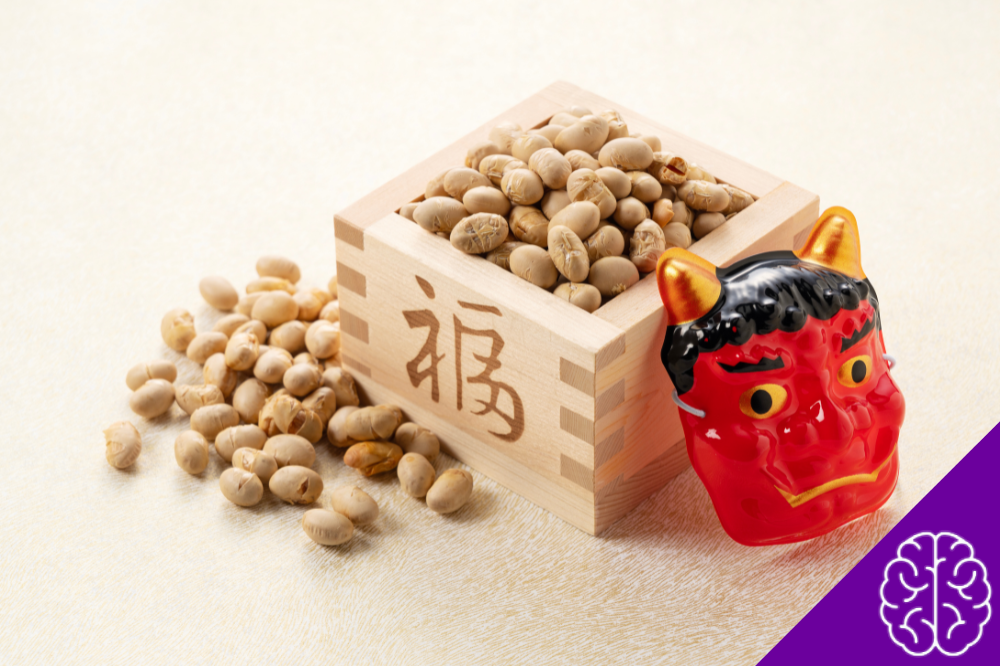
2. Throwing beans for good luck in Japan
In Japan, Setsubun marks the transition toward spring and usually takes place around February 3.
One of its best-known customs is mamemaki, a ritual in which people throw roasted soybeans while saying a phrase traditionally translated as “demons out, good luck in.”
The practice represents an attempt to drive away bad influences and welcome good fortune.
How is mamemaki practiced?
Families may perform the ritual at home, while temples and shrines can organize larger public celebrations.
The tradition can also vary by location. At Sensoji Temple in Tokyo, for example, participants use a variation of the traditional phrase because of the temple’s connection to Kannon.
Setsubun remains part of Japan’s cultural calendar, making it one of the unusual traditions that continues to have a place in modern life.
3. Blackening the bride and groom in Scotland
In parts of rural Scotland, some communities maintain a wedding custom known as blackening.
Friends and relatives cover the bride, groom or both with messy substances before the wedding. Depending on the local tradition, these can include ingredients such as flour, eggs and treacle.
The group may then parade the couple around the community.
What is the purpose of blackening?
The exact origins of the custom are difficult to establish, and practices differ between communities.
Historic Environment Scotland describes blackening as a wedding tradition that remains relatively common in some rural areas. The custom has changed over time, but the central idea of covering the couple and publicly marking the occasion remains.
It is important to note that blackening does not represent a universal Scottish wedding tradition. It is associated with particular communities and regions.
4. Burning a Viking-style galley in Shetland
Every January, the town of Lerwick in Shetland hosts Up Helly Aa, a festival featuring costumes, torchlight processions and the burning of a Viking-style galley.
The festival dates back to the 19th century and has become one of Shetland’s most recognizable cultural events.
What happens at Up Helly Aa?
The celebration includes a series of community events before the main procession.
During the evening:
- Nearly 1,000 participants known as guizers carry torches.
- They follow a procession through Lerwick.
- The group gathers around a replica galley.
- Participants set the galley on fire.
The event has paused at various points in its history, including during the World Wars and the COVID-19 pandemic, but the tradition continues today.
5. Eating lutefisk during the Christmas season
Some unusual traditions involve food rather than festivals or ceremonies. In Norway, lutefisk remains a distinctive part of the country’s culinary heritage.
Lutefisk starts with dried fish. The preparation involves soaking the fish in a lye solution and then soaking it in water again before cooking.
The result has a soft, distinctive texture that can divide opinions.
Is lutefisk still eaten today?
Yes, although it isn’t a Christmas dish for every Norwegian family.
Lutefisk remains associated with the holiday season, and restaurants can serve it as a seasonal specialty. The dish also has a strong connection to Norwegian-American communities in the United States.
Its continued presence on holiday menus shows how food can preserve cultural traditions even as eating habits change.
6. Celebrating the Naked Festival in Japan
The name Hadaka Matsuri, often translated as the “Naked Festival,” might make this Japanese event sound more extreme than it actually is.
At the Konomiya Shrine in Inazawa, Aichi Prefecture, participants traditionally wear white loincloths and headbands rather than being completely naked.
The festival has a history dating back many centuries and includes rituals intended to ward off misfortune.
What happens during the festival?
A young local man takes the role of the Shin Otoko, who represents people’s misfortune and impurity.
Participants try to touch him as he makes his way toward the shrine. According to the tradition, touching him can transfer misfortune away and bring good fortune.
The event continues to attract large crowds and remains an important part of the local cultural and religious calendar.
Why do these unusual traditions continue?
Traditions can survive for centuries when communities continue to find meaning in them.
Some connect people with religious beliefs, while others reinforce local identity or create opportunities for families and neighbors to gather.
Common reasons traditions survive include:
- Families passing customs to younger generations
- Religious institutions maintaining ceremonies
- Communities organizing annual celebrations
- Local groups adapting older customs to modern life
- Tourism increasing awareness of regional traditions
Not every tradition remains unchanged. Many evolve while keeping the elements that communities consider most meaningful.
Tradition or curiosity? Why context matters
Calling a tradition unusual depends on perspective. A custom that surprises outsiders may feel completely normal to the community that practices it, especially when it carries religious, historical or cultural meaning.
These unusual traditions also show that customs don’t need to remain unchanged to survive. Communities can adapt them over time while preserving the elements that still hold meaning.
Ultimately, understanding the context behind a tradition offers a much richer perspective than simply treating it as something strange or curious.
- You May Also Like: 8 bizarre laws from history that were actually real