
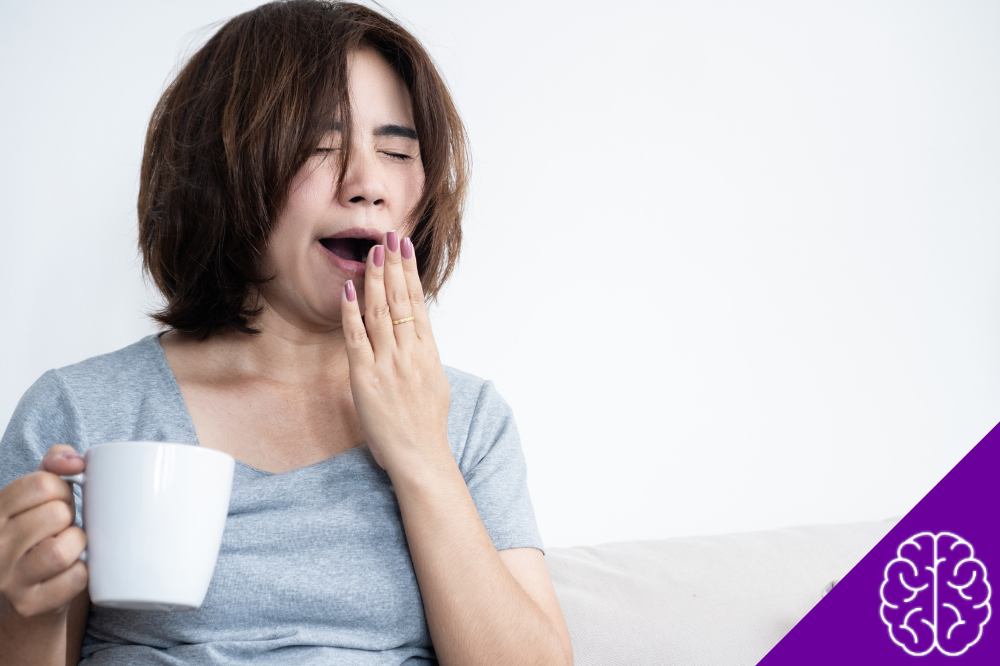
Why do we yawn when we are tired, bored or even when someone else does it? The behavior seems simple, but scientists have found several clues that point to a more complex process involving the brain, body and social behavior.
Yawning happens throughout the day and across many species. Yet researchers still debate exactly what purpose it serves.
What happens when you yawn?
A yawn involves much more than opening your mouth and taking a deep breath.
During a typical yawn, you:
- open your mouth widely;
- inhale deeply;
- stretch muscles around your face and jaw;
- expand your chest;
- exhale.
The process usually lasts only a few seconds, but it produces measurable changes in the body. Research has linked yawning with changes in heart rate, lung volume and muscle activity.
That makes yawning a coordinated physiological event rather than a simple reflex caused by tiredness.
Why do we yawn when we are tired?
Yawning often appears when your level of alertness changes.
You may yawn:
- before falling asleep;
- shortly after waking;
- during quiet activities;
- when your attention starts to decline.
This pattern has led scientists to study whether yawning helps the brain transition between different states of alertness.
One theory proposes that the physical movements involved in yawning may briefly increase arousal. Stretching the face and throat and changing breathing and cardiovascular activity could contribute to that shift.
That does not mean every yawn serves the same function. Instead, tiredness may simply create conditions in which yawning becomes more likely.
Does yawning cool your brain?
Another prominent theory focuses on brain temperature.
The brain needs to remain within a relatively narrow temperature range. Researchers have proposed that yawning could help regulate that temperature through changes in blood flow, breathing and the movement of surrounding tissues.
Some experiments support this possibility. Research in humans has found that yawning frequency can change with ambient temperature, which fits the idea that temperature may influence the behavior.
The evidence is interesting, but it does not prove that brain cooling explains every yawn.
Does yawning give you more oxygen?
The old idea that people yawn because they need more oxygen does not hold up well.
A yawn includes a deep inhalation, so it is easy to assume that the body uses the movement to increase oxygen intake. Studies, however, have found that changes in oxygen and carbon dioxide levels do not produce the pattern that this explanation would predict.
Yawning also occurs before birth, which further complicates the idea that it exists simply to increase oxygen intake.
So while breathing is an obvious part of yawning, oxygen shortage is not considered its main explanation.
Why is yawning contagious?
Seeing another person yawn can make you yawn yourself.
This phenomenon is known as contagious yawning, and researchers have observed it in humans as well as several other social species.
Watching or hearing a yawn can trigger the response without conscious intention. Studies have linked contagious yawning with activity in brain regions involved in processing other people’s actions and social information.
Researchers have proposed several explanations for this effect.
One possibility involves social synchronization. If yawning relates partly to changes in alertness, a contagious response could help coordinate activity within a group.
Another possibility involves social communication. Yawning may provide information about a person’s state, such as tiredness or changes in arousal.
However, contagious yawning does not automatically prove that someone is feeling empathy. The relationship between yawning, empathy and social cognition remains more complicated than that popular explanation suggests.
Why do we yawn when someone else does?
Why do we yawn after watching another person do it? Scientists know that the response can happen automatically, but they have not established one definitive reason for it.
The effect may involve the brain’s tendency to respond to observed actions. Social context can also influence contagious yawning, particularly in species that live in groups.
This makes contagious yawning especially interesting because it connects an everyday physical behavior with social behavior.
Do animals yawn too?
Humans are not the only animals that yawn.
Researchers have observed yawning in numerous vertebrates, including:
- mammals;
- birds;
- reptiles;
- fish.
The behavior also appears before birth in humans. Its presence across such different animals suggests that yawning has a long evolutionary history.
The function may not be identical across every species. Some animals also show contagious yawning, giving researchers another way to investigate the possible connection between yawning and social behavior.
Why do we yawn when we are bored?
Boredom can make yawning more likely, especially during activities that require little mental stimulation.
Think about situations such as:
- sitting through a long lecture;
- watching a repetitive presentation;
- waiting without much to do;
- performing a monotonous task.
These situations can reduce alertness and attention. A yawn may accompany that shift.
However, yawning does not reliably indicate boredom. The same behavior can occur when you are sleepy, waking up or experiencing a change in arousal.
Can stress cause yawning?
Yawning can also appear during stressful situations.
Researchers have observed yawning in people preparing for challenging or highly stimulating events. This pattern supports the idea that yawning may relate to changes in arousal, rather than simply low energy.
That could explain why someone might yawn before an exam, competition or public performance even when they have slept normally.
The behavior may accompany the body’s transition into a different state of alertness.
Can yawning actually wake you up?
A yawn may accompany a temporary increase in alertness, but it is not a substitute for sleep.
The arousal theory suggests that the combination of stretching, deep breathing and physiological changes may help shift your state of alertness.
That does not mean yawning eliminates sleepiness.
If you are severely sleep-deprived, yawning will not restore the alertness that adequate sleep provides.
When is frequent yawning unusual?
Yawning from time to time is normal.
A noticeable increase in yawning can have many possible explanations. Excessive daytime sleepiness, changes in sleep patterns and some medications can contribute to frequent yawning. It can also occur alongside certain neurological conditions.
Frequent yawning alone does not indicate that something is wrong.
If it appears suddenly, happens much more often than usual or comes with other unexplained symptoms, a healthcare professional can help determine whether there is an underlying cause.
So, why do we yawn? Scientists still have questions
Science has identified several plausible mechanisms, but no single explanation accounts for every situation.
Yawning appears connected to changes in alertness and may also play a role in temperature regulation and social behavior. The evidence has ruled out some popular explanations, such as the idea that yawning simply corrects an oxygen shortage, while other theories continue to develop.
That uncertainty makes yawning more interesting, not less. A behavior that seems almost meaningless may involve several systems working together, and researchers are still working out exactly why evolution kept it around.