

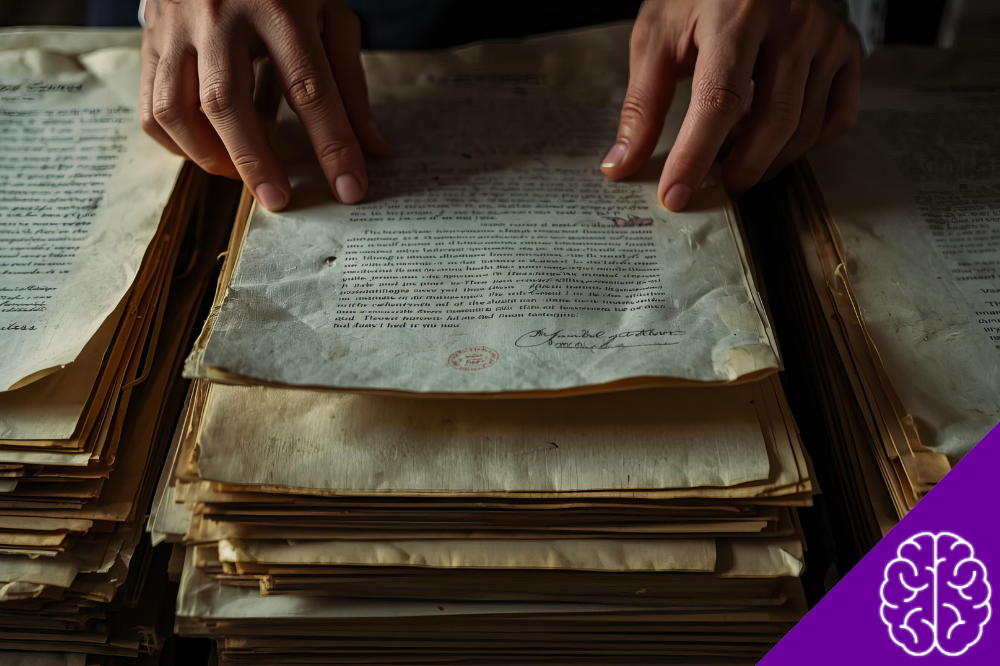
Some historical coincidences sound too strange to be true, but reliable records show that a few really happened. From two former presidents dying on the same anniversary to a famous actor’s brother saving the son of a future assassination victim, these cases are documented rather than based on internet legends.
The stories below focus on events with historical records behind them, while avoiding popular coincidence claims that rely on myths or inaccurate details.
1. John Adams and Thomas Jefferson died on the same day
On July 4, 1826, exactly 50 years after the Declaration of Independence, former presidents John Adams and Thomas Jefferson died within hours of each other.
The coincidence was particularly striking because the two men had played major roles in the founding of the United States. They had once been close political allies, later became rivals, and eventually resumed their correspondence.
Jefferson died at Monticello in Virginia at age 83. Adams died at his home in Quincy, Massachusetts, at age 90, reportedly unaware that Jefferson had already died.
The date made the event even more remarkable: it was the 50th anniversary of American independence. The National Archives and Smithsonian both document the unusual timing.
2. Abraham Lincoln’s son was saved by John Wilkes Booth’s brother
One of the strangest connections in American history involves Robert Todd Lincoln, Abraham Lincoln’s eldest son, and actor Edwin Booth, brother of the man who would later assassinate the president.
In late 1864, Robert Lincoln was standing on a crowded train platform in Jersey City when he fell toward the tracks as a train began moving. Edwin Booth happened to be nearby and pulled him to safety.
Robert later recognized his rescuer as the famous actor. Edwin, however, did not initially know that the man he had saved was Abraham Lincoln’s son.
Only months later, Edwin’s brother John Wilkes Booth assassinated President Lincoln at Ford’s Theatre.
The rescue is documented in accounts from the period and is one of the most extraordinary family connections surrounding the Lincoln assassination.
3. Robert Lincoln was present at three presidential assassinations
The coincidences surrounding Robert Todd Lincoln did not end with his father’s death.
He was also connected to the assassinations of James A. Garfield and William McKinley.
In 1881, Lincoln was serving as secretary of war and was traveling with President Garfield when Garfield was shot at a Washington, D.C., railroad station.
Twenty years later, Lincoln attended the Pan-American Exposition in Buffalo, New York, where President McKinley was fatally shot.
Robert Lincoln therefore found himself connected to three presidential assassinations:
- Abraham Lincoln in 1865;
- James Garfield in 1881;
- William McKinley in 1901.
Importantly, this does not mean he was involved in any of them. His presence at the three events was an extraordinary matter of circumstance.
4. One man’s home was the site of the Civil War’s beginning and end
Wilmer McLean had an unusually direct connection to the American Civil War.
In 1861, Confederate forces used his property near Manassas, Virginia, during the First Battle of Bull Run. The fighting took place on land that included his property.
McLean later moved his family roughly 120 miles away to Appomattox Court House.
Four years later, another major event took place inside his new home.
On April 9, 1865, Confederate General Robert E. Lee surrendered the Army of Northern Virginia to Union General Ulysses S. Grant in McLean’s parlor.
In other words, the conflict that had reached his property at the beginning of the war ended inside his home.
The National Park Service now preserves the Appomattox house as part of the historic site.
5. Mark Twain was born and died during appearances of Halley’s Comet
Mark Twain’s connection with Halley’s Comet is one of the best-known literary coincidences.
Twain was born on November 30, 1835, when Halley’s Comet was visible from Earth.
Decades later, he predicted that he would die when the comet returned. In 1909, he wrote about entering the world with the comet and expecting to leave with it.
His prediction turned out to be remarkably close.
Twain died on April 21, 1910, shortly after Halley’s Comet had made its 1910 appearance. The Smithsonian records both the prediction and the timing of his death.
This was not a supernatural prediction. Twain knew the comet’s approximate return period and deliberately made the prediction. The coincidence was that his death occurred during the same apparition.
6. Violet Jessop survived disasters involving three sister ships
Violet Jessop’s story is less about a single moment and more about an astonishing sequence of events.
Jessop worked as a stewardess aboard the RMS Olympic, the RMS Titanic and later the HMHS Britannic, three sister ships operated by the White Star Line.
In 1911, she was aboard Olympic when it collided with the British warship HMS Hawke. The ship survived.
The following year, Jessop was working aboard Titanic when it struck an iceberg and sank in April 1912. She survived the disaster and was rescued aboard a lifeboat.
Then, in 1916, she was serving aboard Britannic, which had been converted into a hospital ship during World War I. Britannic struck a mine in the Aegean Sea and sank. Jessop survived that disaster as well.
She eventually spent about 42 years working at sea.
The Royal Museums Greenwich holds archival material relating to Jessop, while contemporary historical accounts document her presence aboard the three ships.
7. A novel described a Titanic-like disaster 14 years before it happened
In 1898, American writer Morgan Robertson published Futility, a novella about a fictional ocean liner called the Titan.
The ship was described as an enormous luxury liner traveling across the North Atlantic. In the story, it struck an iceberg and sank.
Fourteen years later, the real RMS Titanic struck an iceberg and sank during its maiden voyage.
The similarities are striking. Both were large luxury liners traveling in the North Atlantic, both were portrayed as exceptionally advanced vessels, and both had inadequate lifeboat capacity for everyone aboard.
The Royal Museums Greenwich has examined the parallels between Robertson’s fictional ship and the Titanic, including the iceberg collision and similarities in the vessels’ characteristics.
There is an important caveat, however. Calling Robertson’s story a literal prediction goes beyond what the evidence establishes. Large ocean liners, iceberg hazards and concerns about lifeboat capacity were already part of maritime discussions when he wrote the book.
The coincidence is real; the claim that Robertson somehow foresaw the Titanic’s sinking is an interpretation.
What These Historical Coincidences Have in Common
The most fascinating historical coincidences do not require supernatural explanations.
Many involve people who were already connected to major events, making unusual encounters more likely. Others involve dates, places or circumstances that happened to line up in ways nobody could have planned.
That distinction matters because famous lists of coincidences often mix documented events with stories that have been exaggerated over time.
For example, some popular internet lists about Abraham Lincoln and John F. Kennedy contain inaccurate details. A coincidence can be genuinely remarkable without every version of the story being true.
The seven examples above stand out because the underlying events are supported by historical records, archival material or established historical institutions.
Why Do Historical Coincidences Seem So Unbelievable?
Part of the reason is simple probability.
History contains billions of people, countless events and an enormous number of dates and places. With enough opportunities for unusual combinations to occur, some coincidences are bound to be extraordinary.
There is also a tendency to remember the unusual matches while ignoring the countless events that have nothing in common.
That does not make these cases any less fascinating. It simply means that an extraordinary coincidence is not automatically evidence of a hidden connection.
Final Thoughts
The most convincing historical coincidences are often the ones that survive careful checking.
John Adams and Thomas Jefferson really did die on the same July 4. Edwin Booth really did save Abraham Lincoln’s son before his brother assassinated the president. Wilmer McLean really did have a connection to both the beginning and end of the Civil War. And Mark Twain really did die during the return of Halley’s Comet he had joked about years earlier.
The unusual part is not necessarily that these events were destined to happen. It is that history produced combinations so unlikely that they still sound fictional centuries or decades later.